


Understanding the precise chronological progression of metalworking is critical to managing high-volume hardware quality. Every successful hardware rollout relies on a series of optimized sheet metal fabrication process steps to prevent dimensional drift and secure structural integrity. Transforming thin, flat metal plates into complex, rigid structural enclosures requires a seamless blend of digital math, high-pressure cutting, mechanical forming, and permanent assembly.
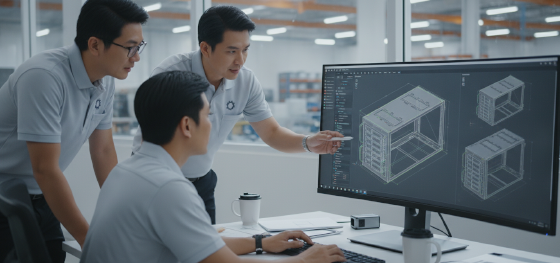
For many product developers, the manufacturing floor remains a black box. Submitting a CAD file and hoping for the best often results in high reject rates, mismatched hole tolerances, and unexpected tooling costs. Knowing exactly how your raw plate moves from a digital file to a finished physical product allows you to design parts that are inherently optimized for fast, cost-effective production.
Let's trace the six essential stages of modern precision fabrication, analyze how flat-pattern unfolding sets the accuracy for all downstream operations, and explore how our advanced global facility manages each phase to optimize your hardware build.
content:
Step 1: CAD Design and Unfolding
Step 2 & 3: Cutting and Punching
Step 4: Bending and Forming
Step 5: Joining and Welding
Step 6: Finishing and Assembly
FAQ: Critical Questions About Fabrication Steps
Step 1: CAD Design and Unfolding

Why must a 3D sheet metal model be unfolded into a flat pattern before manufacturing?
Unfolding calculates the precise material elongation that occurs during bending, translating 3D flanges into a flat pattern with pre-calculated bend deductions.
The manufacturing journey begins in the digital space. Designers model three-dimensional brackets and chassis in CAD software, defining critical dimensions and material thicknesses. Our programming department then processes these files, applying precise K-factor and bend deduction math to unfold the 3D model into a flat, two-dimensional pattern.
This mathematical unfolding is the most critical preparatory phase of the broader sheet metal fabrication process, setting the precise physical boundaries for the flat plate. If the flat pattern is modeled without incorporating these bend deductions, the metal will stretch beyond its target dimensions during press operations, leading to loose fits and misaligned mounting holes.
Step 2 & 3: Cutting and Punching
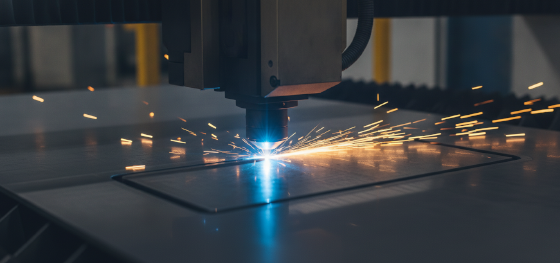
What are the primary methods used to slice raw flat patterns out of metal sheets?
We utilize high-speed fiber laser cutting for complex outer profiles and CNC turret punching for rapid, standardized hole grids, louvers, and embossments.
Once the flat data is validated, the physical sheet metal fabrication process steps transition into the material removal phase. Flat sheets of metal are loaded onto advanced workstations to cut out the perimeter of the flat pattern and slice all interior mounting holes. For parts requiring high geometric flexibility, we deploy high-speed sheet metal laser cutting systems that cleanly vaporize the steel without leaving physical tool marks.
If your panel design features hundreds of identical round holes or integrated structural ventilation, we route the sheets to our CNC turret presses. This mechanical sheet metal punching process shears out standard shapes in milliseconds, making it significantly faster and more cost-effective than tracing every single perimeter point with a laser beam.
Step 4: Bending and Forming
How do flat patterns transition into rigid three-dimensional hardware?
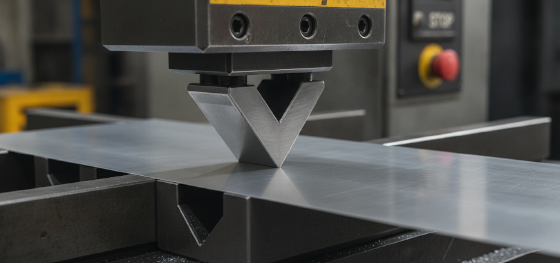
Hydraulic CNC press brakes drive a top punch down to force the flat metal into custom-shaped V-dies, bending the plate along calculated axes to form flanges.
After blanking, the flat metal parts are routed to the forming department. This is where sheet metal bending occurs. Operators place the flat sheets against automated back gauges on CNC press brakes. As the top punch descends, it deforms the metal along straight bend lines, establishing the targeted 3D volume.
For deep enclosures requiring hollow cylindrical profiles or complex curved shells, specialized deep sheet metal forming techniques are applied. Throughout this deformation stage, our operators continuously monitor angular springback, adjusting the press strokes to ensure that every flange folds to its exact intended angle under high structural repeatability.
Step 5: Joining and Welding
How are separate bent flanges joined together to form a solid, rigid enclosure?
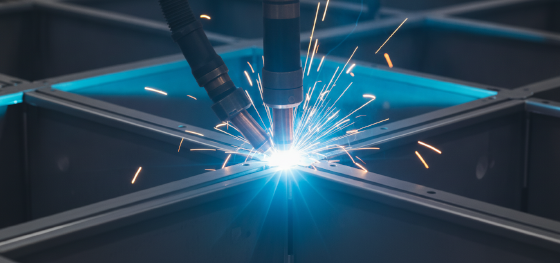
We permanently secure individual components utilizing permanent metallurgical welding or cold mechanical fastening methods like riveting and clinching.
Once the individual panels are bent into shape, they must be combined to form a complete, rigid chassis. This phase focuses heavily on sheet metal joining to establish permanent mechanical connections. For watertight, high-strength industrial frames, our certified welders execute precise sheet metal welding (including TIG, MIG, and resistance spot welds), fusing the metal edges at the molecular level.
For pre-plated panels or assemblies where heat distortion must be avoided, we utilize cold-joining fasteners. This cold processing relies on pneumatic presses to install pop rivets and self-clinching hardware directly into pre-punched holes, providing strong machine threads without heat damage.
Step 6: Finishing and Assembly
What final operations prepare the sheet metal assembly for immediate commercial use?
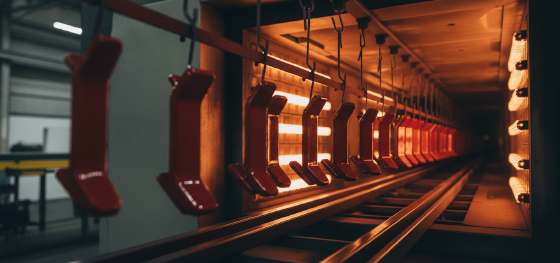
We apply protective surface coatings like powder painting or anodizing, followed by the final mechanical integration of hinges, seals, and card guides.
Raw metal assemblies are highly vulnerable to environmental corrosion and oxidation. Before final shipping, assemblies undergo rigorous surface finishing. We apply professional powder coatings, anodizing, or chemical conversion coatings to protect the metal from rust and provide a clean, premium aesthetic.
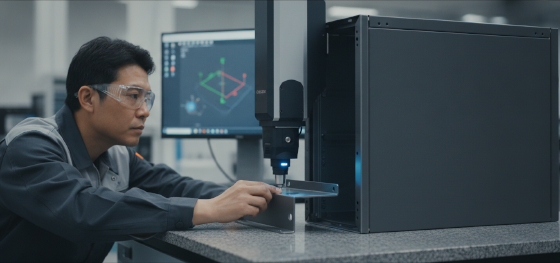
Once the finishes are fully cured, we execute the final sheet metal assembly. Our integration technicians mount mechanical hardware, including hinges, locks, rubber gaskets, and custom faceplates. Every completed box build assembly undergoes rigorous dimensional inspection and physical alignment checks, ensuring that the hardware is fully ready for immediately populating your electronic components.
FAQ: Critical Questions About Fabrication Steps
Why is flat-pattern grain orientation critical during the nesting phase?
During the rolling process at the steel mill, metal develops a continuous grain direction. If a bend is executed parallel to this rolling grain, the outer fibers are highly prone to micro-cracking and material splitting. We resolve this during our digital CAD nesting stage by orienting all major bend lines perpendicular or diagonal to the grain direction.
How do we prevent weld spatter and paint chipping on pre-finished cabinets?
We apply specialized anti-spatter sprays to the sheet surfaces during welding to prevent molten metal droplets from sticking. For pre-finished painted surfaces, we utilize protective vinyl films and custom-padded assembly tables to prevent metal-on-metal friction during the final mechanical hardware integration.
Can aluminum and stainless steel go through the exact same fabrication steps?
While the general workflow is identical, the mechanical parameters differ. Lightweight aluminum is softer and bends with less force but requires larger minimum bend radii to prevent cracking; stainless steel is much harder and work-hardens rapidly during forming, requiring higher tonnage press brakes and specialized tool steel punch dies.
How does JUCHENG manage quality control across these sheet metal fabrication process steps?
We implement strict quality gates at every single workstation. Our operators verify flat patterns using digital scanners after cutting, inspect bend angles with electronic angle gauges on our press brakes, and conduct full coordinate measuring machine (CMM) dimensional checks on completed assemblies before final packaging.

