


Surface aesthetics dictate the perceived value of a product long before a consumer evaluates its functionality. In the hyper-competitive landscapes of automotive lighting and high-end medical devices, the difference between a "cloudy" finish and "crystalline" clarity is the result of a rigorous manufacturing contract known as the spi surface finish chart. Established by the Society of the Plastics Industry, this classification system provides a universal language for engineers and toolmakers to define the precise level of mold polishing required. Navigating the variables of Injection molding surface finishes requires moving beyond vague terms like "shiny" or "matte" and adopting a data-driven approach to steel preparation. Jucheng Precision operates as a high-fidelity cosmetic house, utilizing manual craftsmanship and elite S136 stainless steel to ensure your designs achieve the exact specular reflection and surface energy dictated by the SPI standard. Mastering these grades is the primary defense against unexpected "Orange Peel" or "Haze" in your final production batches.
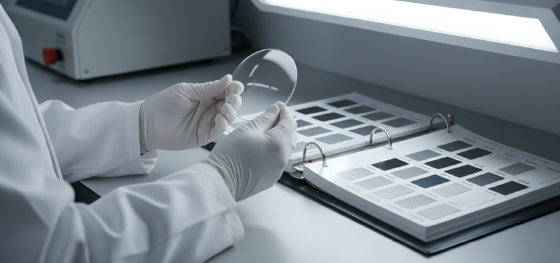
Achieving the "Golden Sample" status requires a surgical understanding of the 12 distinct SPI grades. Every increase in polish level represents a significant investment in skilled labor hours and specialized polishing media. Amateurs often over-specify Grade A-1 finishes for internal structural components, incurring unnecessary "Tooling Debt" without any functional or aesthetic gain. Conversely, failing to specify a Grade D-1 finish for a rugged handheld grip can lead to an ergonomic failure. Jucheng Precision eliminates these "Procurement Blind Spots" by providing a comprehensive DFM audit on every project. We map your cosmetic requirements to the optimal steel hardness and polishing protocol, ensuring your prototypes and mass-production units possess the aesthetic soul your brand deserves. This guide deconstructs the four primary Grade families and the material science governing their success.
The Four Pillars of the SPI Finish Chart
Grade A: The Science of Optical Diamond Polishing
Grades B and C: Managing Semi-Gloss and Functional Matte
Material Interrogation: Why Some Resins Refuse to Shine
JUCHENG Protocol: Manual Mastery in Surface Realism
The Four Pillars of the SPI Finish Chart

Standardization eliminates the variance of human perception in the tool shop. The spi surface finish chart categorizes mold finishes into four primary families—A, B, C, and D—each corresponding to a specific method of steel removal and a distinct visual outcome. Selecting the wrong grade is not merely an aesthetic error; it can interfere with part ejection and cycle times. To assist in early-stage material and tooling selection, Jucheng Precision provides the following definitive technical matrix:
SPI Grade
Method / Media
Typical Ra (µm)
Visual Appearance
Grade A (A1-A3) | Diamond Buffing | 0.01 - 0.05 | Mirror / High-Gloss |
Grade B (B1-B3) | Grit Paper | 0.05 - 0.10 | Semi-Gloss |
Grade C (C1-C3) | Grit Stone | 0.10 - 0.30 | Matte |
Grade D (D1-D3) | Dry Blast (Glass/Sand) | 0.30 - 1.00+ | Textured / Dull |
Grade A: The Science of Optical Diamond Polishing

Specular brilliance is an achievement of extreme manual labor. Grade A finishes—ranging from A-1 (Super Mirror) to A-3 (Standard Mirror)—occupy the elite tier of the spi surface finish chart. To achieve an A-1 finish, our master model makers utilize progressively finer grades of diamond buffing compound, often working under high-magnification lamps to eliminate even sub-micron scratches. This process is mandatory for transparent resins like Polycarbonate and PMMA used in automotive lighting and medical lenses. Any microscopic tool mark left in the steel is magnified ten-fold once the part is molded, resulting in "Haze" or light diffraction that ruins photometric data. At Jucheng Precision, we exclusively utilize S136 stainless steel for Grade A projects; standard tool steels often contain microscopic impurities or "Pits" that prevent the material from reaching a true mirror shine. We treat every A-grade tool as a precision optical instrument, ensuring your cosmetic intent is physically realized without the visual noise of amateur polishing.
Grades B and C: Managing Semi-Gloss and Functional Matte

Functional surfaces require a pragmatic balance of aesthetics and cost-efficiency. Grade B finishes (B-1 to B-3) are achieved using ultra-fine grit sandpapers, resulting in a crisp semi-gloss that hides minor molding defects while maintaining a premium industrial look. Grade C finishes (C-1 to C-3) utilize grit stones to produce a uniform matte surface. These mid-tier levels on the spi surface finish chart are the workhorses of consumer electronics and industrial housings. They provide the necessary surface energy for secondary painting or electroplating while reducing the overall "Manual Tax" of the mold-making phase. Jucheng Precision advocates for Grade C finishes on internal structural components, where a stone finish provides sufficient smoothness for part ejection without the unnecessary expense of a diamond buff. By allocating the polishing budget only where it is visible to the end-user, we ensure your project remains capital-efficient without compromising on the structural soul of the design.
Material Interrogation: Why Some Resins Refuse to Shine

Chemistry dictates the "Gloss Ceiling" of a physical part. One of the most common errors in procurement is specifying an A-1 finish for a high-shrinkage material like Polypropylene (PP) or HDPE. Because these materials are semi-crystalline and have a "Waxy" surface energy, they can never replicate the mirror clarity of amorphous resins like Polycarbonate. Even if the mold steel is polished to a diamond buff, the resulting PP part will appear "Hazy" or slightly dull. The spi surface finish chart must be synchronized with the resin’s molecular reality. Jucheng Precision engineers partner with you during the DFM phase to identify these material mismatches. If your brand identity requires a high-gloss "Piano Black" finish, we may recommend a PC/ABS blend over a standard ABS to ensure the material can hold the surface energy required for that specular authority. We ensure that the money you spend on mold polishing isn't wasted on a resin that is physically incapable of reflecting its quality.
JUCHENG Protocol: Manual Mastery in Surface Realism
Manufacturing excellence at Jucheng Precision is built on the foundation of integrated process control. We don't just "cut and polish"; we audit the surface profile using non-contact 3D metrology. Our facility, housing over 150 CNC machines and 25 high-precision 5-axis centers, provides the geometric precision needed for complex 3D shut-off surfaces. However, for the final SPI finish, we rely on our veteran craftsmen who have spent decades perfecting the art of "Hand Feeling." We provide the material lot traceability and Ra inspection reports needed to ensure your high-requirement parts meet the strict standards of the automotive and medical industries. Stop gambling your cosmetic success with shops that treat polishing as an afterthought. Not sure if your material choice matches your required SPI grade? Upload your 3D CAD file to JUCHENG today for a Free DFM Review. Our experts will identify the optimal Injection molding surface finishes for your budget, ensuring your transition to production is seamless, beautiful, and profitable.

