


Light manipulation defines the frontier of modern human-machine interfaces. In the high-velocity sectors of automotive interiors, high-end consumer electronics, and surgical instrumentation, the ability to communicate information through opaque surfaces is an engineering mandate. Traditional printing fails to provide the permanence and optical crispness required for backlit symbols or permanent serial numbering. When your project demands microscopic resolution that won't fade under repetitive use or chemical sterilization, laser etching plastic parts is the only strategically viable choice. This sophisticated branch of Injection molding surface finishes involves utilizing high-energy photons to either selectively vaporize surface coatings or chemically alter the polymer matrix itself. Jucheng Precision operates as a center of optical excellence, utilizing multi-axis laser systems and specialized resin additives to ensure your control panels, keyboards, and medical housings possess the immutable visual soul required for premium market positioning.
Manufacturing sovereignty is earned through the management of "Photon-Matter Interaction." Amateurs often view laser etching as a simple "burning" process, unaware that the wavelength of the laser and the absorption characteristics of the plastic dictate the contrast and edge quality of the final mark. Jucheng Precision eliminates "Graphic Blur" by performing a surgical audit of your resin chemistry and coating stack-up. Whether you are seeking a "Night-Design" effect for a luxury vehicle center console or permanent UDI (Unique Device Identification) for a medical instrument, our technical team ensures your hardware retains its "Day One" legibility through the entire product lifecycle. This guide deconstructs the physics of paint ablation, the necessity of laser additives, and the precision required to engineer backlit interfaces that survive the most rigorous environmental audits.
Photon Ablation Physics: Vaporizing Layers with Precision
Night-Design Architecture: Engineering Backlit Icons
Molecular Contrast: The Science of Laser-Sensitive Additives
Precision Traceability: QR Codes and UDI Compliance
JUCHENG Protocol: Multi-Axis Laser Mastery and Quality Control
Photon Ablation Physics: Vaporizing Layers with Precision
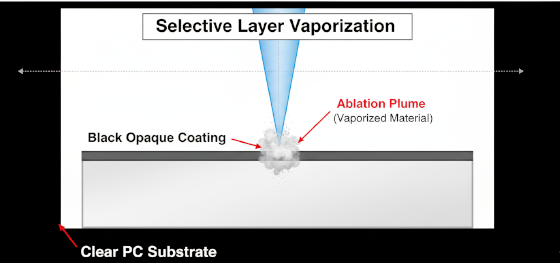
Mechanical accuracy in laser etching plastic parts is a byproduct of selective energy absorption. Unlike physical engraving, which uses a tool bit to cut the surface, laser etching utilizes a concentrated beam of light—typically from a Fiber or CO2 laser—to interact with the polymer. When the laser hits the part, the photons are absorbed by the material, rapidly increasing the localized temperature. In the "Ablation" mode, the top layer of paint or resin is heated so violently that it transitions directly from a solid to a gas. This vaporization happens in nanoseconds, leaving behind a sharp, clean edge that defines the graphic. At Jucheng Precision, we calibrate the pulse frequency and "Beam Diameter" to ensure the energy is concentrated enough to vaporize the target layer without inducing "Thermal Bleed" into the surrounding areas. This precision is vital for creating high-definition icons on consumer electronics where the line thickness may be as thin as 0.1mm. We don't just "burn" the part; we manage a microscopic explosion of material to deliver the razor-sharp visual authority your brand requires.
Night-Design Architecture: Engineering Backlit Icons
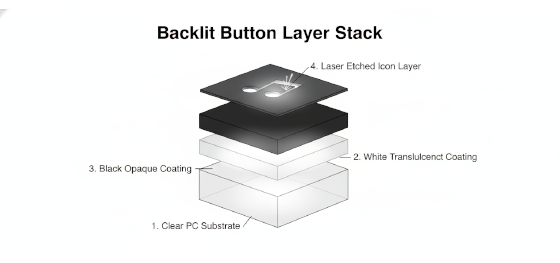
Illuminating information through an opaque housing is a multi-layer manufacturing marathon. Creating "Night-Design" components—found in luxury automotive dashboards and high-end gaming peripherals—requires a specific Injection molding surface finishes strategy combined with laser precision. The process begins with molding a part in a transparent or translucent Injection molding materials such as Clear Polycarbonate. This part is then moved to JUCHENG’s dust-free spray booth, where it receives a base layer of white translucent paint, followed by a thick, light-blocking topcoat of black or dark grey paint. The laser then "Saves" the design by surgically etching away only the top dark layer to reveal the white layer beneath. When an internal LED is activated, the light passes through the clear base and the white paint, creating a glowing icon while the rest of the button remains perfectly dark. Managing this "Depth of Cut" is critical; if the laser is too strong, it burns through the white layer, resulting in "Light Leaks." Jucheng Precision utilizes digital feedback sensors to maintain sub-micron depth control, ensuring every backlit symbol on your interface provides uniform luminance and professional clarity.
Molecular Contrast: The Science of Laser-Sensitive Additives
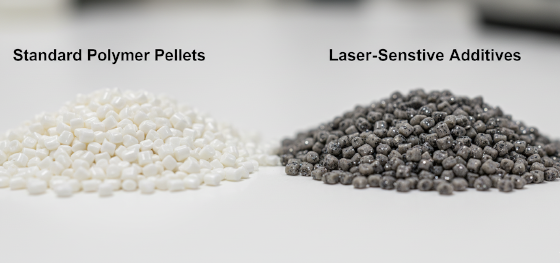
Achieving high-contrast markings on "pure" resins is a common engineering hurdle. Many standard plastics, such as Polypropylene or certain grades of ABS, do not absorb laser energy effectively, resulting in faint or illegible marks. laser etching plastic parts at the industrial level often requires the use of "Laser Additives"—specialized mineral pigments or metal oxides mixed into the resin during the Injection molding materials stage. When hit by the laser, these particles trigger a "Carbonization" reaction, turning the plastic a deep black or bright white without removing any material. This is vital for clinical diagnostic tools where a recessed mark (ablation) would act as a trap for bacteria. Jucheng Precision engineers partner with you to select the correct additive package to ensure your QR codes and logos exhibit high-contrast legibility even on light-colored or non-polar polymers. We turn an unreactive surface into a high-definition canvas, ensuring your permanent branding is integral to the molecular structure of the part.
Precision Traceability: QR Codes and UDI Compliance
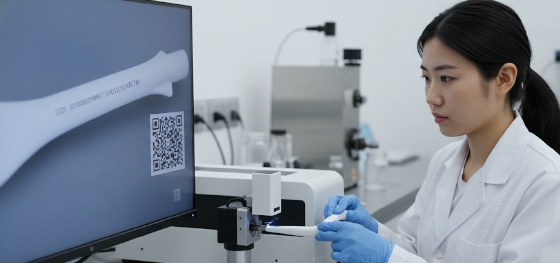
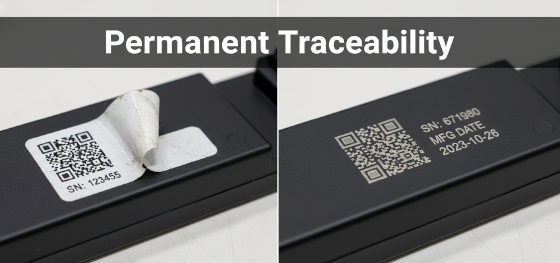
Traceability dictates the survival of products in regulated medical and aerospace markets. A paper label can be lost, and a silk-screened serial number can be wiped away by harsh solvents. laser etching plastic parts provides the "Immutable Fingerprint" required for UDI (Unique Device Identification) and FAA compliance. Jucheng Precision utilizes high-resolution fiber lasers to etch QR codes, Data Matrix symbols, and alphanumeric serials directly onto your hardware. We calibrate our systems to ensure the mark remains legible under 10x magnification, providing the high data density needed for tracking small medical implants or complex automotive wire harnesses. Our facility subjects these marks to "Chemical Soak" and "Taber Abrasion" audits in our QC lab, ensuring the traceability survives years of field use and repeated sterilization cycles. We don't just provide markings; we provide a documented chain of accountability for your hardware, protecting your brand from the legal risks of lost traceability.
JUCHENG Protocol: Multi-Axis Laser Mastery and Quality Control

Manufacturing excellence at Jucheng Precision is built on the foundation of vertical integration. We eliminate the friction of multi-vendor assembly by housing our elite CNC machine shop, cleanroom painting lines, and multi-axis laser centers under a single roof. This allows us to manage the entire "Optical Stack" of your parts—from the molding of the clear PC base to the precision laser ablation of the final icon. Our facility utilizes 3D-galvanometer laser heads capable of etching complex 3D contours without the "Focus Drift" that ruins the edges on curved surfaces. We provide full material lot traceability and optical inspection reports for every batch, ensuring your hardware journey is lean, predictable, and market-ready. Stop gambling your brand’s visual identity with shops that treat laser etching as a generic afterthought. Not sure if your resin choice supports high-contrast carbonization? Upload your 3D CAD file to JUCHENG today for a Free DFM Review. Our experts will identify the optimal Injection molding surface finishes for your brand, ensuring your transition to production is seamless, brilliant, and retail-ready.

