


Manufacturing millions of identical circuit boards means absolutely nothing if the final quality control checkpoint generates false rejection data. Relying on poorly fabricated testing jigs guarantees that microscopic pogo pins will completely miss their designated copper contact pads on the motherboard. Executing flawless Test fixture CNC machining creates an unyielding physical foundation that aligns these diagnostic probes perfectly every single time. Slashing false-positive rejection rates requires mechanical perfection that cheap 3D-printed plastics simply cannot provide under extreme clamping pressure.

Factory managers consistently bleed capital trying to diagnose motherboard failures that are actually caused by warped testing equipment. Bending or flexing during the diagnostic clamping phase instantly ruins the electrical continuity check. Developing a reliable Industrial enclosure prototype alongside your testing apparatus ensures absolute dimensional harmony across the entire production floor.
Solving this massive logistical bottleneck requires locking down your subtractive milling tolerances instantly. Let's explore why insulating polymers dominate diagnostic assemblies, how advanced cutting centers conquer complex geometries, and why integrating heavy metals stabilizes your quality control pipeline.
content:
Quality Control Nightmares: When Jigs Fail
Material Selection: Insulating Plastics vs Rigid Metals
Extreme Geometric Demands: Leveraging Subtractive Milling
Integrating Diagnostic Tools: Seamless Hardware Assembly
Turnkey Factory Operations: Delivering Fast Custom Hardware
FAQ: Honest Answers About Tolerances and Wear
Quality Control Nightmares: When Jigs Fail
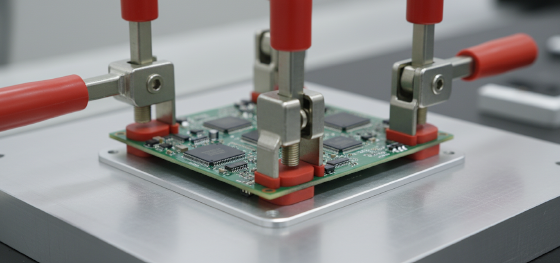
What causes perfectly functional circuit boards to fail final factory inspections?
Microscopic misalignment within the testing cradle forces the diagnostic pins to hit empty fiberglass instead of the conductive copper pads, generating false failure codes instantly.
Shutting down a massive commercial assembly line to recalibrate a warped testing jig burns thousands of dollars every hour. Procurement teams must recognize that investing heavily in the inspection equipment directly protects the profitability of the overall mass-production run.
Carving these holding cradles out of unyielding materials completely neutralizes this diagnostic nightmare. Precision milling guarantees the circuit board drops perfectly into the testing slot, locking into place without requiring aggressive manual forcing from the operator.
Material Selection: Insulating Plastics vs Rigid Metals
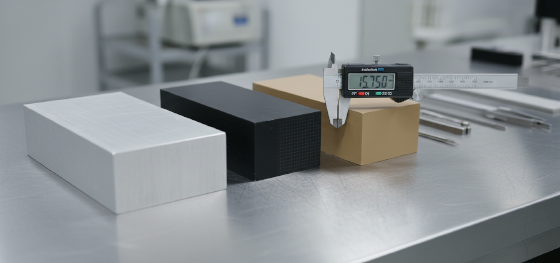
Selecting the foundational raw billet dictates whether your diagnostic machine survives continuous factory abuse. The engineering matrix below contrasts heavy structural metals against advanced non-conductive polymers.
| Industrial Material | Primary Engineering Advantage | Best Diagnostic Use Case |
|---|---|---|
| POM (Delrin) / PEEK | Absolute electrical insulation and extremely low friction coefficient. | Circuit board holding nests and direct contact surfaces. |
| Aerospace Aluminum (6061) | Unyielding structural rigidity and excellent CNC machinability. | Heavy base plates supporting the plastic nests. |
| Teflon (PTFE) | Unbeatable chemical resistance against harsh testing fluids. | Specialized chemical or high-heat environmental testing rigs. |
Specifying advanced engineering plastics remains absolutely mandatory for any component physically touching the bare motherboard. These specialized polymers provide incredible dimensional stability while acting as total electrical insulators, preventing accidental short circuits during live power testing.
Anchoring these non-conductive plastic cradles requires massive structural weight. Engineers typically bolt the delicate polymer testing nests directly onto heavy aluminum base plates, combining electrical safety with indestructible metallic rigidity.
Extreme Geometric Demands: Leveraging Subtractive Milling
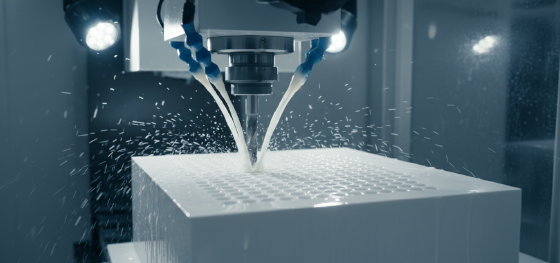
How do toolmakers drill hundreds of microscopic pin holes with absolute perfection?
Deploying advanced 5-axis cutting centers allows spinning drills to attack the solid block from multiple angles simultaneously without ever unclamping the raw material.
Moving the raw block between different machines introduces severe tolerance stacking errors. If the microscopic pin holes deviate by even a fraction of a millimeter, the entire diagnostic apparatus becomes totally worthless.
Subtractive milling actively defends against these fatal deviations. Executing strict Test fixture CNC machining protocols ensures every single geometric feature remains mathematically locked to your original CAD blueprint.
Integrating Diagnostic Tools: Seamless Hardware Assembly
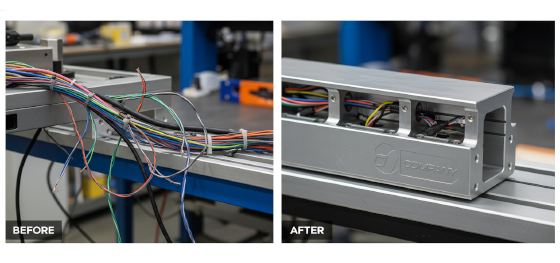
Housing expensive optical sensors and diagnostic computers requires equally precise protective shells. Milling a dedicated Measurement equipment housing ensures your delicate analytical tools survive the harsh, vibrating environment of the factory floor.
Leaving sensitive diagnostic cabling exposed invites catastrophic physical damage from moving assembly line equipment. Routing these vital communication wires through internally milled channels protects the data stream completely.
Mating the testing cradle perfectly with the external diagnostic shell eliminates all mechanical rattling. We carve tight O-ring compression grooves into the mounting faces to ensure industrial dust never compromises the internal sensor arrays.
Turnkey Factory Operations: Delivering Fast Custom Hardware
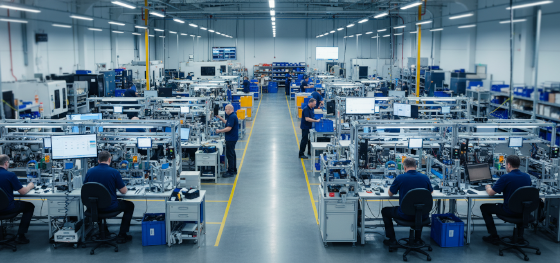
Waiting weeks for a third-party machine shop to deliver critical assembly line tools paralyzes your commercial launch. Fragmented supply chains inevitably result in mismatched tolerances between the testing cradle and the actual product.
Operating our massive turnkey precision manufacturing hub eliminates this scheduling disaster entirely. We mill the product shells and the corresponding diagnostic cradles simultaneously within the exact same building.
Stop bleeding capital on false-positive rejections. Send your complex motherboard dimensions to our engineering team today. We calculate the ultimate diagnostic mounting pathways and deliver unyielding quality control hardware.
FAQ: Honest Answers About Tolerances and Wear

Will repeated clamping operations slowly wear down the plastic testing cradle?
Advanced polymers like PEEK and Delrin possess exceptional natural lubricity and wear resistance, allowing them to survive hundreds of thousands of friction cycles without degrading.
Can you mill complex vacuum channels to hold the circuit board down securely?
Absolutely. Subtractive cutting easily creates deep, interlocking internal air channels connected to pneumatic pumps, allowing operators to suck the PCB perfectly flat against the fixture.
Why do some testing jigs warp aggressively after a few months of factory use?
Cheap brokers often use un-annealed plastics that retain deep internal manufacturing stress. We strictly utilize stress-relieved billets to guarantee lifelong dimensional stability.
Does adding complex metallic heat sinks to the jig increase the unit cost?
Integrating active thermal extraction requires extended spindle time, slightly increasing the initial invoice but actively preventing overheating during aggressive high-voltage stress testing.

