


UV coating is a specialized protective finish applied to surfaces and cured using ultraviolet (UV) light. This technology has revolutionized industries ranging from automotive to printing due to its rapid curing process, durability, and high-gloss finish. Unlike traditional coatings that rely on air drying or heat, UV coatings polymerize instantly when exposed to UV light, creating a hard, resilient layer. This method not only enhances efficiency but also provides superior resistance to scratches, chemicals, and environmental wear.
How UV Coating Works
Ceramic Coatings vs. UV Coatings
Applications in Automotive and Optics
Industrial Uses: From Powder Coatings to Machinery
Advantages of UV Curing Technology
How UV Coating Works
The UV coating process involves applying a liquid formulation containing photoinitiators, monomers, and oligomers onto a substrate. When exposed to UV light, the photoinitiators trigger a chemical reaction, transforming the liquid into a solid film in seconds. This curing process is energy-efficient and environmentally friendly, as it emits minimal volatile organic compounds (VOCs). Industries favor UV coating for its ability to protect surfaces while maintaining clarity and aesthetic appeal.

Ceramic Coatings vs. UV Coatings
While ceramic coatings are known for their hydrophobic properties and long-lasting protection, and UV coatings offer faster application and curing times, black oxide coatings provide a different set of advantages focused primarily on corrosion resistance and aesthetic appeal for ferrous metals. Ceramic coatings typically require hours to bond with surfaces, whereas UV coatings cure almost instantly; black oxide, being a conversion coating, forms through a chemical reaction but also involves relatively quick processing times. However, all three are used in automotive and industrial applications to enhance surface durability and function. UV coatings are often preferred for high-volume production due to their efficiency; black oxide is commonly applied to tools, fasteners, and automotive components for its matte black finish and moderate corrosion resistance; while ceramic coatings excel in long-term gloss and paint protection.
Applications in Automotive and Optics
UV coatings are widely used in the automotive industry to protect headlights, dashboards, and touchscreens. When applied to headlight lenses, UV coatings prevent yellowing and hazing caused by prolonged sun exposure. Similarly, optical lenses and glasses benefit from UV coatings to reduce glare and improve scratch resistance. The ability to apply a clear, high-gloss finish without compromising transparency makes UV coatings ideal for precision optics.
Industrial Uses: From Powder Coatings to Machinery
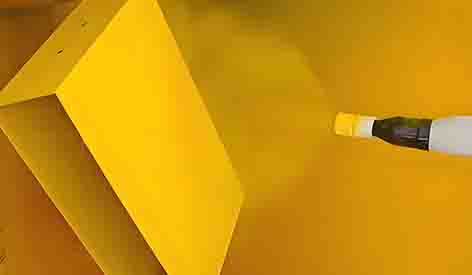
In industrial settings, UV coatings are applied to machine components to reduce friction and prevent corrosion. Unlike powder coatings, which require high-temperature curing, UV coatings adhere at room temperature, making them suitable for heat-sensitive materials. Additionally, UV-cured coatings are used in 3D printing and electronics to create insulating layers that protect circuitry from moisture and dust.
Advantages of UV Curing Technology
The curing speed of UV coatings is unmatched—products can be handled immediately after application, reducing production downtime. This makes UV coatings ideal for high-speed manufacturing lines. Furthermore, UV-cured coatings are more environmentally sustainable than solvent-based alternatives, as they contain fewer harmful chemicals. Industries adopting UV curing benefit from lower energy consumption and reduced waste.
UV coating technology continues to advance, offering faster, more efficient solutions for surface protection across multiple industries. Whether used to protect automotive headlight lenses, enhance the durability of glasses, or improve the longevity of industrial machine parts, UV coatings provide a high-performance alternative to traditional methods. With benefits such as rapid curing, eco-friendliness, and superior clarity, UV coatings are set to remain a cornerstone of modern manufacturing and finishing processes.

