


Paying for secondary CNC machining to drill microscopic threads into thousands of metal covers will instantly bankrupt a hardware project. Procurement teams usually select raw metals based purely on ingot prices, completely ignoring the massive labor costs required to finish the parts manually. Selecting proper die casting materials requires calculating the total manufacturing journey from the injection press to the final assembly line. Deploying zinc die casting entirely rewrites this financial equation by delivering perfectly formed, net-shape components that completely bypass the milling bay.

Sourcing complex, tiny hardware components introduces massive scaling risks. High-heat metals ruthlessly attack tooling steel, forcing startups to pay for expensive mold rebuilds constantly. Switching to lower-melting-point alloys eliminates this severe thermal shock. Operating directly from our Shenzhen precision manufacturing hub, Jucheng Precision leverages this unique metallurgical advantage to extend your tooling lifespan to over one million flawless shots.
Luxury consumer electronics and high-end automotive interiors absolutely demand flawless, mirror-like chrome finishes. Standard metals often suffer from internal porosity, causing expensive plating chemicals to bubble and peel off. Let's explore why this heavy, premium-feeling metal dominates the cosmetic hardware market, how it achieves zero-gap tolerances, and which specific commercial alloy grades your CAD files require.
content:
Understanding Advantages: Zero CNC and Infinite Tooling
Material Properties: The Premium Tactile Feel
Common Alloys: Zamak 3 vs Zamak 5
Machine Synergy: Dominating with Submerged Pumps
JUCHENG Hub: Turnkey Solutions Shipped Globally
FAQ: Honest Answers About Rust, Weight, and Tolerances
Understanding Advantages: Zero CNC and Infinite Tooling
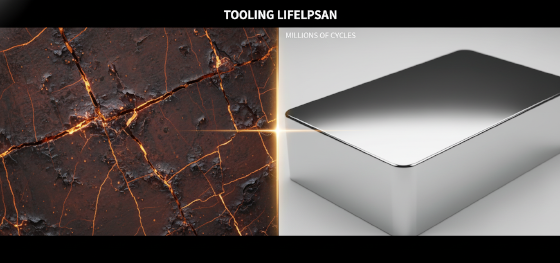
How do manufacturers eliminate costly secondary CNC threading operations?
By exploiting the extreme fluidity of this liquid alloy, allowing it to fill microscopic mold details and cast fully functional internal threads directly during the initial high-speed molding cycle.
Milling tiny features into solid metal wastes incredible amounts of machine time. Hardware engineers desperately need components that drop out of the hydraulic press completely ready for installation. This specific metal flows like water when melted, capturing the exact texture and razor-sharp geometries of the polished steel die.
Tooling amortization destroys budgets when you have to buy a new steel mold every few months. Because this metal processes at significantly lower temperatures, it subjects the expensive H13 tool steel to virtually zero thermal fatigue. Your initial Non-Recurring Engineering (NRE) tooling investment pays for itself as the mold confidently survives millions of injection cycles.
Material Properties: The Premium Tactile Feel
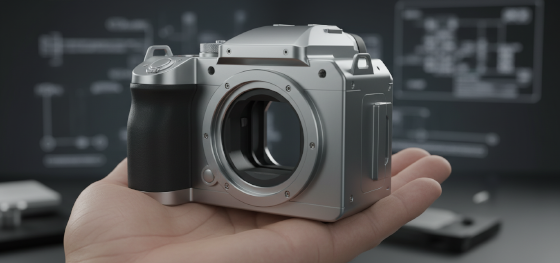
Why do premium consumer brands prefer this metal over lightweight alternatives?
It provides an incredibly dense, solid tactile feel that consumers instantly associate with high-end luxury, while simultaneously offering superior impact resistance and vibration dampening.
Holding a flimsy plastic camera chassis feels cheap and unprofessional. When users pick up a professional optical lens or a luxury smart lock, they expect heavy, unyielding structural integrity. This metal delivers massive density, providing the premium heft required for top-tier retail products without utilizing expensive machined brass.
Surface porosity ruins high-end cosmetic finishing. Liquid zinc cures into an incredibly tightly packed molecular structure, creating a virtually flawless outer skin. This dense surface acts as the ultimate canvas for copper, nickel, and chrome electroplating, ensuring your shiny finishes never blister or flake off in the field.
Common Alloys: Zamak 3 vs Zamak 5
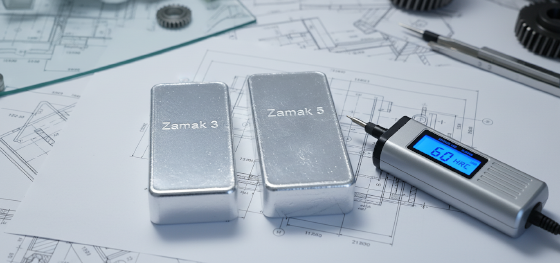
Navigating the chemical properties of different metal ingots prevents disastrous field failures. The technical matrix below highlights exactly when hardware teams should upgrade their baseline material to survive aggressive mechanical environments.
| Alloy Grade | Key Engineering Characteristic | Best Commercial Application |
|---|---|---|
| Zamak 3 | Ultimate balance of castability, dimensional stability, and flawless plating. | Luxury electronics enclosures, cosmetic bathroom hardware. |
| Zamak 5 | Higher copper content provides increased hardness and tensile strength. | Heavy-duty automotive gears, industrial locking mechanisms. |
| Zamak 2 | Maximum hardness and highest tensile strength across the entire family. | High-wear bearing surfaces, aggressive mechanical tools. |
Most commercial projects default strictly to die cast zamak 3 because it reliably handles nearly every cosmetic requirement seamlessly. Upgrading your material selection is necessary only when your component faces severe mechanical abuse. Deploying zamak 5 die casting introduces noticeably greater hardness for critical load-bearing assemblies.
Machine Synergy: Dominating with Submerged Pumps
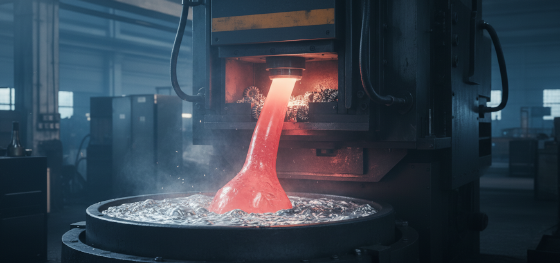
Why does manufacturing this metal happen at double the speed of traditional foundries?
Because the low melting point allows the entire hydraulic pumping mechanism to sit permanently submerged in the boiling crucible, executing rapid-fire closed-loop injections.
Heating metals to extreme temperatures usually dissolves the internal steel components of the factory machinery. Lower melting points completely neutralize this catastrophic threat. Factories successfully utilize the hot chamber die casting process to continuously suck up liquid metal and fire it into the mold without any slow robotic ladling delays.
Eliminating the robotic transfer also prevents atmospheric oxygen from contaminating the liquid metal. This closed-loop speed dramatically lowers your per-unit manufacturing cost while ensuring your micro-precision hardware remains absolutely free of brittle oxide inclusions.
JUCHENG Hub: Turnkey Solutions Shipped Globally
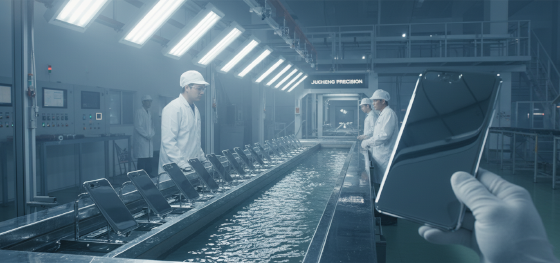
Why must you partner with a factory that owns dedicated electroplating lines?
Because shipping raw, unfinished metal across town to a third-party plating shop guarantees surface scratching, logistical delays, and massive finger-pointing when the chrome inevitably peels off.
Delivering true turnkey hardware requires executing every single manufacturing phase under one roof. Operating our massive Shenzhen precision manufacturing hub gives procurement teams a flawless, closed-loop supply chain. We melt the ingots, execute the high-speed injection, and drop the parts directly into our automated surface finishing baths.
Stop letting cheap brokers ruin your premium cosmetic hardware. Send your intricate 3D CAD files to our engineering team today for a comprehensive DFM review. We will optimize your net-shape geometries, completely eliminate your secondary CNC costs, and deliver flawless, mirror-polished components ready for global retail.
FAQ: Honest Answers About Rust, Weight, and Tolerances
Does this dense metal rust rapidly like cast iron or steel?
No, it contains no iron and therefore cannot develop red rust. However, it will develop a dull white oxidation layer if exposed to moisture, making plating or powder coating mandatory for aesthetics.
Can I use my existing aluminum mold to cast these micro-precision parts?
No. The shrinkage rates between the two metals are vastly different. Pumping zinc into a tool designed for aluminum will result in parts that fail to meet strict dimensional tolerances.
What is the absolute thinnest wall you can cast with this alloy?
Because of its incredible fluidity under high pressure, we routinely cast structurally rigid walls down to 0.5mm for highly compact electronic telecommunication housings.
Why do some cheap components suffer from dimensional changes over time?
This is known as "aging shrinkage." It only happens if the factory uses impure, low-grade ingots contaminated with lead or tin. We strictly utilize high-purity virgin ingots to prevent geometric drift.

