


Replacing heavy steel brackets with lightweight metal completely transforms your product's performance. Procurement teams constantly chase weight reduction to extend battery life in electric vehicles and increase payload capacity in commercial drones. Selecting aluminum die casting drastically slashes shipping weights without sacrificing the structural integrity required to survive harsh industrial environments. Sourcing these components from cheap brokers, however, usually results in porous, ugly parts that shatter under stress.
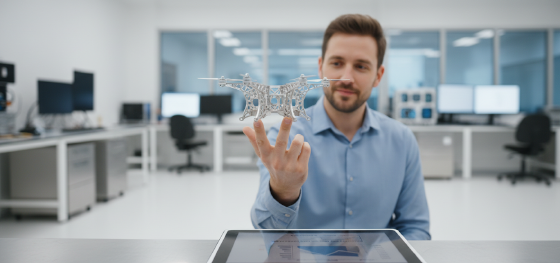
Evaluating raw die casting materials on a spreadsheet never reveals the actual manufacturing nightmares hidden on the factory floor. Liquid aluminum aggressively attacks steel molds, shrinks rapidly upon cooling, and often leaves a visually terrible surface finish that requires massive secondary processing. Operating directly from our Shenzhen precision manufacturing hub, Jucheng Precision tackles these specific metallurgical hurdles every single day.
Securing reliable, high-strength hardware requires understanding exactly how this specific alloy behaves under extreme hydraulic pressure. Let's dissect why this lightweight metal dominates the automotive industry, which specific chemical grades you should select, and why true commercial success relies heavily on your supplier's in-house finishing capabilities.
content:
The Industry Standard: Why Aluminum Dominates Manufacturing?
Thermal and Structural Properties: What Makes It Special?
Grade Selection: Choosing Between A380, ADC12, and A360
Machine Pairing: Surviving the High Melting Point
JUCHENG Hub: End-to-End Metal Manufacturing
FAQ: Honest Answers About Anodizing and Corrosion
The Industry Standard: Why Aluminum Dominates Manufacturing?
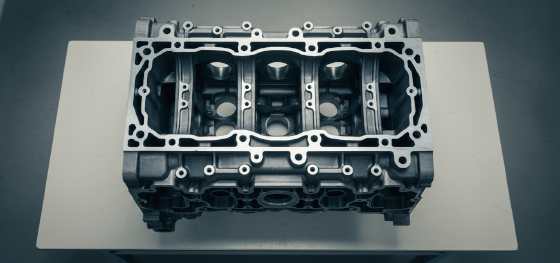
Why do automotive and aerospace giants rely so heavily on this specific metal?
It provides an unbeatable strength-to-weight ratio, allowing engineers to shed massive amounts of weight from engine blocks and chassis frames while maintaining excellent dimensional stability under extreme operating stress.
Designing massive enclosures using cast iron is mathematically obsolete for modern mobility. Every extra ounce you add to a commercial drone directly reduces its flight time. Deploying aluminum die casting allows you to build incredibly rigid, unyielding structures that feel featherlight in the hands of the end-user.
Beyond just weight savings, this metal flows remarkably well under extreme hydraulic pressure. Engineers can design highly complex geometries, integrating dozens of smaller sheet-metal brackets into one single, monolithic shell. This consolidation instantly reduces your assembly labor and simplifies your entire supply chain.
Thermal and Structural Properties: What Makes It Special?
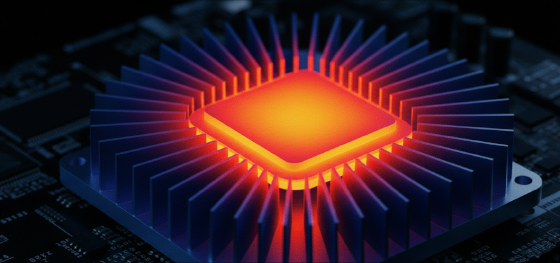
What makes this metal absolutely mandatory for high-performance electronic devices?
Exceptional thermal conductivity allows the entire outer metal housing to function as a massive, natural heatsink that rapidly draws destructive heat away from sensitive internal motherboards and battery packs.
Packing heavy processing power into tiny telecommunication base stations generates massive amounts of internal heat. If you use plastic, the device will literally melt itself. Metal enclosures absorb that thermal energy and radiate it into the atmosphere instantly, protecting your expensive electronics from thermal throttling.
Corrosion resistance is another massive commercial advantage. This metal naturally forms a microscopic oxide layer when exposed to the atmosphere, protecting it from aggressive red rust. This inherent durability makes it the perfect foundational material for outdoor lighting fixtures and rugged military hardware.
Grade Selection: Choosing Between A380, ADC12, and A360
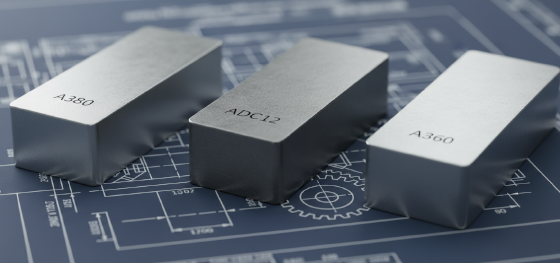
Selecting the exact chemical mix determines your tooling lifespan and your final defect rate. The technical matrix below cuts through the marketing fluff to help you specify the exact metallurgical grade your CAD file demands.
| Metallurgical Grade | Primary Engineering Advantage | Best Commercial Application |
|---|---|---|
| A380 Alloy | Perfect balance of fluidity, strength, and thermal management. | General automotive housings, thick brackets. |
| ADC12 Alloy | Excellent castability and highly optimized for rapid Asian production. | High-volume consumer electronics, heatsinks. |
| A360 Alloy | Superior pressure-tightness and incredible corrosion resistance. | Marine hardware, fluid handling pumps. |
Specifying a380 aluminum die cast material is usually the safest bet for engineers operating in North America, as it handles nearly every structural requirement beautifully. When shifting to heavy mass production, opting for adc12 die casting material aligns perfectly with global supply chains. For parts that must hold pressurized liquids without leaking, deploying a360 aluminum die-casting alloy is absolutely non-negotiable.
Machine Pairing: Surviving the High Melting Point
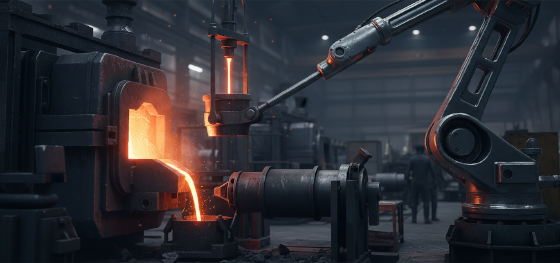
Why must this specific metal be injected using specialized isolated machinery?
Because its extremely high melting point will aggressively chemically attack and dissolve standard submerged steel pumps, requiring factories to utilize a separate furnace and robotic pouring ladles.
Handling liquid metal at 1,200 degrees Fahrenheit destroys cheap factory equipment. Utilizing the cold chamber die casting process is mandatory to keep the brutal heat away from the machine's delicate hydraulic systems. A robotic arm must precisely transfer the glowing liquid into a cold steel cylinder just milliseconds before injection.
Managing this transfer perfectly prevents atmospheric oxygen from contaminating the shot. If a low-tier supplier uses manual labor to scoop the metal, your parts will end up filled with brittle oxide inclusions that shatter during field deployment.
JUCHENG Hub: End-to-End Metal Manufacturing
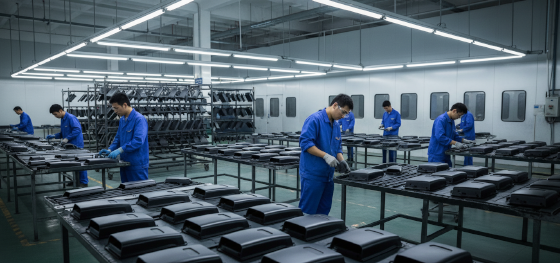
Why is relying on a single turnkey manufacturer absolutely critical for this metal?
Raw castings are visually ugly and require immediate surface finishing and CNC threading; separating these complex steps across multiple vendors guarantees logistical delays and poor quality control.
Dropping a raw, unfinished metal housing onto a boardroom table looks terrible. Because these specific alloys contain high levels of silicon, they are notoriously difficult to anodize beautifully. You must rely on advanced powder coating, painting, or specialized chemical conversion coatings to achieve a premium retail aesthetic.
Operating our Shenzhen precision manufacturing hub, Jucheng Precision handles this entire headache internally. We cast the parts, load them directly into our 150+ CNC machines for precision threading, and route them straight into our surface finishing booths. Send your CAD files to our engineering team today for a free DFM review, and let us deliver ready-to-assemble hardware that looks as good as it performs.
FAQ: Honest Answers About Anodizing and Corrosion
Why do manufacturers warn against trying to bright-anodize these parts?
The high silicon content required to make the liquid metal flow smoothly turns black or dark gray during the anodizing process, making bright cosmetic colors mathematically impossible to achieve.
Will my parts need heavy CNC machining after they leave the mold?
General contours are highly accurate, but you must always use secondary CNC machining to create precise O-ring sealing grooves and finely tapped mounting holes.
How long does a steel mold actually last when processing this metal?
Due to severe thermal fatigue and heat-checking on the steel surface, tooling life typically maxes out around 100,000 shots before requiring maintenance or a full rebuild.
Can these metal components be safely welded to other structures?
Only if they are produced using specialized vacuum-assisted systems. Standard high-speed injections trap internal air bubbles that will violently pop and destroy the weld seam during heating.

