


Selecting the ideal material profile for a highly cosmetic, structural enclosure can quickly define your product development timeline. Utilizing aluminum sheet metal fabrication provides the optimal balance of low physical mass, high thermal conductivity, and natural atmospheric corrosion resistance. For engineers designing modern consumer electronics, electric vehicle housings, and medical devices, this lightweight alloy is the primary choice to optimize both functional performance and industrial aesthetics.

Steel parts are incredibly robust, but their high weight can quickly compromise portable devices and mobile assemblies, leading to high shipping costs and poor user ergonomics. Heavy alloys also require extensive secondary finishing to prevent rust, whereas lighter non-ferrous metals develop a protective oxide barrier immediately upon exposure to air, maintaining a clean finish with minimal maintenance.
Balancing the mechanical ductility of the metal against the requirements of high-speed cutting is what separates cost-effective hardware designs from failed prototypes. Let's examine why this material dominates lightweight designs, analyze the mechanical differences between key alloy grades, and explore how modern processing techniques protect delicate cosmetic surfaces during manufacturing.
content:
Why Choose Aluminum?
Popular Aluminum Grades: 5052 vs. 6061
Laser Cutting and Welding Aluminum
Premium Finishes: Anodizing and Brushing
Aluminum vs. Stainless Steel
FAQ: Critical Questions About Aluminum Sheet Metal Fabrication
Why Choose Aluminum?
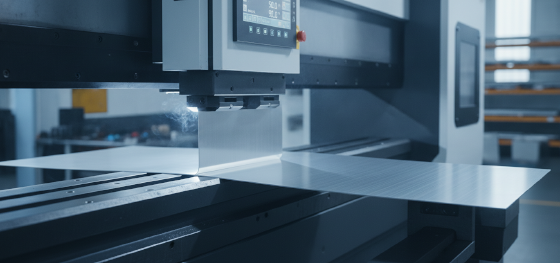
What makes aluminum the best alloy for portable hardware casings?
Aluminum possesses roughly one-third the weight of steel while offering excellent ductility for bending, natural corrosion resistance, and outstanding electromagnetic shielding.
When a project requires structural strength without a heavy weight penalty, an aluminum alloy is the ideal engineering solution. Because it is highly ductile, the material flows smoothly under press brake tooling, allowing for tight bends without micro-cracking. It is also an excellent thermal conductor, turning your chassis into a giant heat sink to dissipate heat from internal PCBs.
Another key advantage is its raw cosmetic potential. Unlike carbon steels that require thick coatings to hide surface imperfections, aluminum is highly compatible with electro-chemical treatments. This allows you to achieve metallic, premium surface finishes that are integrated into the material itself, resisting wear and scratching over years of daily handling.
Popular Aluminum Grades: 5052 vs. 6061
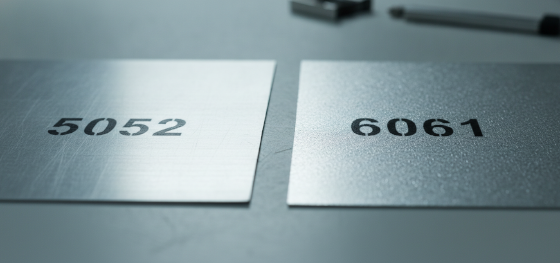
Which aluminum grade is best for custom folded brackets and housings?
Use 5052 for folded parts that require tight bend radii, and select 6061 for heavy-duty components that require structural rigidity and high CNC machining compatibility.
To extract maximum utility from aluminum sheet metal fabrication, designers must understand the physical differences between the primary structural alloys. Bending a high-strength, brittle alloy past its elongation limits will instantly tear the material fibers along the fold line. Selecting the correct raw grade is essential to prevent structural failures on the shop floor.
For standard enclosures, brackets, and cabinets, 5052-H32 is the undisputed industry workhorse. It features high fatigue strength and excellent formability, allowing for tight, reliable bends without cracking. In contrast, 6061-T6 is a precipitation-hardened alloy with superior yield strength, making it ideal for machined panels or heavy load-bearing frames. However, 6061-T6 is highly prone to cracking when folded, requiring much larger radii to accommodate the material stress.
Laser Cutting and Welding Aluminum
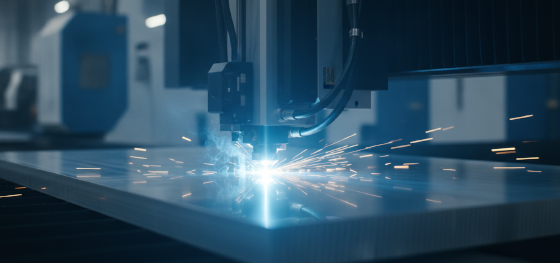
Why does aluminum require specialized CNC cutting lasers?
Aluminum is a highly reflective material that can bounce laser beams back into the cutting head, requiring advanced optical systems to manage the feedback without damaging the machine.
Traditional CO2 laser cutters struggle with highly reflective materials. To cut these alloys safely and cleanly, modern facilities utilize advanced fiber laser cutting systems. These machines concentrate high-density energy onto a micro-focused spot, vaporizing the reflective metal instantly before the beam can bounce back and damage the optical system.
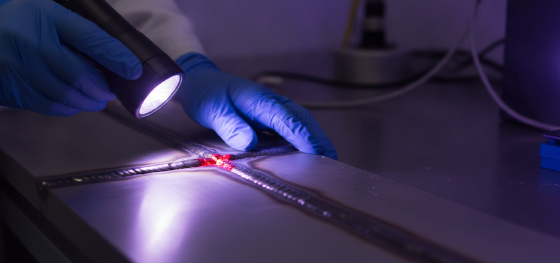
Welding aluminum also introduces unique metallurgical challenges. Because it dissipates heat rapidly and instantly forms a tough oxide layer on its surface, our certified operators execute high-frequency TIG welding under clean inert gas shields. This prevents weld porosity, ensuring that your joined panels remain structurally solid and ready for surface preparation.
Premium Finishes: Anodizing and Brushing
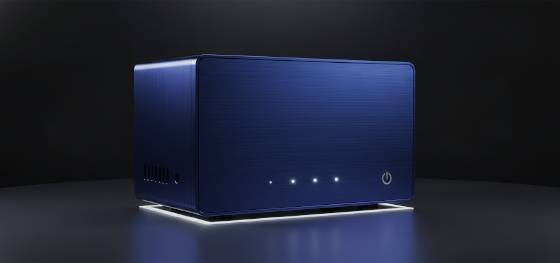
How do you achieve an aesthetic, wear-resistant coating on raw aluminum parts?
We execute progressive mechanical brushing to remove extrusion lines, followed by electro-chemical anodizing to build an integrated oxide layer that accepts custom dyes.
Raw aluminum straight from the press brake often displays minor tool marks. To achieve a high-end cosmetic finish, we recommend a combination of physical and chemical post-processing. Running the panels through automated brushing rollers creates a uniform, textured grain that hides raw metal imperfections.
We then perform electro-chemical anodizing. This process submerged the metal into an acid bath, passing an electric current to artificially grow the natural oxide layer. The resulting porous structure is highly receptive to organic dyes, allowing us to lock in vibrant metallic colors (such as deep black, silver, or blue) that will not peel, chip, or flake over time.
Aluminum vs. Stainless Steel
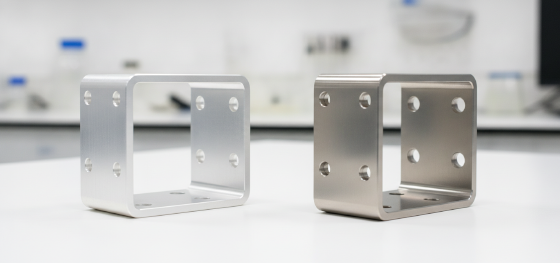
When should a product designer choose aluminum over stainless steel?
Select aluminum when weight reduction, electrical conductivity, and cost are the primary design drivers; choose stainless steel when high-temperature limits or extreme chemical resistance are required.
Choosing between aluminum and steel is a fundamental decision when selecting a sheet metal material for your product shell. While stainless steel provides unmatched mechanical strength and chemical resistance (essential for surgical instruments and marine equipment), it is roughly three times heavier than aluminum, making it highly impractical for portable assemblies.
Aluminum also offers superior electrical and thermal conductivity, allowing for integrated grounding and cooling pathways. At JUCHENG, we don't force you into a single material. We provide full-service manufacturing across both metals, analyzing your mechanical requirements to help you choose the most economical alloy for your specific B2B application.
FAQ: Critical Questions About Aluminum Sheet Metal Fabrication
How do you calculate the correct bend allowance for aluminum alloys?
The calculation depends on the material thickness, the chosen inner radius, and the K-factor. Because aluminum stretches differently depending on its temper (such as 5052-H32 vs. 6061-T6), we calibrate our unfolding software with precise, empirical bend allowance data to ensure the flat pattern cuts match your target dimensions after folding.
What causes cracking on the outer radius during aluminum bending?
Outer-edge cracking occurs when the inner bending radius is set too sharp for the material's ductility, forcing the outer fibers past their ultimate tensile strength. To prevent this, we maintain a minimum bend radius that corresponds to the specific thickness and temper of the selected sheet, and bend across the grain direction whenever possible.
Why is pre-plating important before assembling aluminum panels?
Applying chemical conversion coatings (such as chromate conversion) before final assembly ensures that the overlapping flanges are protected from corrosion. It also provides a low-resistance electrical contact point, which is crucial for grounding electronic sub-assemblies inside custom chassis.
How does JUCHENG prevent tool marks during aluminum sheet metal fabrication?
Aluminum is a soft metal that is highly vulnerable to surface scratching from press brake dies. To prevent cosmetic damage, our press operators utilize specialized urethane die inserts or apply protective vinyl masking films to the sheets before bending, delivering clean, scratch-free panels ready for immediate anodizing.

