


In the world of Rapid Tooling, one material is the undisputed champion of speed. It is the engine that makes "rapid" possible. That material is aluminum.
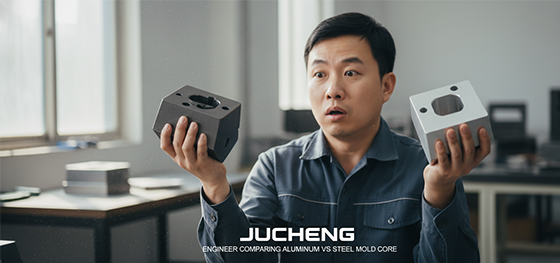
Many people are surprised by this. Isn't a mold supposed to be made of hard, durable steel? Yes, for mass production. But for the critical phase of low-volume production, a different set of rules applies.
Understanding the "why" behind Aluminum tooling is key to understanding the strategic power of this process. This guide will explore the two superpowers of aluminum that make it the perfect choice for accelerating your product launch.
content:
The Need for Speed: Why Not Steel?
Aluminum's Superpower #1: Machinability
Aluminum's Superpower #2: Heat Dissipation
Case Study: Prototyping for an Automotive Accessory
Your Smartest Path to Market
The Need for Speed: Why Not Steel?
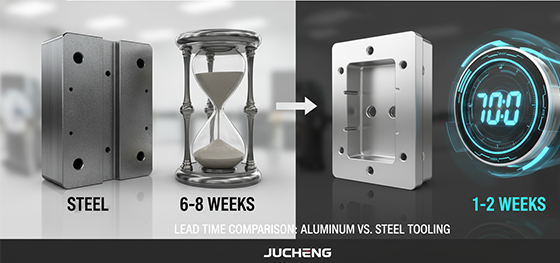
A traditional production mold is made from hardened tool steel, like H13. This material is incredibly hard and durable. It is designed to last for a million shots or more. But this durability comes at a huge cost: time.
Hardened steel is very difficult and slow to machine. Creating a complex production mold from steel is a painstaking process that can take 6 to 12 weeks, or even longer.
For a startup that needs to get to market fast, or for a company needing a bridge production run, this long wait is a major problem. The goal of rapid tooling is to shrink this timeline from months to days. This is impossible with steel. This is where aluminum enters the story.
Aluminum's Superpower #1: Machinability
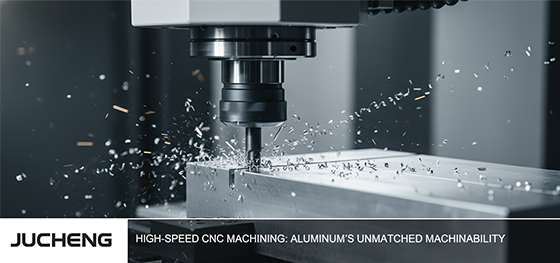
The first superpower of aluminum is its incredible machinability. High-grade aluminum alloys, like 7075, are much softer than tool steel.
This means a CNC machine can cut through it much, much faster. A cutting tool can move at higher speeds and take deeper cuts. The material removal rate can be three to five times faster than with steel.
This dramatic difference in machining time is the primary reason why an aluminum tool can be created so quickly. An entire mold cavity that might take 100 hours to machine in steel could potentially be finished in just 30 hours in aluminum. This is the core of "rapid."
At JUCHENG, we keep a stock of high-quality 7075 aluminum blocks ready. This means we can often start machining your tool the very same day you approve the design.
Aluminum's Superpower #2: Heat Dissipation
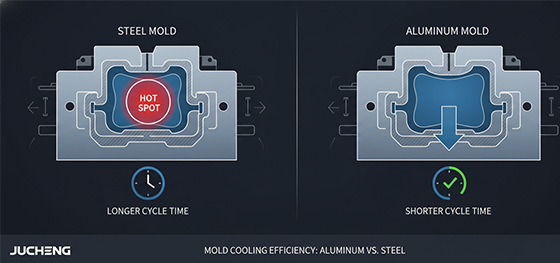
The second, and often overlooked, superpower of aluminum is its excellent thermal conductivity. It transfers heat far more efficiently than steel. This has a huge impact on the injection molding cycle time.
The longest part of any molding cycle is cooling. The part must cool down and become solid before the mold can open.
Because an aluminum tool pulls heat out of the plastic part much faster than a steel tool, the cooling time can be significantly reduced. A cycle that might take 45 seconds in a steel tool could take only 30 seconds in an aluminum tool.
This might not sound like much. But over a production run of 5,000 parts, this faster cycle time adds up to a huge saving in machine time. This saving is passed on to you in the form of a lower price per part.
Case Study: Prototyping for an Automotive Accessory
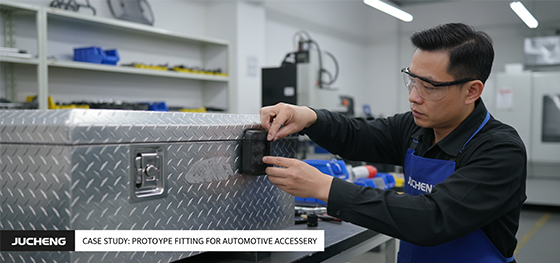
So how is this used in the real world? Let's consider a client developing a new line of automotive accessories.
They were designing a popular product, an aluminum truck tool box. This box needed a new, complex plastic latch cover. The cover had to fit perfectly onto the main metal box.
Committing to a $50,000 steel mold for the latch cover before they had even tested the fit was too risky. Instead, JUCHENG used Aluminum tooling to create a low-cost rapid tool.
In just two weeks, we delivered 500 perfect, production-grade plastic latch covers. The client was able to use these parts to perform real-world assembly tests. They discovered a small design flaw in the fit. They were able to update their CAD design before the main production tool was made, saving them from a hugely expensive mistake.
Your Smartest Path to Market
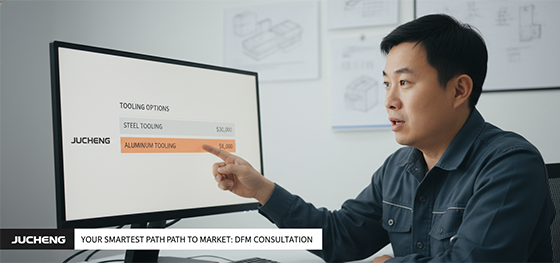
Is an aluminum tool as durable as a steel tool? No. It is not designed for millions of cycles. A typical aluminum tool is good for a few hundred to about five thousand shots.
But for that specific "bridge" quantity, it is the perfect solution. It is faster to make. It produces parts faster. And it is much, much cheaper.
Choosing Aluminum tooling is a strategic decision. It is about choosing speed and flexibility. It is about reducing risk. It is about finding the smartest, most efficient path to get your product into the market.

