


Specifying arbitrary geometric constraints incinerates production budgets before the machine spindle even engages. Machinists battle severe tool deflection when attempting to carve perfect internal cylinders deep within hardened steel billets. Fluid dynamics and kinetic vibrations dictate the absolute survival rate of strict CNC Hole Tolerances during high-volume precision manufacturing.
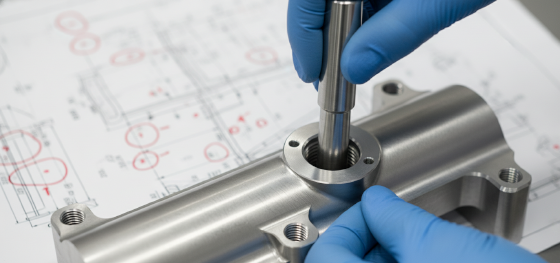
Deciding between a standard drilled void and a precisely reamed ISO H7 press-fit separates brilliant engineering from financial catastrophe. Standard twist drills inherently wander upon entry, creating slightly triangular geometries completely unsuitable for critical rotational bearings. Engineers must mathematically justify the massive secondary tooling expenses required to achieve true micron-level cylindrical perfection.
Mastering this specific dimensional matrix actively prevents crippling assembly line bottlenecks. Procurement teams must brutally evaluate thermal soak expansion, machine spindle runout, and the staggering cost of custom solid carbide reamers. Precision hardware success relies entirely on matching the designated cutting methodology to the exact mechanical load-bearing requirement.
Standard Drilling vs Precision Reaming: Where Is the Divide?
Does an H7 Press-Fit Actually Prevent Bearing Seizure?
Are You Wasting Budget on Unnecessary CNC Hole Tolerances?
Will Thermal Expansion Ruin Your Go/No-Go Gauge Inspections?
Can Boring Bars Effectively Replace Expensive Custom Reamers?
How Do Jucheng Engineers Verify Micron Fits in Shenzhen?
What Are the Most Critical CNC Hole Machining FAQs?
Standard Drilling vs Precision Reaming: Where Is the Divide?

Standard drilling violently tears through metal, leaving severe spiral tool marks and unpredictable diametrical oversizing, whereas precision reaming gently shaves the internal wall to lock the dimension into a verifiable ISO tolerance band.
The physical chisel edge of a standard twist drill mathematically guarantees a slightly non-circular hole. As the drill bit extends further from the collet, kinetic leverage amplifies microscopic spindle runout into massive tool chatter. This deflection ruins the internal surface finish and destroys the geometric cylindricity necessary for mechanical shafts.
Transitioning to precision reaming requires drilling a pilot hole slightly undersized, leaving exactly enough stock material for the fluted reamer to scrape away. Reamers contain multiple straight or helical flutes that follow the existing void, physically ironing out the rough ridges. This secondary operation ensures the cavity achieves an absolute mirror-like finish.
| Machining Operation | Typical Tolerance Limit | Surface Finish (Ra) | Primary Engineering Use Case |
|---|---|---|---|
| Standard Twist Drilling | +/- 0.100 mm | Rough (3.2 to 6.3 µm) | Standard bolt clearance, fluid channels |
| Machine Reaming | +/- 0.010 mm (H7/H8) | Smooth (0.8 to 1.6 µm) | Dowel pin alignment, light press-fits |
| Single-Point Boring | +/- 0.005 mm | Mirror (0.4 to 0.8 µm) | High-speed bearing journals, heavy locators |
Does an H7 Press-Fit Actually Prevent Bearing Seizure?

Demanding an H7/g6 tolerance matrix becomes absolutely mandatory when engaging high-speed steel bearings into static aluminum housings to physically prevent the outer race from spinning freely.
If the CNC cavity is engineered a fraction of a micron too large, kinetic vibration forces the bearing to slip. The outer race actively grinds against the soft aluminum wall, instantly galling the material and destroying the entire gearbox housing. Precision engineering relies entirely on this microscopic interference friction.
Conversely, an excessively undersized cavity brutally crushes the bearing shell during assembly. This inward radial pressure compresses the delicate internal ball bearings against their tracks, destroying the designed clearance. The mechanism overheats immediately upon activation, guaranteeing catastrophic kinetic seizure within minutes of the motor starting.
Are You Wasting Budget on Unnecessary CNC Hole Tolerances?

Specifying an ISO H7 fit for a simple clearance hole designed merely to pass a standard mounting bolt represents a terrifying waste of raw financial capital and spindle time.
Reaming deep, blind cavities requires extremely slow feed rates and aggressive high-pressure coolant to flush out the microscopic chips. If the dense titanium chips fail to evacuate, they wrap around the flutes and violently snap the expensive custom carbide reamer deep inside the workpiece, turning the entire billet into immediate scrap.
Forcing machinists to hit tight diametrical bands on non-critical geometric features spikes your non-recurring engineering (NRE) costs for absolutely zero functional gain. Procurement teams must ruthlessly audit their CAD blueprints, downgrading non-bearing holes to standard drilled tolerances to artificially accelerate the manufacturing cycle.
Will Thermal Expansion Ruin Your Go/No-Go Gauge Inspections?
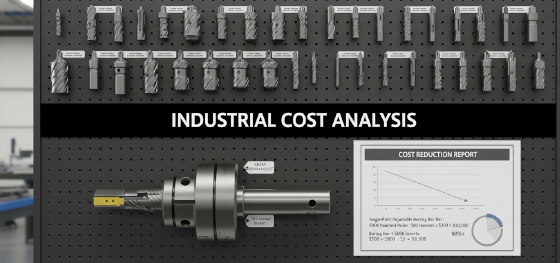
Thermal soak physically distorts the atomic lattice of the workpiece during aggressive roughing passes, mathematically invalidating any micrometer measurements taken while the metal remains hot.
Measuring a freshly reamed aluminum bore while the metal glows with kinetic heat delivers deeply flawed inspection data. The CNC operator might confirm a perfect dimension on the machine bed. However, once the billet cools to ambient room temperature, the cavity shrinks violently inward.
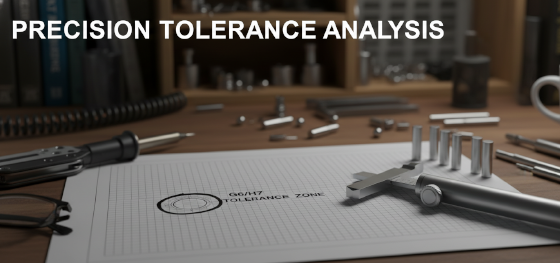
This post-machining shrinkage causes the previously passed component to instantly fail a cold hardened steel Go/No-Go plug gauge test in the quality assurance lab. Elite machine shops actively flood the cutting zone with temperature-controlled coolant and mandate lengthy cooling periods before officially verifying micron-level interference fits.
Can Boring Bars Effectively Replace Expensive Custom Reamers?
Single-point boring bars offer a highly economical alternative to custom solid reamers for internal diameters exceeding twenty millimeters, drastically reducing tooling inventory costs.
Custom-sized carbide reamers cost hundreds of dollars each and degrade rapidly when shearing abrasive D2 tool steel. Once the reamer wears down by two microns, it cuts undersized and becomes completely useless. You cannot dynamically adjust a solid reamer; you must throw it away and purchase a brand-new tool.
A boring head houses a single, incredibly cheap replaceable carbide insert. The programmable head allows CNC operators to digitally dial in specific microscopic offsets via the machine controller. If the insert wears down, the machinist simply adjusts the offset parameter by 0.001mm to compensate instantly, keeping production running continuously.
How Do Jucheng Engineers Verify Micron Fits in Shenzhen?
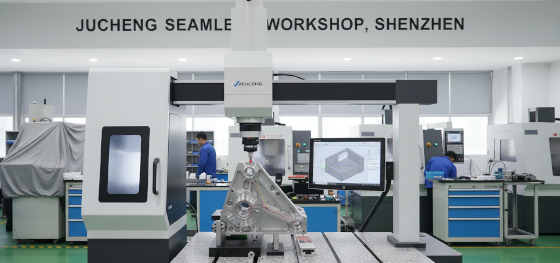
Operating deep within the Shenzhen precision manufacturing hub, Jucheng deploys ultra-rigid 5-axis kinematics and optical CMMs to eradicate catastrophic spindle runout.
Navigating [2026] global hardware procurement demands an absolute elimination of analog measurement guesswork on the shop floor. Relying on digital calipers to verify an H7 bearing journal guarantees assembly failure. Our quality assurance teams utilize certified hardened steel plug gauges inside heavily climate-controlled 20°C laboratories.
We execute rigorous Free DFM reviews on your CAD blueprints before the spindle turns. Our engineers proactively downgrade your unnecessary tight tolerances to slash your machining costs while flawlessly preserving your critical bearing press-fits. Backed by ISO9001:2015 protocols, we manufacture intelligent, verified hardware without MOQ restrictions.
What Are the Most Critical CNC Hole Machining FAQs?
Resolving hardcore kinetic variables prevents devastating assembly failures when designing thick metal profiles for precision industrial fabrication.
Can you achieve an H7 tolerance using only a standard twist drill?
Absolutely not. Standard twist drills wander slightly upon entry and inherently cut oversized due to the violent physical mechanics of their chisel edge. Achieving a certified H7 press-fit requires a dedicated secondary reaming or single-point boring operation to smooth the walls perfectly.
Does deep hole drilling increase the risk of tolerance failure?
Yes, severely. As the cutting tool extends further from the rigid spindle collet, mechanical leverage amplifies microscopic spindle vibrations into massive tool chatter. This violent deflection ruins the internal surface finish and utterly destroys the geometric cylindricity of the deep bore.
Why do machinists use Go/No-Go plug gauges instead of digital calipers?
Sliding calipers suffer from Abbe error (jaw bending) and cannot physically measure the deep internal geometry of a narrow bore accurately. Hardened steel plug gauges provide an instant, foolproof mechanical verification of the entire cylindrical tolerance band without human reading errors.

