


Freezing your hardware design based strictly on theoretical computer files is a dangerous commercial gamble. Sourcing physical parts is the only way to verify real-world wind resistance and internal board clearances. Evaluating cnc machining vs die casting for prototypes early prevents your startup from taking on devastating development debt before first flight trials.
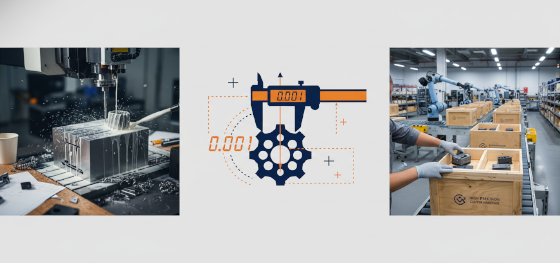
Rushing into mass production without testing physical fits is a massive financial trap. Startups often waste valuable capital demanding permanent steel molds before validating their final design, while mature corporations waste time on slow cutting paths when they should be mass-producing. Deciding between die casting vs cnc machining keeps your early-stage cash flow completely secure.
Consolidating your early-stage prototyping with an agile contract manufacturer ensures your engineering team designs for commercial survival. Let's dissect why buying hard tools for first-round designs is financial suicide, explore how multi-axis mills simulate cast parts flawlessly, and analyze alternative polymer replication methods.
content:
Tooling Avoidance: Why V1 Prototypes Reject Hard Molds
Milled Replicas: Simulating Cast Geometry with Multi-Axis Cutting
Polyurethane Replication: Vacuum Casting for Lightweight Shells
Scaling Gracefully: Transitioning to Small Batch Runs
FAQ: Honest Answers About Prototyping and Verification
Tooling Avoidance: Why V1 Prototypes Reject Hard Molds
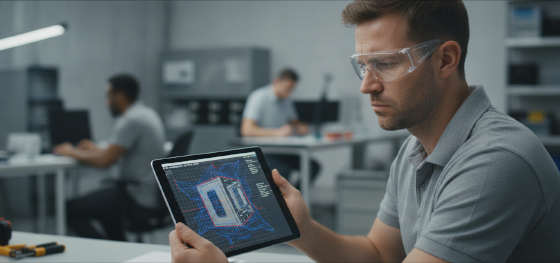
Why must engineers avoid building permanent steel molds during the initial design phase?
Because early designs inevitably contain geometric errors, and modifying completed steel molds is extremely expensive, causing massive product launch delays.
Procurement teams often panic when they receive their first official tooling invoices. Spending fifty thousand dollars on a steel mold just to test ten early-stage components makes zero commercial sense.
Managing your initial cnc machining vs die casting for prototypes budget requires bypassing these massive capital barriers completely. You must utilize flexible, temporary production pathways that allow you to modify your design daily.
Milled Replicas: Simulating Cast Geometry with Multi-Axis Cutting

How can factories simulate the exact physical properties of a cast part without building a mold?
By employing advanced 5-axis CNC machining to carve complex, thin-walled geometries directly from solid pre-compressed aluminum billets.
Solid billets are pre-forged and completely free of the microscopic internal gas pockets that naturally form inside cast metal during cooling. This structural density ensures your test parts survive brutal drop testing flawlessly.
Milling raw blocks of aluminum comfortably achieves tight, microscopic tolerances down to five microns. This high-precision approach is why leading hardware developers specify cnc machining vs die casting for prototypes to ensure perfect mechanical alignment.
Polyurethane Replication: Vacuum Casting for Lightweight Shells
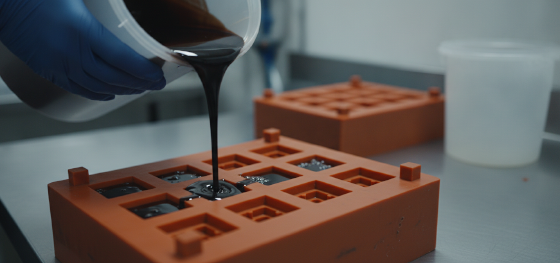
What rapid manufacturing process works best for small batches of cosmetic plastic covers?
Pouring liquid polyurethane into flexible silicone master molds under deep vacuum pressure, which replicates injection-molded quality flawlessly.
Pitching medical hardware to venture capitalists demands breathtaking physical models. SLA and SLS 3D printing provide incredible speed, but they produce porous, rough surfaces that look like cheap garage projects.
Silicone replication completely solves this commercial hurdle. Vacuum casting produces flawless polyurethane copies that perfectly mimic mass-produced consumer plastics, allowing your sales team to secure early-adopter contracts.
Scaling Gracefully: Transitioning to Small Batch Runs
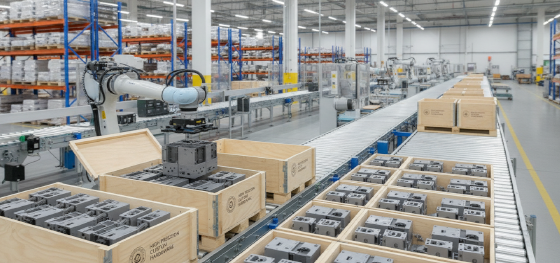
Comparing manufacturing methodologies based on your current volume goals prevents massive budget overruns. The technical matrix below outlines how different rapid methods support specific developmental milestones.
| Developmental Milestone | Best Prototyping Choice | Key Verification Advantage |
|---|---|---|
| 1 to 10 Units (Alpha) | 5-Axis Milling (CNC) | Zero mold debt, instant design changes, real aerospace alloys. |
| 10 to 50 Units (Beta) | Vacuum Casting (Silicone) | Flawless injection-molded surface finish for presentations. |
| 100 to 5,000 Units (Pilot) | low volume production cnc vs die casting | Bridges prototyping with cheap, modular tooling inserts. |
Sourcing cnc machining vs die casting for prototypes runs with JC Rapid is incredibly simple. We maintain a highly flexible, fully audited facility, allowing us to run short batches of 100 to 5,000 pieces with highly competitive tooling and piece pricing.
Stop paying outrageous unit prices for slow subtractive milling or high-NRE mold tooling. Send your complex CAD files to our engineering team today for a comprehensive, manual DFM flow analysis and secure a highly optimized dual-quote.
FAQ: Honest Answers About Prototyping and Verification
Does the complexity of the internal geometry increase my cnc machining vs die casting for prototypes cost?
Yes, complex internal features require extended spindle time, which increases the initial machining invoice. However, the complete elimination of mold NRE debts makes it highly economical for short runs.
Can I run zinc and aluminum through the exact same steel mold?
No. Because different metals shrink and contract at completely different rates, pouring aluminum into a mold designed for zinc will result in parts that fail to meet your dimensional tolerances.
Do you charge extra fees for mandatory Material Test Reports?
Providing complete chemical certifications (CoA) and RoHS compliance certificates with every single delivery is our standard practice, included entirely free of charge.
Will the soft rapid tools wear out quickly during production?
Softer steel and aluminum alloy molds naturally degrade faster than hardened steel, but they easily survive two to five thousand shots before showing any dimensional wear.

