


Sourcing custom metal parts for a new hardware launch often feels like a massive guessing game. Procurement teams frequently struggle to decide between paying for expensive steel molds or spending hours on a milling machine. Comparing die casting vs cnc machining directly resolves this common production dilemma. Your choice between these two metalworking giants dictates your entire budget, delivery speed, and final part performance.
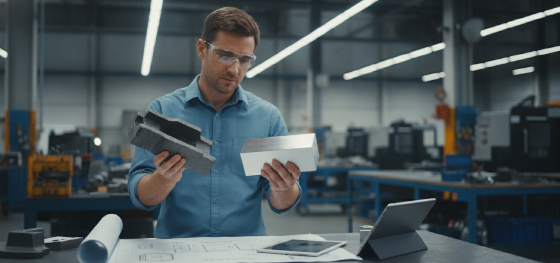
Buying too much machinery or opening high-pressure molds too early represents a dangerous cash flow trap. Startups often waste valuable capital on expensive tooling before validating their final design, while mature corporations waste time on slow cutting paths when they should be mass-producing. Finding the perfect balance between these techniques keeps your production margins healthy.
Partnering with an agile, dual-capability contract manufacturer ensures your engineers design for commercial success. Let's break down the basic physics of cutting versus molding, analyze how volume changes your unit pricing, and explore how combining both methods under one roof slashes your overall expenses.
content:
Cutting vs. Molding: Basic Metalworking Physics
Unit Pricing and Tooling Expenses
Tight Tolerances and Dimensional Accuracy
Structural Strength and Material Defects
Combining Both Methods: Hybrid Factory Secrets
Turnkey Assembly and Sourcing at JC Rapid
FAQ: Honest Answers About CAD Molds and Surface Finishes
Cutting vs. Molding: Basic Metalworking Physics
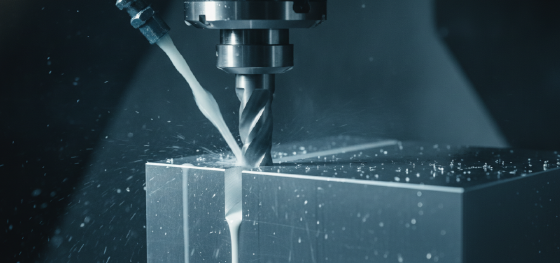
Shaving away metal from a solid block differs completely from pouring hot liquid into a steel mold. CNC milling relies on high-speed spinning cutters to carve features out of solid raw blocks, leaving no draft angles or internal voids behind.
Liquid injection operates on the opposite thermodynamic principle. We melt raw metal ingots and shoot the hot liquid into a steel die under extreme pressure, freezing the metal instantly into your final desired shape.
Choosing between these physical methods depends on your geometric complexity and target volume. Subtractive cutting excels at creating flat, sharp faces and ultra-tight holes, while liquid molding excels at producing thin-walled, lightweight shapes incredibly fast.
Unit Pricing and Tooling Expenses
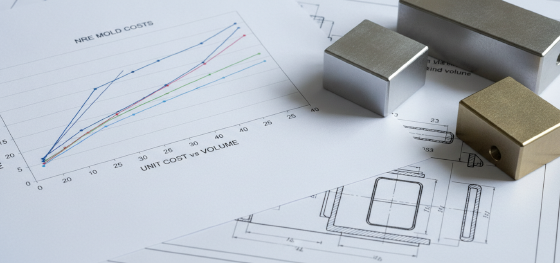
Managing ongoing unit expenses requires looking closely at your total production volume. Sourcing cnc machining vs die casting cost models always comes down to a classic battle between upfront tooling bills and per-part prices.
Upfront mold creation requires a massive capital investment. However, once that steel die is cut, the machine spits out identical parts in seconds, driving down your piece price to mere pennies.
Cutting parts directly from solid billets requires zero tooling debt, making CNC highly economical for early runs. If you are struggling to make a decision, requesting a custom cnc machining vs die casting for prototypes package allows you to test your design cheaply before buying expensive steel.
Tight Tolerances and Dimensional Accuracy
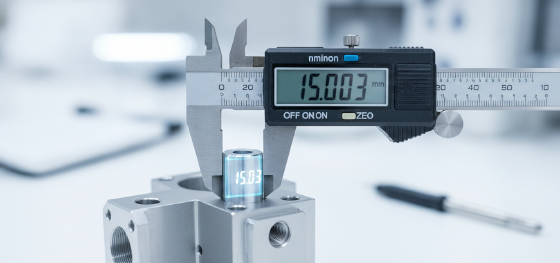
Hitting microscopic limits is the absolute specialty of computer-controlled cutting tools. Comparing die casting vs cnc tolerances reveals that raw cast parts simply cannot compete with the absolute precision of a spinning drill bit.
Molten alloys shrink and contract unpredictably as they freeze inside the mold, which naturally limits as-cast accuracy. Standard casting tolerances are perfectly fine for general housing walls but fail completely on critical bearing seats or O-ring grooves.
Securing absolute zero-gap assembly fitment requires a strategic combination of both methods. We cast the main shape cheaply and then use our milling machines to finish-cut the most critical dimensions to perfect micro-levels.
Structural Strength and Material Defects
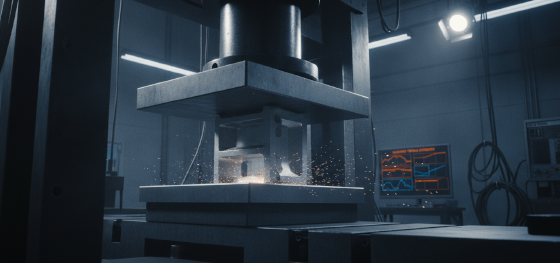
Trusting your structural components to survive heavy physical stress requires analyzing internal metal density. Looking at die casting vs cnc strength metrics reveals that solid extruded billets possess superior molecular integrity compared to molded parts.
Injected metal frequently traps tiny air bubbles during high-speed, high-pressure cycles, creating internal gas voids that weaken the part. These microscopic voids can cause structural cast parts to snap under intense physical impact or heavy vibrations.
We eliminate this structural weakness completely by deploying advanced vacuum-assisted casting. We suck all the air out of the mold cavity milliseconds before injection, delivering ultra-dense, non-porous castings that rival the strength of solid machined blocks.
Combining Both Methods: Hybrid Factory Secrets
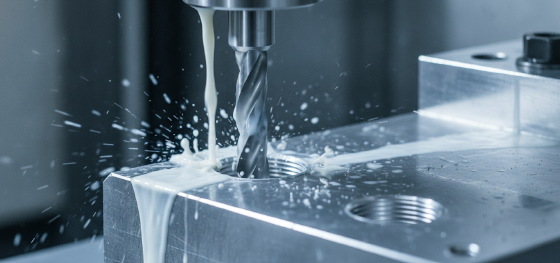
Manufacturing custom hardware successfully often means ignoring the "either-or" debate entirely. Elite factories do not treat these methods as rivals; instead, they integrate them into a seamless hybrid workflow.
Running precise cnc machining die cast parts is the ultimate industry secret to saving money at scale. We cast the complex, thin-walled housing quickly to save material, then use our 5-axis mills to tap the threads and flatten the mating faces flawlessly.
Skipping this turnkey integration by using separate suppliers is a massive mistake. If your machine shop is disconnected from your casting house, they will constantly blame each other for dimensional errors, leaving you with useless scrap.
Turnkey Assembly and Sourcing at JC Rapid
Comparing raw numbers on a spreadsheet is only the first step. The table below outlines how production volume dictates your optimal manufacturing strategy.
| Production Quantity | Best Sourcing Choice | Key Sourcing Advantage |
|---|---|---|
| 1 to 100 Units | 5-Axis Milling (CNC) | Zero mold debt, instant design changes. |
| 100 to 1,000 Units | low volume production cnc vs die casting | Bridges prototyping with cheap, modular molds. |
| 5,000+ Units | High-Pressure Injection | Lowest unit price, fastest cycles. |
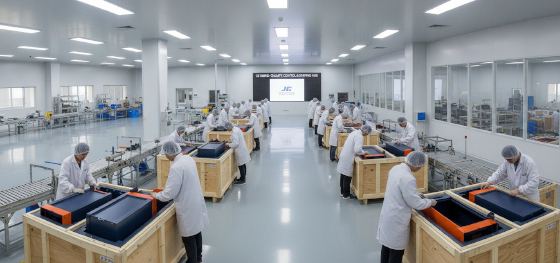
Sourcing metal parts with JC Rapid is incredibly simple. We maintain a highly flexible, fully audited facility, allowing us to run short batches of 100 to 5,000 pieces with highly competitive tooling and piece pricing.
Balancing zinc vs aluminum economics further refines your budget. Selecting the aluminum die casting vs cnc machining path is perfect for lightweight heatsinks, while opting for the zinc die casting vs cnc machining path slashes your tooling debt because zinc molds last millions of shots.
Perfecting your ultimate die casting vs cnc surface finish requires selecting the right post-processing. We house automated bead blasting, anodizing, and powder coating lines in-house, delivering ready-to-assemble hardware directly to your assembly line.
FAQ: Honest Answers About CAD Molds and Surface Finishes
Can I use my existing CNC milling CAD file to cast parts immediately?
No. Solid machined designs must be completely optimized for molten metal flow. We must add specific draft angles and uniform wall thicknesses to prevent the part from getting stuck in the mold.
Why is anodizing cast aluminum much harder than anodizing machined aluminum?
Cast aluminum contains high levels of silicon to help the liquid flow smoothly. This silicon turns an ugly gray or black during chemical anodizing, making powder coating a much better choice for bright cosmetic colors.
How fast can your engineers deliver a final manual quote?
We bypass the inaccurate automated quote tools completely. Our technical team reviews your CAD files manually and delivers an extremely precise, guaranteed quote within twenty-four hours of submission.
Do you provide complete material traceability reports with every delivery?
Providing complete chemical certifications (CoA) and RoHS compliance certificates with every single delivery is our standard practice, included entirely free of charge.

