


Metal in its raw, machined state is a study in potential, but it is also a target for degradation. A block of 6061 aluminum or a plate of mild steel coming off a mill is technically perfect but environmentally vulnerable. Exposure to oxygen, moisture, and manual handling begins the inevitable decline toward oxidation. This is where CNC machining surface treatment evolves from a cosmetic choice to a structural necessity. Among the diverse array of finishes, one method stands above the rest for its combination of durability, environmental responsibility, and sheer aesthetic impact. This is the world of cnc powder coating.
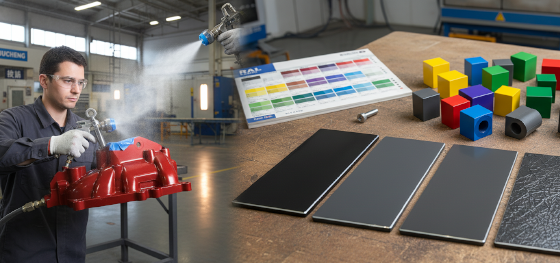
At Jucheng Precision, we recognize that a high-performance part is only as good as its defense system. Powder coating is not merely "dry paint." It is a thermal-chemical bond that creates a seamless plastic skin over a metal substrate. Unlike liquid paints that rely on evaporating solvents—often leaving behind microscopic pores—powder coating utilizes the power of electrostatics to create a dense, cross-linked polymer shield. This guide explores the mechanical rigor JUCHENG applies to the powder-coating cycle, from the physics of the spray to the complex engineering of tolerance masking, ensuring your parts survive the real world while looking flawless.
Efficiency in finishing requires a mastery of both chemistry and geometry. You cannot simply blow powder onto a precision part and expect it to fit. It requires a facility that understands how twenty microns of coating can change the assembly of a gearbox or the fitment of a medical enclosure. Let us dive into the pillars of professional powder coating.
Electrostatic Magic: The Science of the Spray
Precision Fitment: Tolerance Management and Masking
Chromatic Strategy: The RAL System and Aesthetics
Tactile Diversity: Gloss, Matte, and Specialty Textures
JUCHENG’s Standard: Controlled In-House Excellence
Electrostatic Magic: The Science of the Spray
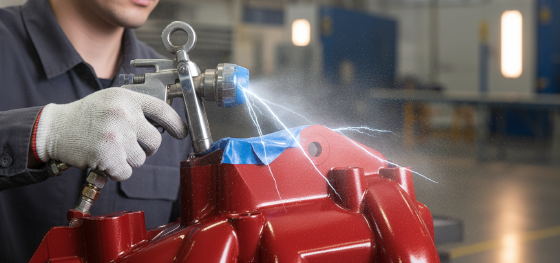
The foundation of cnc powder coating is a phenomenon of physics rather than simple mechanics. The process involves a finely ground mixture of pigment and resin, which is fed through a specialized spray gun. As the powder particles pass through the gun's nozzle, they are imparted with a strong positive or negative electrostatic charge. The metal component, held by a conductive rack, is grounded. This creates a powerful invisible attraction. The charged powder seeks the grounded metal with unerring accuracy, even flying around corners and into recesses to find a landing spot. This is the "wrap-around" effect, and it is the primary reason powder coating provides such superior edge coverage compared to liquid spray, which often leaves "thin spots" on sharp corners.
Once the part is evenly "dusted" with this dry powder, it moves into a curing oven. This is where the true alchemy occurs. At temperatures typically ranging from 180°C to 200°C (350°F to 400°F), the powder particles melt and flow together. But they don't just melt like wax; they undergo a chemical reaction called cross-linking. The polymer chains bond together into a continuous, high-molecular-weight matrix. This results in a finish that is significantly tougher than any air-dried paint. It resists chipping, scratching, and chemical degradation because it is essentially a single, unbroken sheet of durable plastic shrink-wrapped to the metal. At Jucheng Precision, we monitor our oven temperatures with digital precision, ensuring that the cross-linking is complete without over-baking the material, which could lead to brittleness or color shifts.
Precision Fitment: Tolerance Management and Masking
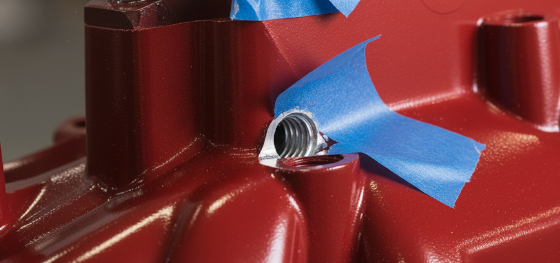
The biggest fear for any engineer specifying cnc powder coating is the "tolerance creep." A standard industrial powder coat adds between 50 to 100 microns (0.002 to 0.004 inches) of thickness to the surface. For a decorative panel, this is irrelevant. For a precision-machined bore designed for a press-fit bearing, this is a disaster. If the coating enters a threaded hole, the screw will seize. If it builds up on a mating surface, the assembly will be misaligned. Precision manufacturing demands that we protect the functional "truth" of the machining while shielding the rest of the part.
Jucheng Precision solves this through a rigorous masking protocol. We utilize high-temperature silicone plugs, specialized Kapton tapes, and custom-designed magnetic shields to protect every critical feature. Our DFM team identifies these "No-Coat Zones" during the quoting phase. We don't just plug holes; we engineer the masking. For complex assemblies, we may even machine specific "masking tabs" that are removed after the coating process. This attention to detail ensures that when you receive your powder-coated parts, they are ready for immediate assembly. There is no need for secondary tapping of holes or scraping of paint from bearing seats. We bridge the gap between heavy-duty protection and micron-level precision, a capability that standard "paint shops" simply cannot provide.
Chromatic Strategy: The RAL System and Aesthetics
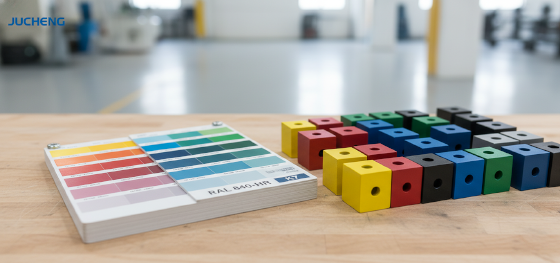
In the global industrial supply chain, "blue" is not a specification. To ensure that a part machined in China matches a part manufactured in Germany, we rely on the RAL color standard. The RAL system provides a universal language of color, assigning a four-digit code to over two hundred standard industrial hues. Whether it is RAL 9005 Jet Black or RAL 7035 Light Grey, the consistency of the powder resin ensures that your brand identity remains identical across every batch and every continent.
Beyond simple color matching, cnc powder coating offers a depth of pigment that liquid paint struggles to achieve. Because the coating is thick and opaque, it provides a "richness" that enhances the perceived value of the metal part. At Jucheng Precision, we maintain a vast library of RAL-certified powders in stock, allowing for rapid turnaround on standard colors. For our clients in the consumer electronics and automotive sectors, color is often the primary touchpoint for their end-users. We treat the application of these pigments with the same rigor we apply to our 5-axis tool paths, ensuring that the coverage is uniform, free of "fish-eyes" or sags, and brilliantly consistent from the first part to the ten-thousandth.
Tactile Diversity: Gloss, Matte, and Specialty Textures

Appearance is only one dimension of a surface finish; the other is the "hand-feel" or texture. Powder coating allows for a degree of tactile customization that is unique among industrial finishes. By altering the resin chemistry and the curing cycle, we can achieve a wide range of surface profiles. High-gloss finishes (90%+) reflect light brilliantly and are easy to clean, making them popular for medical carts and laboratory equipment. Matte and satin finishes, conversely, absorb light and provide a sophisticated, modern look that hides fingerprints and minor surface scratches—ideal for handheld electronics.
For industrial environments where grip and durability are paramount, JUCHENG offers specialty textures like "Sand" or "Wrinkle" finishes. These coatings feature a non-directional, gritty surface that significantly increases the surface area of the coating. This makes the part much harder to scratch and provides an excellent non-slip grip for handles and control knobs. Wrinkle finishes are also an engineer's secret weapon for hiding cast metal imperfections or minor machining vibrations that might be visible under a smooth gloss coat. By selecting the right texture, you aren't just choosing how a part looks; you are choosing how it interacts with the user and how it ages in the field. Our team provides tactile samples to our clients, helping you feel the difference before you commit to a production run.
JUCHENG’s Standard: Controlled In-House Excellence
The greatest risk in CNC machining surface treatment is the fragmentation of the supply chain. If you buy machining from one shop and powder coating from another, you create a gap in accountability. Jucheng Precision eliminates this risk by offering an integrated finishing ecosystem. We manage the process from raw stock to final cure. This "one-roof" philosophy means that our machinists and our coating technicians are in constant communication. We know exactly which surfaces need masking because we were the ones who milled them.
Our in-house powder coating line is optimized for the rapid turnaround required by the prototyping and low-volume production sectors. We perform pre-treatment cleaning—including ultrasonic degreasing and chemical etching—to ensure that the molecular bond between the metal and the powder is unbreakable. Every batch is subjected to adhesion testing (ASTM D3359) and thickness verification using digital gauges. When you receive a package from JUCHENG, you receive components that are not only aesthetically striking but are armored for survival. Don't leave your finishing to chance. Trust the partner that treats every micron of powder with the technical respect it deserves. Contact Jucheng Precision today to see how our precision powder coating services can armor your next industrial project.

