


When someone picks up your product for the first time, what happens? Before they turn it on, before they test its features, they feel it. They see it. They form an instant, subconscious judgment about its quality.
This first impression is not determined by the software inside. It is determined by the surface outside. The texture, the color, the way it reflects light.
For a product made from metal, this is the world of CNC machining surface treatment. It is the final, and perhaps most important, step in the CNC Machining journey. It is the process that turns a simple machined object into a product with a soul.
First Impressions Are Machined in Metal
Preparing the Canvas: Bead Blasting and Sanding
The Classic Choice for Aluminum: Anodizing
Creating a Signature Look: Brushing and Polishing
The Final Step: A Partnership in Perfection
First Impressions Are Machined in Metal
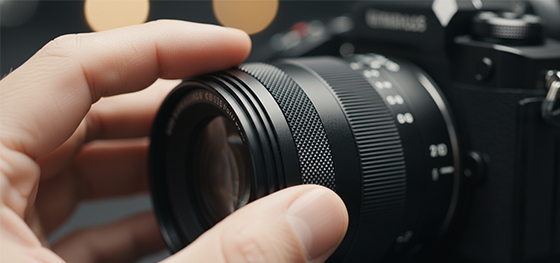
Think about a high-end camera lens. When you turn the focus ring, you feel a smooth, precise resistance. When you touch the body, it feels cool, solid, and professional.
This experience is no accident. It is the result of deliberate choices. The knurled texture on the ring for grip. The matte black anodized finish that does not reflect light. These are not just coatings. They are functional and aesthetic decisions.
A raw part directly from a CNC machine, with its sharp edges and visible tool marks, feels unfinished. It feels like a component. A properly finished part feels like a product. The surface treatment is what bridges this gap. It is what creates the perceived value.
Preparing the Canvas: Bead Blasting and Sanding
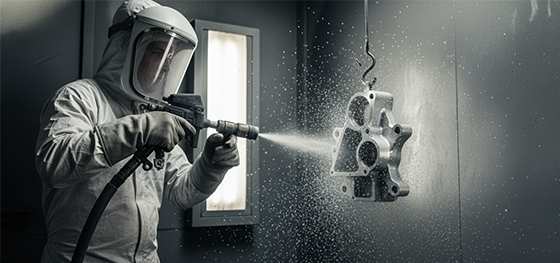
Before you can apply a beautiful final finish, you must first create a perfect surface. This is the critical preparation stage.
A common and highly effective preparation method is bead blasting. This process uses a high-pressure stream of air to shoot tiny, spherical beads (often glass or ceramic) at the surface of the part.
This does two things. First, it removes all the microscopic tool marks left by the CNC machine. Second, it creates a very fine, uniform, and non-directional matte texture. This beautiful, soft texture is a fantastic finish in its own right. It is also the perfect, clean canvas for a subsequent finish like anodizing.
Hand sanding is another key preparation step, used to smooth specific edges or create an even finer surface. It is a highly skilled process that requires a delicate touch.
The Classic Choice for Aluminum: Anodizing
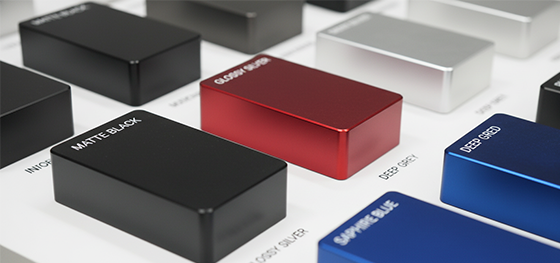
For aluminum parts, anodizing is the king of finishes. It is the process used on everything from iPhones to high-end architectural hardware.
Anodizing is not a paint. It is a chemical process that grows a hard, ceramic-like layer of aluminum oxide directly from the surface of the metal. This layer is incredibly durable and scratch-resistant.
The real magic of anodizing is its appearance. It can be dyed in a huge range of colors, from clear and silver to deep black, and even vibrant blues and reds. Because the color is inside the porous oxide layer, it has a unique, metallic sheen that paint cannot replicate.
A combination of bead blasting followed by a clear or colored anodize is the recipe for the classic, premium "Apple" look and feel.
Creating a Signature Look: Brushing and Polishing

Sometimes, a uniform matte or satin finish is not enough. You want to create a more dynamic, signature look. This is where mechanical finishes like brushing and polishing come in.
Brushing creates a texture of fine, parallel lines in the metal. This gives the surface a beautiful, linear grain that catches the light and communicates precision. It is very popular on high-end audio equipment.
Polishing is the pursuit of a perfect, mirror-like reflection. It is a highly labor-intensive process of buffing the metal until all surface imperfections are removed. It creates an undeniable look of luxury.
The best designers often combine these finishes. They might use a brushed finish on a main surface, with a brightly polished chamfered edge. This contrast creates a huge amount of visual interest and perceived value.
The Final Step: A Partnership in Perfection
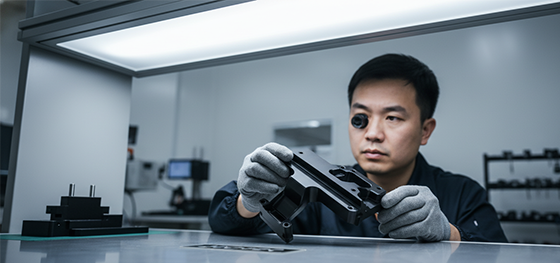
Achieving a perfect finish is the final 10% of the manufacturing journey, but it accounts for 90% of the first impression. It requires an obsessive attention to detail.
This is where your choice of manufacturing partner is critical. Does your partner have a dedicated, skilled finishing department? Do they have a rigorous cosmetic quality control process?
At JUCHENG, we understand that our job is not done when the CNC machine stops. We have a team of artisans and technicians who are experts in these finishing processes. We inspect every part under special lighting to ensure the finish is flawless.
We partner with you to understand your aesthetic intent. We can provide samples of different finishes. We help you choose the CNC machining surface treatment that will not just protect your part, but will tell the story of quality and precision that your brand deserves.

