


Dropping a highly sensitive diagnostic monitor onto a hard clinic floor destroys expensive internal electronics instantly. Paramedics and nurses operate under chaotic, high-stress conditions where sweaty hands and rapid movements make equipment drops a common reality. Specifying a rugged, custom-milled Handheld medical device shell eliminates this dangerous clinical hazard entirely. Holding a securely textured, rubberized enclosure ensures absolute tactile control when patient care demands split-second reactions.

Rushing into high-volume injection tooling without validating these handheld ergonomics is a massive financial gamble. Failing to test the physical snap-fits and interlocks leads to split seams and moisture leaks during clinical trials. Developing a robust Medical device enclosure prototype resolves these structural weaknesses long before you commit to permanent steel molds.
Balancing lightweight portability with robust drop-proofing defines true medical product engineering. Let's explore how overmolding elastomeric layers prevents expensive slips, analyze the high-precision requirements for ultrasonic welding, and discover how turnkey molding accelerates your market launch.
content:
Ergonomics and Shock Absorption: Preventing Costly Slips
Overmolding and Two-Color Injection: Soft Tactile Grips
Ultrasonic Welding: Creating Watertight Interlocking Joints
JC Rapid Hub: Rapid Tooling and Production
FAQ: Honest Answers About Biocompatibility and Curing
Ergonomics and Shock Absorption: Preventing Costly Slips
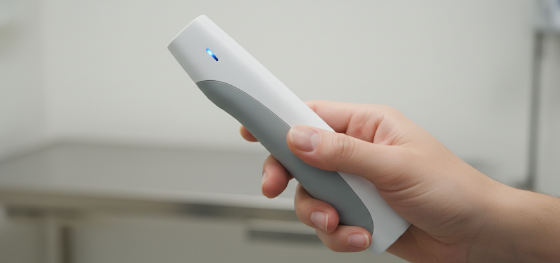
What dictates the physical shape of a premium portable clinical scanner?
Form-fitting geometric curves designed specifically to cradle the human hand comfortably prevent fatigue during grueling twelve-hour hospital shifts.
Shaving dead weight off the chassis is only half the battle. If your handheld medical device shell lacks a natural, balanced center of gravity, doctors will find the instrument awkward to aim, leading to poor diagnostic readings in the field.
Incorporating physical ridges and textured finger-slots directly into the molding tools ensures the device stays locked in the user's grip. This strategic design prevents accidental slips while providing a highly professional, premium feel.
Overmolding and Two-Color Injection: Soft Tactile Grips
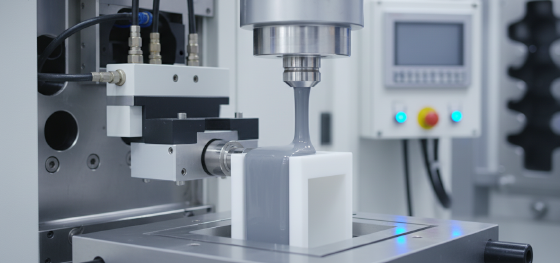
How do professional factories permanently fuse soft rubber directly over hard plastic structures?
Utilizing two-color injection molding allows injecting high-performance elastomers like TPU or TPE directly over a rigid polycarbonate core inside the exact same machine cycle, forming a seamless, molecularly fused bond.
Gluing separate rubber sleeves onto finished plastic parts is an obsolete manufacturing method. Adhesives break down rapidly when exposed to harsh hospital disinfectants, causing the rubber to peel off and trap dangerous bacteria underneath. While we use injection molding for this mass product, validating your ergonomic grip early requires machining a Disposable surgical tool handle CNC prototype from solid biocompatible polymers.
Fusing these distinct materials under intense heat ensures the soft grip remains permanently attached. Your final handheld medical device shell gains a luxurious, non-slip skin that actively absorbs violent kinetic impacts during accidental drops.
Ultrasonic Welding: Creating Watertight Interlocking Joints
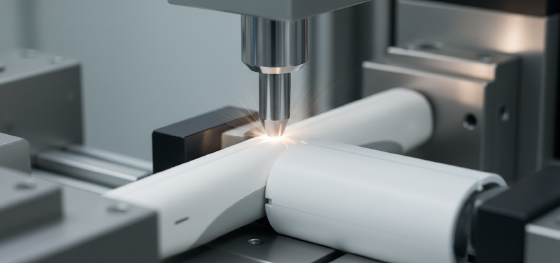
Why do standard snap-fit designs fail to keep internal clinical electronics dry?
Standard plastic latches flex under impact pressure, opening microscopic gaps where blood, water, and caustic sterilizers easily seep in to short-circuit the motherboard.
Engineering airtight enclosures requires executing high-precision ultrasonic welding joints. This advanced process uses high-frequency acoustic vibrations to melt the mating seams of your handheld medical device shell together into one unified, hermetic barrier.
Securing these flawless welds demands extreme dimensional tolerance control. Even a microscopic 0.05mm deviation in the interlocking tongue-and-groove channel will cause the weld to fail, making precision tool machining absolutely non-negotiable.
JC Rapid Hub: Rapid Tooling and Production
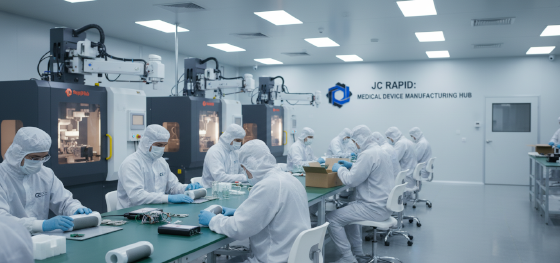
Why should startups execute their multi-material molding projects under one roof?
Shipping raw molded cores to a separate overmolding facility introduces severe logistical delays and risks exposing the delicate plastic to contamination, ruining the chemical bonding process.
Operating our massive turnkey manufacturing facility completely eliminates this supply chain risk. JC Rapid houses advanced multi-shot injection machines, high-precision tooling bays, and dust-free cleanrooms under one integrated roof.
Stop risking your clinical hardware on weak joints and slippery plastics. Send your complex handheld CAD files to our engineering team today for a rigorous DFM analysis, securing flawless, hospital-ready performance.
FAQ: Honest Answers About Biocompatibility and Curing

Are overmolded TPU and TPE elastomers completely safe for direct skin contact?
Yes. We strictly source medical-grade, USP Class VI certified elastomers that contain zero harmful phthalates, ensuring the finished handles are completely biocompatible and hypoallergenic.
Can you apply cosmetic clear anodizing to these portable plastic housings?
No. Anodizing is an electrochemical process exclusively meant for non-ferrous metals like aluminum and titanium. Plastic enclosures achieve their color and texture directly through pigment mixing and mold texturing.
Will the soft rubber grip degrade when exposed to harsh UV sterilization lights?
Standard consumer rubbers degrade quickly. We specify high-durability, UV-stabilized medical silicones and urethanes to ensure your grips maintain their elastic, non-slip properties permanently under clinical lights.
How do you keep the plastic from shrinking unevenly during the overmolding phase?
Managing thermal shrinkage requires precise mold temperature control. Our tooling engineers utilize advanced fluid flow simulations to perfectly balance the cooling rates, preventing any geometric warping.

