


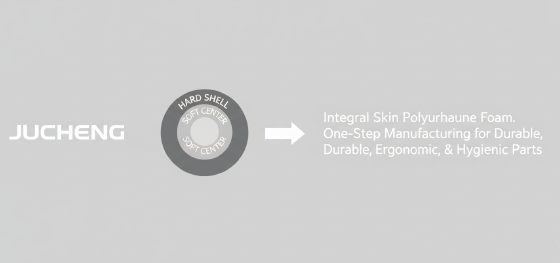
Designing high-touch interfaces for medical rehabilitation equipment or interactive service robots in the current market reveals a persistent hardware conflict: the need for "Soft-Touch" comfort combined with "Industrial-Grade" durability. Traditional multi-part assemblies, where a soft foam is wrapped in a secondary vinyl or leather skin, often suffer from peeling seams and hygiene failures in high-use environments. The polyurethane reaction injection molding process offers a sophisticated physical solution to this problem. By utilizing integral skin polyurethane foam, engineers can produce components that feature a dense, unyielding outer shell and a soft, microcellular core in a single manufacturing cycle. This one-step manufacturing capability is the secret to delivering retail-ready aesthetics without the labor-intensive assembly of traditional upholstery.
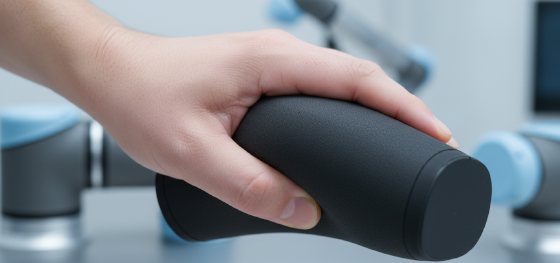
Mechanical performance in "Soft-Skin" hardware is determined by the precision of the chemical reaction against the mold surface. In traditional molding, achieving a non-porous skin on a foam core requires secondary coatings that can flake over time. Jucheng Precision addresses these aesthetic hurdles by utilizing specialized self-skinning physics, where the temperature differential of the aluminum tool dictates the skin thickness. Jucheng provides high-tier Polyurethane Molding Services that prioritize tactile ergonomics and surface integrity for the world's leading medical and fitness OEMs in our Shenzhen factory hub.
Operating under a dual mandate of ISO 13485 for medical safety and ISO 14001 for environmental responsibility, Jucheng Precision acts as the high-tier material scientist for global innovation teams. We leverage our capacity of 150+ CNC machines and 25 5-axis Haas/Mazak units to transform complex CAD files into validated, soft-touch hardware in as fast as 15 business days. This guide explores the essential self-skinning standards, material performance data, and the surface texturing logic required for manufacturing integral skin polyurethane foam hardware that ensures user comfort and passes the most rigorous clinical durability audits.
content:
Self-Skinning Mechanics: How a Single Shot Creates Two Layers?
Technical Data: Comparing Skin Hardness and Core Density
Texture Innovation: Simulating Leather and Rubber in the Mold
JUCHENG Strategy: Bridging Tactile Prototyping to Mass Production
FAQ: Logistics and Durability of Integral Skin Polyurethane Foam
Self-Skinning Mechanics: How a Single Shot Creates Two Layers?

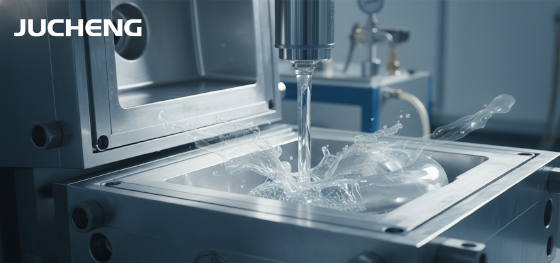
The production of integral skin polyurethane foam is a masterclass in controlled thermodynamics. Unlike a standard prototype robot part that is either 100% solid or 100% foam, an integral skin part is both. When the liquid A and B components are injected into the mold, the material in contact with the relatively cool aluminum walls (maintained at 40-50 degrees Celsius) solidifies without foaming, creating a dense, non-porous skin. The material in the warmer center of the part is allowed to expand, creating the soft microcellular core. Jucheng Precision performs free DFM analysis in 24 hours to optimize your part's geometry for this thermal transition, ensuring that the skin is thickest in high-wear areas like corners and mounting points.
Can I control the softness of the core?
Yes. By adjusting the amount of blowing agent in the B-side polyol, Jucheng can produce parts ranging from "Marshmallow" soft for cushions to "Automotive-Tire" firm for industrial handles.
Skin thickness management is the secondary pillar of our manufacturing logic. If the mold is too cold, the skin becomes excessively thick and brittle; if too hot, the skin becomes thin and prone to tearing. Jucheng utilizes automated thermal water circuits within our aluminum RIM tools to maintain mold temperatures with +/- 2 degree precision. This level of environmental control is essential for components like surgical armrests or exercise equipment grips, where a consistent tactile response is required across a production run of 1,000 units. Our Shenzhen hub delivers these "Dual-Phase" parts with 100% molecular bonding between the skin and core, eliminating the risk of delamination found in glued assemblies.
Venting of the mold is the third critical factor in achieving a perfect surface. As the foam expands, it must push the internal air out of the cavity without creating turbulent bubbles on the skin. Jucheng’s engineering team utilize 5-axis CNC machining to cut microscopic "Flash-Vents" along the parting line. These vents are thin enough to block the liquid polyurethane but wide enough to allow the gasses to escape freely. This prevents the "Surface Voids" that ruin the aesthetics of high-end consumer robotics, delivering a part that is "Boringly Perfect" directly out of the tool with zero manual rework required.
Technical Data: Comparing Skin Hardness and Core Density
Success in ergonomic hardware depends on the data. If your design assumes a soft grip but you receive a part that feels like hard wood, your user experience is ruined. Jucheng Precision provides full material characterization reports to help your design team specify the exact "Compression Force Deflection" required for your project. The following table compares the typical mechanical profiles Jucheng achieves with integral skin polyurethane foam for the current MedTech and industrial markets.
| Metric | Soft / Comfort Grade | Industrial / High-Wear Grade | Application Impact |
|---|---|---|---|
| Overall Density (kg/m³) | 250 - 450 | 500 - 850 | Weight vs. Support |
| Skin Hardness (Shore A) | 40 - 60 | 70 - 90 | Tactile "Grip" Factor |
| Elongation at Break (%) | 150 - 250 | 80 - 150 | Tear Resistance |
| Abrasion Loss (mg) | Moderate | Very Low | Survives 10,000+ Cycles |
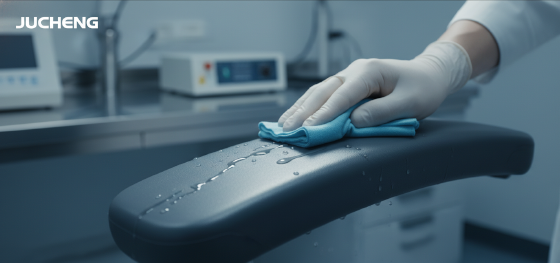
The "Abrasion Loss" data is the primary reason why hospital procurement managers favor Jucheng’s integral skin solutions. In a clinical setting, an armrest is cleaned with aggressive Isopropyl Alcohol dozens of times a day. A standard painted or wrapped part would disintegrate within weeks. Because our skin is an inherent part of the chemical matrix, it possesses exceptional chemical resistance and surface toughness. Jucheng’s Polyurethane Molding Services ensure that your hardware maintains its "Day-One" appearance even after years of continuous exposure to harsh medical sanitizers.
Texture Innovation: Simulating Leather and Rubber in the Mold
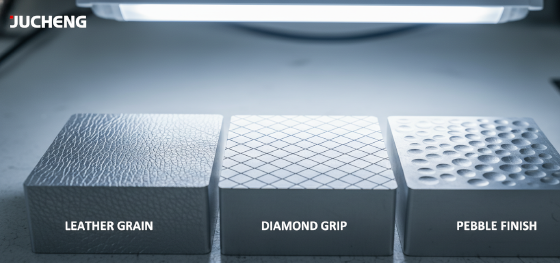
Visual and tactile identity are unified through the mold surface. In integral skin polyurethane foam manufacturing, the part takes on the exact texture of the tool. Jucheng Precision leverages its 150+ CNC machines capacity to machine high-fidelity textures directly into our aluminum mold cavities. We can simulate the organic grain of premium leather, the aggressive "stipple" of a tool handle, or a smooth "Apple-style" satin finish. This eliminates the need for secondary vinyl wrapping or painting, providing a "Finished-in-the-Mold" component that saves you 30% in post-processing costs.
How to achieve a multi-texture grip?
Jucheng utilizes 5-axis CNC laser texturing to apply different grain patterns to different sections of the same mold, creating integrated "High-Grip" zones for user interaction.
Color stability is integrated into the liquid logic. Unlike surface-painted parts that reveal a white core when scratched, Jucheng’s integral skin parts are "Color-Through." We mix high-stability pigments and UV-blocking additives directly into the Side B polyol. Whether you require a traditional "Tractor Green" or a modern "Medical White," the color is a permanent part of the molecular structure. This is essential for Industrial Robot Parts used in abrasive factory environments, where hardware is constantly bumped and scuffed. Our Shenzhen hub can match any Pantone or RAL color with +/- 0.5 Delta-E accuracy, ensuring your brand identity is unyielding.
Complex parting lines are managed via 5-axis precision. For organic, ergonomic shapes like a humanoid robotic hand or a curved lumbar support, the mold must open in multiple directions. Jucheng utilizes 25 5-axis Haas/Mazak units to machine the interlocking slides and cam-actions required for these complex tools. By holding +/- 0.02mm tolerances on the tool parting lines, we ensure that the "Seam" on your integral skin part is almost invisible, delivering a seamless aesthetic that mirrors the quality of high-end consumer electronics. This attention to detail is what allows Jucheng to support the world’s most ambitious HMI (Human-Machine Interface) projects.
JUCHENG Strategy: Bridging Tactile Prototyping to Mass Production
Dominating the ergonomic hardware market requires a partner that can scale from a single functional Alpha unit to a commercial deployment of 5,000 Beta machines without losing a millisecond of momentum. Jucheng Precision operates with a 24/7 manufacturing mindset in our Shenzhen precision manufacturing hub, delivering high-tolerance integral skin components with industry-leading speed. We provide a "Bridge to Production" that ensures your innovations move from concept to pilot run with 100% metallurgical and chemical confidence. we have No MOQ, allowing you to source 1 to 10 units for user-testing without the crushing cost of mass-production tools.
Integrating your ergonomic design with JUCHENG’s expertise ensures that your hardware survives the "First-Touch" test and moves into mass adoption. we offer comprehensive DFM reviews within 24 hours, identifying potential "Air-Traps" or "Skin-Thinning" risks in your design before they become field failures. Whether you are building an autonomous medical assistant or a heavy-duty industrial mobile base, Jucheng Precision provides the rigid, precise, and soft-to-the-touch foundations that keep your innovation moving through the high-speed cycles and the years of hard labor.
Our facility is equipped with dedicated high-pressure RIM assembly cells and ISO-standard quality labs, allowing us to manage the entire hardware lifecycle in one location. we manage the complexity of multi-material bonding and custom textures so your engineering team can focus on the user experience and the AI. By combining Shenzhen's speed with industrial-grade material verification and global quality standards, JUCHENG remains the preferred partner for the world's most aggressive Polyurethane Molding Services challenges. Contact us today to start your next project.
FAQ: Logistics and Durability of Integral Skin Polyurethane Foam
What is the maximum part size JUCHENG can mold in integral skin?
We regularly produce oversized armrests, pads, and bumpers up to 1,500mm in length with consistent skin quality.
Can I integrate metal inserts for mounting?
Yes. We specialize in encapsulating steel or aluminum mounting brackets directly into the foam core for unyielding connections.
How long does the aluminum tool last for integral skin foam?
Because of the low-pressure cycle, our 7075 aluminum tools can maintain sub-micron accuracy for up to 10,000 shots.
Does the material meet medical safety standards?
Yes. We utilize medical-grade resins that pass cytotoxicity and irritation testing, ensuring safety for clinical use.
What is the lead time for a textured Beta prototype?
Aluminum rapid tooling and the first batch of textured parts are typically delivered in 15 to 20 business days.
Peeling skins and poor hygiene are absolute innovation killers for high-end robotic systems. Partnering with Jucheng Precision ensures that your functional iterations are built with the durable polyurethane reaction injection molding and specialized integral skin polyurethane foam techniques the industry demands. Reach out to our Shenzhen manufacturing hub today for a complete DFM review and build the unyielding foundation your autonomous fleet requires.

