


Managing small-batch manufacturing budgets for a new custom metal product is a brutal balancing act. Sourcing teams frequently struggle to find a supplier willing to run small batches of five hundred units without charging high prices. Evaluating low volume production cnc vs die casting options early prevents your startup from making a massive capital mistake. Transporting five thousand unverified units into the market before testing real customer feedback is a dangerous commercial gamble.

Rushing blindly into permanent high-volume steel tooling is a dangerous trap. Every single second your part spends cooling inside the press directly drives up your ongoing expenses. Deciding between die casting vs cnc machining dictates whether your retail margins remain sustainable over the entire product lifecycle.
Demanding absolute financial transparency separates elite manufacturing partners from low-tier brokers. Let's dissect the intermediate volume dilemma, explore why multi-axis cutting beats casting for complex features, and explain how to secure the most profitable casting technology.
content:
Uncomfortable Middle: Navigating the 100 to 5,000 Part Dilemma
Complex Geometries: When to Stick With Multi-Axis Cutting
Rapid Tooling Bridges: Making Short-Run Casting Economical
Turnkey Production: Consolidating Your Sourcing
FAQ: Honest Answers About Tool Life and Minimum Orders
Uncomfortable Middle: Navigating the 100 to 5,000 Part Dilemma

Why do traditional mass-production foundries refuse to run small-batch prototyping cycles?
Because setting up massive high-tonnage presses and pre-heating heavy steel dies requires hours of manual labor, making short runs completely unprofitable under old-school business models.
Traditional factories ignore the awkward middle ground between ten prototypes and ten thousand final assemblies. They routinely enforce massive minimum order quantities that block hardware innovation. Utilizing low volume production cnc vs die casting cost curves safely avoids this physical bottleneck.
Sourcing your components in smaller batches provides the ultimate scaling sandbox. You receive real, production-grade parts that match your strict structural specifications exactly, allowing you to run comprehensive field trials.
Complex Geometries: When to Stick With Multi-Axis Cutting
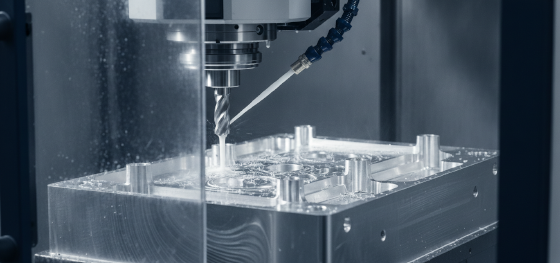
How do engineers choose between 3D printing and milling for early-stage hardware?
By deploying high-speed subtractive milling for solid metallic strength or utilizing silicone molds to pour high-fidelity polyurethane parts.
Carving your structural components directly from solid aluminum billets provides absolute mechanical truth. Utilizing advanced 5-axis CNC machining delivers the exact tensile strength and structural rigidity your final commercial product will possess, completely bypassing mold debts.
Choosing low volume production cnc vs die casting paths depends heavily on design complexity. If your CAD file requires intricate cooling fins or precise internal bearing journals, milling raw solid blocks remains the only mathematically viable option for survival.
Rapid Tooling Bridges: Making Short-Run Casting Economical
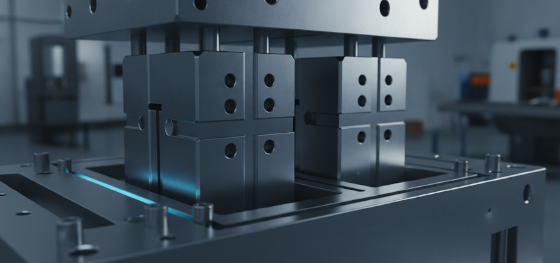
How can manufacturers dramatically lower the initial tooling debt for short production runs?
By deploying custom rapid tooling technologies, utilizing modular master mold bases and softer steel alloys that machine significantly faster on CNC spindles.
Slicing custom cavity inserts directly into pre-machined master frames eliminates raw steel waste and drops your upfront tooling bills by over fifty percent.
Lowering this initial mold expense changes the financial math entirely, significantly dropping your total cnc machining vs die casting cost and making metal injection highly profitable even for smaller runs.
Turnkey Production: Consolidating Your Sourcing
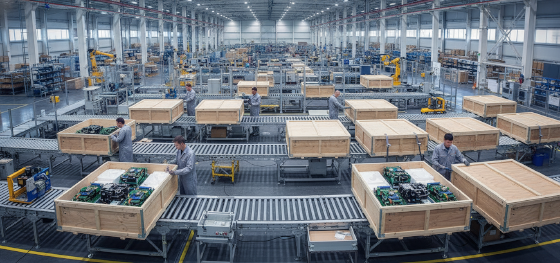
Why must you partner with a factory that operates both advanced casting and milling?
Because keeping prototyping, low-volume casting, and final CNC finishing under one integrated roof eliminates logistical delays and vendor finger-pointing.
Sourcing low volume production cnc vs die casting runs with JC Rapid is incredibly simple. We maintain a highly flexible, fully audited facility, allowing us to run short batches of 100 to 5,000 pieces with highly competitive tooling and piece pricing.
Stop paying outrageous unit prices for slow subtractive milling or high-NRE mold tooling. Send your complex CAD files to our engineering team today for a comprehensive, manual DFM flow analysis and secure a highly optimized, low-cost quote.
FAQ: Honest Answers About Tool Life and Minimum Orders

Does the complexity of the internal gating system increase my total project budget?
Yes, complex runner channels consume more raw metal per shot. We design highly optimized gating paths to minimize excess scrap metal, keeping your material waste exceptionally low.
Can I run zinc and aluminum through the exact same steel mold?
No. Because different metals shrink and contract at completely different rates, pouring aluminum into a mold designed for zinc will result in parts that fail to meet your dimensional tolerances.
Will the soft rapid tools wear out quickly during production?
Softer steel and aluminum alloy molds naturally degrade faster than hardened steel, but they easily survive two to five thousand injections before showing any dimensional drift.
Why do some small-batch castings suffer from severe surface sink marks?
Uneven cooling inside poorly designed molds pulls material away from thick sections, a defect we eliminate by running advanced flow simulations during the DFM phase.

