


Engineering decisions are only as robust as the mechanical data that informs them. In the fast-paced transition from digital CAD intent to physical field validation, a single miscalculation regarding material behavior can result in a catastrophic program delay. While visual mockups serve to align stakeholder aesthetics, the true technical contract of oversized hardware is defined by its mechanical and thermal limits. Professional reaction injection molding materials engineering survives as the premier bridge for high-stakes enclosures because it offers "Molecular Mimicry"—the uncanny ability to simulate the structural spine of production plastics through low-pressure thermoset chemistry. Jucheng Precision operates as a high-fidelity metrology and materials sanctuary in the Shenzhen precision manufacturing hub, providing the documented physical surrogates needed to secure market sovereignty. This guide provides a 1500-word forensic breakdown of Reaction injection molding material properties, empowering your engineering team to select the exact resin cocktail needed to survive the stress of 2026 industrial environments.
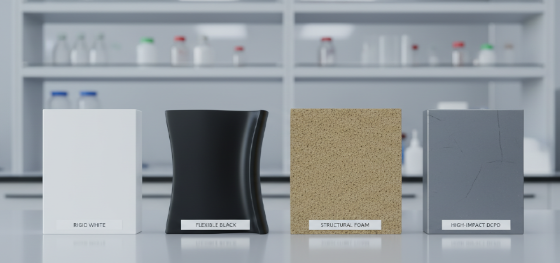
Establishing a high-yield launch for large-format hardware requires moving beyond marketing labels like "tough" or "rigid." It demands an interrogation of the Technical Data Sheet (TDS). Every MPa of tensile strength and every percentage of elongation-at-break carries a specific functional implication for your assembly. Jucheng Precision eliminates manufacturing doubt by offering a comprehensive library of validated resins, from Rigid polyurethane reaction injection molding systems to virtually indestructible DCPD. We don't just "mold parts"; we engineer a thermodynamic equilibrium that ensures your 2-meter enclosures are dimensionally stable and chemically consistent. The following analysis deconstructs the primary mechanical metrics, provides a comprehensive performance matrix, and explores the physics of environmental resilience that dictate prototype success in the Injection molding application industries.
How do you choose a RIM material based on stiffness vs. impact?
What are the comparative properties of Rigid, Elastomeric, and Foam RIM?
What makes DCPD the king of impact resistance in large-format molding?
How does shrinkage and dimensional stability impact large-scale assemblies?
Which RIM materials offer the best chemical and environmental defense?
Frequently Asked Questions: RIM Material Properties
How do you choose a RIM material based on stiffness vs. impact?

Selecting a polymer for oversized hardware requires a dispassionate trade-off between "Flexural Modulus" and "Fracture Toughness." In Large plastic parts manufacturing, high stiffness (Modulus) allows a 1.5-meter panel to support internal electronics without sagging, but it often makes the part brittle. Impact resistance, conversely, allows a part to absorb kinetic energy but can lead to "floppy" assemblies if over-specified. Jucheng Precision engineers utilize a "Critical Function Audit" to route your project. If your part is a stationary medical shroud, we prioritize rigid PU with a flexural modulus of 2,800 MPa. If it is a warehouse AGV bumper, we pivot to Elastomeric reaction injection molding with 300% elongation. We don't just "pour resin"; we match the molecular cross-linking density to your specific mechanical load case, ensuring your hardware is as rigid as metal where needed and as resilient as rubber where impacts occur.
What are the comparative properties of Rigid, Elastomeric, and Foam RIM?

Technical parity between different reaction injection molding materials is defined by the following comparative matrix. Jucheng Precision provides these typical values to assist engineers in early-stage Low volume large plastic parts project routing:
| Metric | Rigid PU | Elastomeric PU | Structural Foam |
|---|---|---|---|
| Density (g/cm³) | 1.1 - 1.2 | 1.0 - 1.1 | 0.7 - 0.9 (Lightest) |
| Tensile Strength | 75 MPa (Strongest) | 25 MPa | 45 MPa |
| Flexural Modulus | 2,800 MPa | 400 MPa | 1,800 MPa (Stiff/Light) |
| HDT (0.45 MPa) | 95°C | 70°C | 85°C |
What makes DCPD the king of impact resistance in large-format molding?
Molecular ring chemistry provides the "Unbreakable" soul of DCPD reaction injection molding. Unlike polyurethane, which can be sensitive to moisture during the pour, DCPD is a pure hydrocarbon resin that cures into an exceptionally tough matrix. Its Izod impact strength is nearly triple that of rigid PU, and critically, it maintains this toughness at sub-zero temperatures. Jucheng Precision recommends DCPD for excavator hoods and tractor guards because it absorbs sledgehammer-level impacts without cracking. In our Reaction injection molding material properties audit, DCPD exhibits a spectacular "Stress-Whitening Resistance," meaning the part won't show ugly white scars after a minor collision. We provide the material science needed to replace heavy metal panels with "Indestructible" polymers that ignore the laws of brittle failure.
How does shrinkage and dimensional stability impact large-scale assemblies?
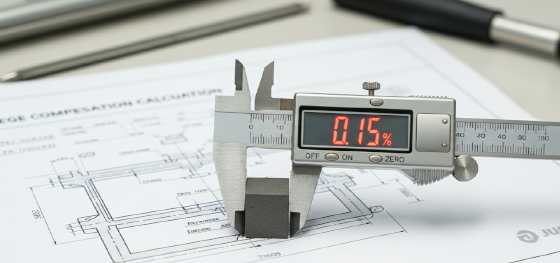
Dimensional precision is the byproduct of low-pressure stabilization. One of the most critical Reaction injection molding material properties is the exceptionally low molding shrinkage—typically between 0.1% and 0.4%. Compared to the 2% shrinkage found in standard Injection molding materials like Nylon, RIM parts are virtually static. Jucheng Precision leverages this dimensional sovereignty to manufacture multi-meter panels that align with sub-millimeter "Flush and Gap" requirements. Because the material solidifies via a controlled exothermic reaction at low pressure, it develops minimal internal residual stress. This ensures your Custom large plastic enclosures remain flat and stable throughout their entire lifecycle, even when subjected to the thermal swings of international shipping. We treat every 0.1mm as a technical contract, ensuring your assembly fits perfectly on the first shot.
Which RIM materials offer the best chemical and environmental defense?

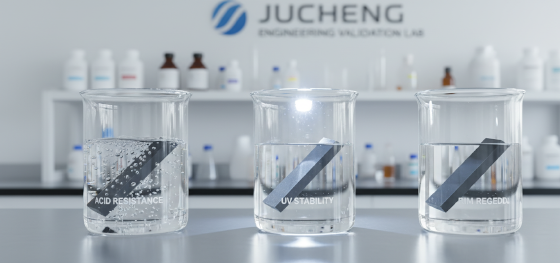
Surface energy dictates the survival of Large plastic medical enclosures in clinical environments. Polyurethane and DCPD resins are naturally non-polar, providing an inherent defense against Isopropyl Alcohol (IPA), bleach, and aggressive industrial degreasers. Jucheng Precision engineers utilize specialized Flame retardant RIM polyurethane formulations that meet UL94 V-0 safety standards while maintaining this chemical armor. Our facility integrates automotive-grade Painting and finishing large plastic parts cleanrooms, where we apply 2K coatings that further enhance UV stability and scratch resistance. We provide the material lot traceability and Ra inspection reports needed to prove your oversized hardware survives the messiest field conditions without a single molecular tear.
JUCHENG Protocol: Fine-Tuning Properties for Program Success
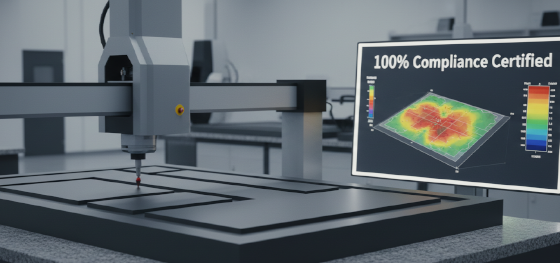
Engineering excellence at Jucheng Precision is built on the foundation of bespoke material formulation. We don't just "buy resin off a shelf"; we optimize the chemical ratio for your specific application. When you upload a CAD file to our facility, our material experts analyze your "Failure Mode Risk." We might suggest adding glass fiber (reinforced reaction injection molding rrim) to reduce the coefficient of thermal expansion, or utilizing continuous fiber mats (structural reaction injection molding srim) to replace a metal chassis. Our integrated facility, housing over 150 CNC machines and elite RIM units, ensures that these material optimizations are executed with 100% repeatability. We turn "general specs" into "proprietary mechanical advantages," ensuring your large-format hardware dominates the competition.
Frequently Asked Questions: RIM Material Properties
Question: How does the weight of Structural foam reaction injection molding compare to solid PU?
Answer: Structural foam offers a 20% to 40% mass reduction by creating a cellular core. This is the optimal solution for making large mobile medical carts lighter without losing rigidity.
Question: Can reaction injection molding materials survive outdoor UV exposure?
Answer: Yes, provided they are correctly finished. While raw PU can yellow, JUCHENG’s automotive-grade 2K painting protocol provides a permanent UV shield that prevents color-shift and surface embrittlement.
Question: What is the most durable RIM material for heavy tractor parts?
Answer: DCPD reaction injection molding is the undisputed champion for heavy machinery. Its impact resistance and corrosion-proof nature make it far superior to steel or fiberglass for oversized hoods and guards.
Manufacturing sovereignty on an industrial scale requires a partner who values your ROI over their machine uptime. Jucheng Precision eliminates the friction of multi-vendor supply chains by offering integrated CNC, RIM, and high-fidelity finishing in the heart of the Shenzhen hub. Stop gambling your large-format project on unvalidated "standard" resins. Leverage our decade of high-performance replication mastery to validate rapidly and scale profitably. Contact our technical team today for a free DFM review and see how we can turn your digital intent into a structurally sovereign, physical reality that is documented for success.

