


Missing a market entry window in the high-stakes robotics or MedTech sectors is a strategic failure that can delay investor demos and revenue by quarters. In the current competitive landscape, the distance between a finalized CAD file and a functional, field-ready machine must be measured in weeks, not months. While high-pressure molding is the gold standard for mass production, the 8-to-12 week wait for hardened steel tools often becomes a terminal bottleneck for R&D teams. Understanding the nuances of reaction injection molding vs injection molding speed is essential for developers who need to iterate on their hardware with the same agility as their software. Mastering RIM vs Injection Molding Lead Times allows engineering leads to launch Beta fleets and gather real-world data while their competitors are still waiting for a tool to be shipped from a traditional mold shop.
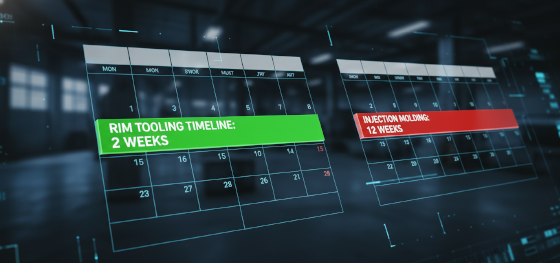
Winning the race to clinical or industrial validation depends on the material chosen for the mold. Because the RIM process operates at less than 100 psi, the requirement for massive steel tools is eliminated. Jucheng Precision addresses these critical schedule hurdles by providing high-tier Rapid prototyping solutions that prioritize the use of high-strength aluminum alloys. Jucheng Precision utilize a fleet of 150+ CNC machines to carve oversized mold cavities in a matter of days. By delivering production-representative parts through a Bridge to Production strategy, Jucheng Precision ensures your technology reaches the field without the multi-month delays of conventional thermoplastic systems in our Shenzhen factory hub.
Operating under the strict quality standards of ISO 13485 and ISO 14001, Jucheng Precision acts as the high-velocity manufacturing engine for global OEMs. Jucheng Precision delivers a free DFM analysis in 24 hours to ensure your design is optimized for rapid aluminum tooling, preventing the design-rework cycles that inflate development timelines. This guide explores the essential tooling timeline, the logic of agile tooling, and the pilot run logistics required for mastering RIM vs Injection Molding Lead Times to ensure your next innovation secures its place in the market.
content:
Tooling Timeline: Why Aluminum Beats Steel by 8 Weeks?
Technical Data: Comparing Lead Times for 100-Unit Fleets
Agile Tooling: Design Pivots Mid-Production
The Bridge Strategy: Launching Before the Steel Tool is Ready
JUCHENG Hub: Managing 24/7 Rapid Response in Shenzhen
FAQ: Real Answers for Expedited Tooling and Production
Tooling Timeline: Why Aluminum Beats Steel by 8 Weeks?

Manufacturing speed is governed by the machinability of the mold substrate. In the comparison of RIM vs Injection Molding Lead Times, the choice between aluminum and steel is the primary driver of the schedule. Traditional injection molds require P20 or H13 hardened tool steel to withstand the 15,000 psi hydraulic pressure of molten plastic. Machining steel is a slow, multi-stage process involving roughing, heat treatment, and weeks of electrical discharge machining (EDM) for fine features. Jucheng Precision utilize aerospace-grade 7075-T6 aluminum for RIM molds, which can be CNC machined three to four times faster than steel. This allows Jucheng Precision to deliver a 1.5-meter long mold base in as little as 10 business days, effectively cutting 60 days off the standard development cycle.
How does mold material impact first-part delivery?
Aluminum allows for high-feed-rate CNC milling and eliminates the need for post-machining heat treatment, resulting in T1 samples delivered in 15 days versus 90 days for steel.
Secondary processes are integrated into the tooling timeline at the Jucheng Precision Shenzhen facility. While standard shops might outsource mold texturing or polishing, Jucheng Precision utilize 25 5-axis Haas/Mazak units to perform in-house laser texturing and robotic polishing. This consolidation of services removes the 5-to-10 day logistical delay associated with shipping heavy tools to third-party texture houses. By managing the entire tool-build lifecycle under one roof, Jucheng Precision ensures that your Alpha and Beta trial units are produced with a Ra 0.8 finish or VDI 3400 texture without adding a single hour of unnecessary transit time.
Setup efficiency further improves the RIM lead time. Because RIM equipment is low-pressure, the molds are lighter and require less complex clamping systems. Jucheng Precision utilize modular universal mold bases, where only the specific cavity and core inserts need to be machined for your unique part. This "Insert-Only" strategy reduces the raw material sourcing time and allows our CNC machines to start cutting your part geometry within hours of DFM approval. This level of logistical readiness is essential for prototype robot teams who need to show progress to their stakeholders every Monday morning.
Technical Data: Comparing Lead Times for 100-Unit Fleets

Success in hardware procurement depends on a realistic understanding of the production ramp-up. If your project timeline allows for three months of tooling, injection molding is viable; if you need to be in the field next month, RIM is the only logical choice. Jucheng Precision provides transparent schedule modeling to help you hit your milestones. The following table compares the typical RIM vs Injection Molding Lead Times for a fleet of 100 robotic scanner housings in the current global market.
| Project Phase | Reaction Injection Molding (Alu) | Injection Molding (Steel) | Time Saved |
|---|---|---|---|
| DFM and Tool Design | 2 - 3 Days | 7 - 10 Days | 5 Days |
| Mold Fabrication | 10 - 15 Days | 45 - 60 Days | 40+ Days |
| T1 Samples to QC | 2 - 3 Days | 5 - 7 Days | 3 Days |
| Production (100 units) | 5 - 7 Days | 1 - 2 Days | (Injection is faster) |
| Total to Shipping | ~25 Days | ~85 Days | 60 Days Early |
This data illustrates that while the injection cycle itself is faster, the NRE tooling delay creates a three-month gap in your product launch. Jucheng Precision allows you to capitalize on this 60-day window to perform field trials, identify bugs, and capture early-adopter customers. For medical device prototyping, this time-to-market advantage is the difference between leading the sector and playing catch-up. Jucheng Precision’s Shenzhen hub is designed to absorb this initial velocity, providing the production-grade hardware you need while your competitors are still reviewing steel tool drawings.
Agile Tooling: Design Pivots Mid-Production

Hardware iteration should not be penalized by rigid tooling. In the context of RIM vs Injection Molding Lead Times, the ability to pivot a design is just as valuable as the initial speed. Aluminum molds used in the RIM process offer a level of agile tooling that hardened steel cannot match. If a field trial reveals that an internal mounting boss needs to move by 20mm to accommodate a new LiDAR sensor, Jucheng Precision can weld new aluminum into the mold and re-machine the feature in our CNC bay within 48 hours. This flexibility allows your hardware to evolve at the same pace as your AI software, ensuring that your final production unit is 100% optimized for the mission.
Can a RIM mold be updated for better venting?
Yes. Because aluminum is highly machinable, Jucheng Precision can add or move venting pins and parting-line vents in hours, solving surface air-trap issues without resetting the lead time clock.
Managing engineering changes (ECN) is a core service at Jucheng Precision. Our engineering team performs a secondary DFM review on every design revision to ensure the RIM vs Injection Molding Lead Times are not compromised by the update. We utilize 150+ CNC machines to prioritize R&D modifications, ensuring that your Alpha-2 or Beta-1 hardware arrives in the lab before the momentum of the project stalls. This iterative speed is what allows our clients to outperform competitors who are anchored to $100,000 "Frozen" steel tools that are too expensive and slow to change.
Internal stress relief of the part is maintained even during rapid design pivots. Because RIM polyurethane cures at low pressure, design changes like thickening a structural rib don't introduce the "Warping Cascades" that occur in injection molding. Jucheng Precision’s commitment to geometric stability ensures that even if you change the design three times in a single month, your parts will still fit the original chassis perfectly. This level of technical oversight is essential for industrial robot parts where field repairs and component swaps must be executed with zero manual modification.
The Bridge Strategy: Launching Before the Steel Tool is Ready

The most effective way to manage lead times is to utilize RIM as a Bridge to Production. In this scenario, Jucheng Precision manufactures your first 500 units using rapid aluminum RIM tooling while your high-volume hardened steel tool is still being built in parallel. This strategy allows you to begin revenue-generating operations months earlier, effectively paying for your production tooling using the cash flow from your RIM-based launch. For a 2-meter long medical housing, this bridge eliminates the three-month "Hardware Void" where a company has a product but no parts to sell.
Will the parts from the bridge look different?
No. Jucheng Precision’s in-house painting and finishing team ensures that your RIM bridge parts are aesthetically identical to the future injection molded parts, maintaining your brand's retail-ready image.
Material simulation is the second pillar of the bridge strategy. Jucheng Precision formulate polyurethane resins that mimic the exact Shore D hardness, flexural modulus, and impact strength of your intended mass-production plastic, whether it is ABS, PC, or Polypropylene. This ensuring that the RIM vs Injection Molding Lead Times are the only difference your customers see. By delivering high-fidelity hardware early, you can secure early-adopter testimonials and finalize your medical device hardware validation services data, providing a solid foundation for your full commercial rollout.
Scalability within the bridge is managed through No MOQ policies at Jucheng Precision. We understand that your initial market entry might require 50 units in month one and 200 units in month three. Our RIM facility is designed for this variable demand, allowing you to pull hardware as needed without the multi-thousand unit minimums required by high-pressure molders. This capital agility is the ultimate risk-mitigation tool for robotics and AgTech startups, ensuring that your R&D budget is focused on progress rather than inventory, all while benefiting from the speed of the Shenzhen manufacturing ecosystem.
JUCHENG Hub: Managing 24/7 Rapid Response in Shenzhen

Dominating the hardware market requires a partner that doesn't just promise speed, but possesses the infrastructure to deliver it. Jucheng Precision operates with a 24/7 manufacturing mindset in our Shenzhen precision manufacturing hub, delivering high-tolerance RIM components and structural industrial robot parts with lead times as fast as 15 business days. Jucheng Precision provides the bridge to production that ensures your innovations move from CAD to field trial with 100% metallurgical and dimensional confidence. Jucheng Precision provides a free DFM analysis in 24 hours to ensure your design is optimized for the unyielding reality of the field.
Integrating your structural design with Jucheng Precision’s expertise ensures that your RIM vs Injection Molding Lead Times decision is based on performance data, not guesswork. Jucheng Precision offers comprehensive DFM reviews within 24 hours, identifying potential gas-trap zones or wall-thickness bottlenecks in your design before they become field failures. Whether you are building an autonomous medical assistant or a heavy-duty industrial mobile base, Jucheng Precision provides the rigid, precise, and *fast* foundations that keep your innovation moving through the high-stakes cycles and the years of hard labor.
The facility is equipped with dedicated high-pressure RIM assembly cells and dedicated ISO 13485 and ISO 14001 quality labs, allowing Jucheng Precision to manage the entire hardware lifecycle in one location. Jucheng Precision manages the complexity of multi-material bonding and automotive-grade finishing so your engineering team can focus on the motion control and the AI. By combining Shenzhen's speed with industrial-grade material verification and global quality standards, Jucheng Precision remains the preferred partner for the world's most aggressive hardware challenges. Contact the Shenzhen hub today to start your 4-day rapid delivery project.
FAQ: Real Answers for Expedited Tooling and Production
What is the maximum time I can save using RIM over injection molding?
For parts over 1 meter, you typically save 60 to 75 days by bypassing the hardened steel tooling phase.
Does Jucheng Precision provide expedited air shipping for large parts?
Yes. We provide custom-fitted flight cases and coordinate international air freight to deliver 2-meter enclosures to North America and Europe in 3 to 5 business days.
How long does a design modification take on an aluminum tool?
Most design pivots, such as moving a mounting point or changing a rib height, are completed in 48 to 72 hours in our CNC bay.
Can I get T1 samples of a 2-meter fender in 15 days?
Yes. Our gantry CNC mills and 24/7 RIM machines are optimized for delivering oversized T1 samples in under three weeks.
Is there a limit to how many parts I can order during the bridge phase?
No. We support your scale from a single unit up to 5,000 units, providing a seamless transition to mass production.
Tooling delays and long lead times are absolute project killers for autonomous robotics. Partnering with Jucheng Precision ensures that your functional iterations are built with the cost-effective polyurethane reaction injection molding and specialized RIM vs Injection Molding Lead Times knowledge the industry demands. Reach out to our Shenzhen manufacturing hub today for a complete DFM review and build the unyielding foundation your autonomous fleet requires.

