


Optimizing material deformation without causing physical fractures is a delicate engineering challenge. Designing parts that leverage sheet metal forming requires deep knowledge of metallurgical limits and mechanical force distribution. This specialized process reshapes flat stock into rigid three-dimensional structures without removing any material, preserving the continuous grain flow and maximizing the mechanical strength of the final assembly.
Suffer from parts that crack along the bend line or fail to hold their structural shape under load? Guesswork in press setup and poor material choices always lead to high reject rates and costly project delays. Working with an experienced manufacturing team allows you to calculate the precise stress limits of your alloys before committing to production tooling.
Balancing force requirements against tool clearances separates successful product designs from failed hardware. Let's examine the core physics of plastic deformation, compare the primary forming methods used in modern shops, and review practical design rules to eliminate splitting and warping.
content:
What is Sheet Metal Forming?
Common Forming Methods: Bending vs. Drawing vs. Stamping
Preventing Material Fracture and Springback
Custom Metal Forming Solutions by JUCHENG
FAQ: Critical Questions About Precision Sheet Metal Forming
What is Sheet Metal Forming?
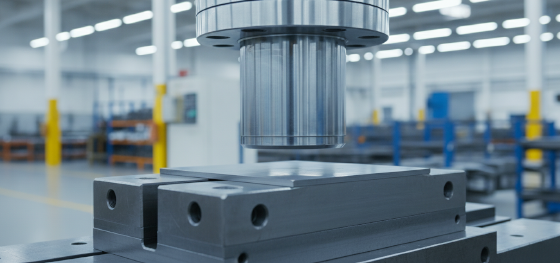
How does the sheet metal forming process work?
The process relies on applying mechanical force past the material's yield strength but below its ultimate tensile strength, forcing the metal to plastically deform into a new geometric shape without cracking.
At its core, sheet metal forming is a mechanical process that alters plate geometry through controlled stress. Modern manufacturing relies heavily on cold forming techniques to process metal plates at room temperature. By running cold forming at room temperature, we retain the material's grain structure and increase its structural hardness through a phenomenon known as work hardening, making the finished component incredibly rigid.
To deform flat stock successfully, the press must overcome the material's internal resistance to shape change. Applying uniform force shifts the metal's molecular structure along slip planes, permanently locking it into the targeted profile. This continuous grain path provides superior mechanical properties compared to welded assemblies, making formed parts ideal for load-bearing applications.
Common Forming Methods: Bending vs. Drawing vs. Stamping
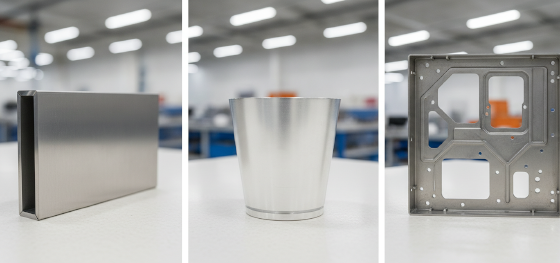
What are the most common mechanical methods used to form sheet metal?
The primary methods include bending to create straight-line folds, drawing to produce deep hollow cavities, and stamping to press complex shapes into raw blanks using matched male and female dies.
To select the most economical approach for your project, you must analyze how sheet metal forming splits into distinct disciplines. Each mechanical method subjects the raw alloy to different stress patterns and requires specialized tooling configurations. Choosing the wrong method can lead to excessive NRE tooling expenses or poor part tolerances.
The first discipline is sheet metal bending, which folds metal along straight axes using press brakes to create simple brackets or flanges. The second method is sheet metal drawing, which uses high-pressure blank holders to stretch flat discs into deep cups or enclosures. The final method is sheet metal stamping, which utilizes custom-matched dies to emboss or punch complex features in a single stroke. Here is a direct process comparison:
| Forming Method | Primary Stress Type | Typical Geometry | Tooling Investment |
|---|---|---|---|
| Straight Bending | Tension (Outer) / Compression (Inner) | Brackets, U-channels, straight flanges | Low (Uses standard V-dies) |
| Deep Drawing | Tensile and Compressive (Combined) | Hollow cylinders, cups, deep enclosures | High (Requires custom draw dies) |
| Custom Stamping | Shear and Localized Compression | Complex chassis, embossed panels | Very High (Matched steel dies) |
Preventing Material Fracture and Springback
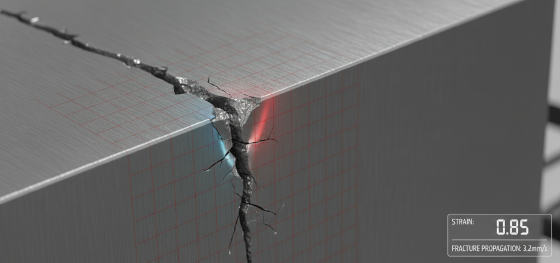
How do manufacturing engineers prevent cracking and springback in formed parts?
We resolve cracks by maintaining proper minimum bend radii and orienting folds perpendicular to the rolling grain, while controlling springback through over-bending calculations or using springback-compensation tools.
Bending plate stock past its physical limits forces the outer fibers to experience extreme tensile stress, causing micro-cracking and material failures. To prevent outer-edge splitting, designers must maintain a minimum inner radius that corresponds to the specific ductility of the material. Harder tempers cannot stretch as easily and require much larger radii.
Another major metallurgical obstacle is springback, where the metal naturally attempts to return to its original flat profile after the punch retracts. To combat this angular rebound, our tooling engineers over-bend the plate by a calculated margin. This ensures that the material relaxes into the exact target angle once the pressure is released, maintaining tight tolerances across production runs.
Custom Metal Forming Solutions by JUCHENG

What sets JUCHENG's custom metal forming services apart?
We combine advanced CNC press brakes and hydraulic stamp lines with deep metallurgical expertise, delivering highly accurate custom enclosures from prototype to production.
As a highly versatile phase of the broader sheet metal fabrication process, metal deformation dictates the structural integrity of custom housings. JUCHENG integrates advanced hydraulic press lines and CNC multi-axis brakes to execute complex deformations with extreme accuracy. Whether you require simple structural folds or deep drawn cylindrical casings, we manage the entire workflow in-house.
We process a wide range of materials to fit your specific application demands, including lightweight aluminum, high-strength stainless steel, and formable carbon steel. Our engineering queue provides a 24-hour free DFM analysis to evaluate your CAD models, checking flanges and stress points before tooling up. Backed by our no MOQ policy and rapid delivery schedules, we provide seamless support for both your agile prototyping runs and volume production demands.
FAQ: Critical Questions About Precision Sheet Metal Forming
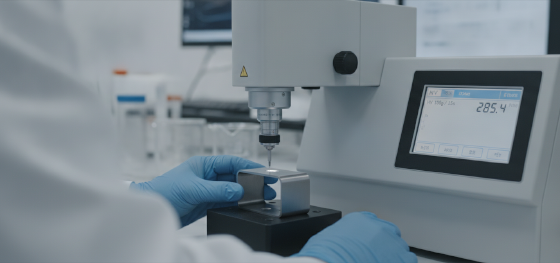
How does the rolling grain direction of sheet metal affect forming?
Sheet metal develops a directional grain structure during the rolling process at the mill. Bending parallel to this grain can cause severe cracking along the fold, whereas forming perpendicular or diagonal to the grain maximizes ductility and prevents outer-edge splitting.
What is the maximum draw depth achievable in a single deep drawing stroke?
The draw depth is limited by the material's draw ratio, typically restricted to a depth equal to or slightly less than the punch diameter. Exceeding this limit causes extreme wall thinning or tearing at the bottom corner, requiring progressive multi-stage draw dies to achieve deeper geometries safely.
Why does SPCC carbon steel form more easily than stainless steel 304?
SPCC is a soft, cold-rolled low-carbon steel with high ductility and low yield strength, requiring minimal force to shape. In contrast, stainless steel 304 possesses high yield strength and work-hardens rapidly during deformation, requiring much higher press forces and larger tooling clearances.
How do you maintain cosmetic surfaces on pre-painted or coated plates during press operations?
To prevent tool marks and scratches on pre-finished plates, we utilize specialized urethane dies or apply protective vinyl films to the metal surface. This cushioning layer prevents direct contact between the steel punch and the coated metal, delivering pristine surfaces ready for final assembly.

