


Maintaining an aging fleet of automation hardware in [2026] reveals a painful reality for industrial robot parts: OEMs eventually stop supporting legacy machines. When a high-value robot in a high-volume line suffers a component failure after its end-of-life date, the entire facility faces a multi-week shutdown while searching for a replacement. Standard supply chains often fail here, leaving maintenance managers with the choice of scrapping a perfectly functional robot or waiting months for a second-hand part. Mastering Custom robot spare parts CNC is the strategic solution that allows manufacturers to bypass OEM obsolescence and keep their lines running indefinitely.

Obsolescence is a mechanical challenge that can be solved through precision fabrication. Often, the failure point of an older robot is a specific wear-item—a plastic gear, a cast aluminum bracket, or a custom sensor mount. Jucheng Precision addresses these critical maintenance bottlenecks by utilizing high-fidelity reverse engineering and high-speed CNC machining. We don't just replicate the original part; we often improve upon it, using modern materials and tighter tolerances to ensure the second life of the robot is more reliable than the first.
Operating out of the Shenzhen precision manufacturing hub, JUCHENG serves as the rapid-response MRO partner for global automation users. We transform broken, worn-out components into digitized CAD models and subsequently into high-performance metal hardware. This guide explores the essential reverse engineering standards, material upgrading benefits, and on-demand production strategies required for manufacturing custom robot spare parts that eliminate downtime and extend ROI.
Reverse Engineering: Digitizing the Legacy Skeleton
Technical Data: Upgrading OEM Materials for Extended MTBF
Performance Upgrading: Replacing Plastic with Alloy
On-Demand MRO: Rapid Turnaround for Critical Spares
JUCHENG: The Shenzhen Hub for Robotic Life Extension
FAQ: Custom CNC Solutions for Discontinued Robots
Reverse Engineering: Digitizing the Legacy Skeleton
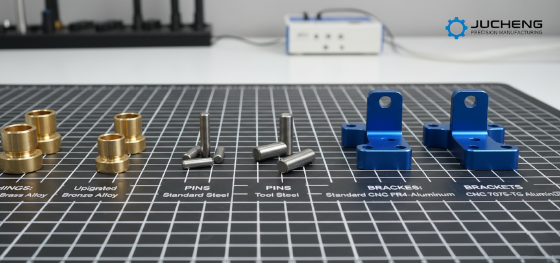
Capturing the geometry of a discontinued part is the first step in Custom robot spare parts CNC. Often, the original manufacturer will not provide the 2D drawings or 3D CAD files for legacy components. JUCHENG utilizes high-resolution 3D laser scanning and Coordinate Measuring Machines (CMM) to map the physical dimensions of a worn or broken part. By capturing the point cloud data with sub-micron accuracy, we can recreate a digital twin that accounts for the original design intent while correcting for years of mechanical wear and deformation.
Fitment analysis is critical during the digital reconstruction phase. When an industrial robot parts component like a J4 axis housing fails, it often distorts adjacent parts. JUCHENG’s engineering team analyzes the assembly context to ensure that the newly machined spare part fits perfectly within the existing kinematic chain. We identify the critical registration features—such as bearing bores and locating pin holes—and apply the necessary GD&T (Geometric Dimensioning and Tolerancing) to ensure the robot’s accuracy is restored to its factory-new state.
Thread identification and restoration are secondary challenges in legacy MRO. Many older robots utilize discontinued thread standards or specialized metric pitches that are difficult to source in off-the-shelf fasteners. JUCHENG utilizes thread-pitch gauges and precision CNC thread-milling to recreate these interfaces perfectly. If the original thread in the robot body is stripped, we can provide oversized custom bolts or hardened steel inserts, effectively repairing the robot while providing a more robust connection for the new spare part.
Internal cavity mapping is essential for parts with integrated cable or pneumatic routing. JUCHENG utilizes industrial CT scanning when necessary to visualize the internal passages of complex cast parts. This ensures that the custom CNC replacement possesses the same internal clearance for the robot’s "nerves," preventing any cable snagging or pneumatic bottlenecks after the machine is reassembled. Our Shenzhen hub manages the transition from broken hardware to production-ready CAD in as little as 24 to 48 hours.
Technical Data: Upgrading OEM Materials for Extended MTBF

One of the greatest advantages of Custom robot spare parts CNC is the ability to upgrade the material quality. Original OEM parts are often designed for cost-optimized mass production, utilizing materials like cast aluminum or molded glass-filled nylon. By switching to high-strength CNC-machined alloys, JUCHENG can significantly increase the Mean Time Between Failures (MTBF) for the component. The following table compares common OEM materials with JUCHENG’s upgraded CNC alternatives.
| OEM Original Material | JUCHENG Upgrade | Yield Strength Increase | Performance Benefit |
|---|---|---|---|
| Cast Aluminum (ADC12) | 7075-T6 Aluminum | ~110% | Fatigue / Impact resistance |
| Molded Nylon (PA66-GF30) | Machined PEEK | ~40% | Thermal / Chemical stability |
| Standard 304 Stainless | 17-4 PH (Aged) | ~300% | Ultimate thread strength |
| Carbon Steel (1045) | 4140 Chromoly | ~60% | Higher torsion capacity |
Upgrading to 7075-T6 Aluminum for robot arm links or brackets provides a massive boost in fatigue life. While cast parts are prone to internal porosity and crack propagation under vibration, JUCHENG’s CNC parts are machined from extruded billets with a consistent, dense crystalline structure. This ensures that the spare part can handle higher dynamic loads than the original, effectively future-proofing the robot for higher accelerations or increased payloads in the [2026] production environment.
Performance Upgrading: Replacing Plastic with Alloy
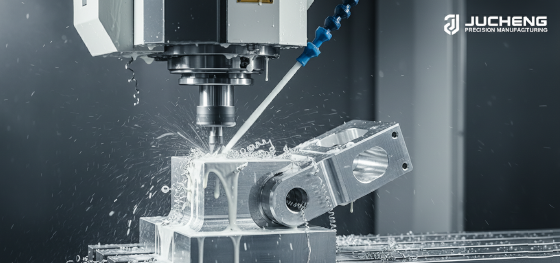
Many legacy robots utilize injection-molded plastic gears or bearing retainers that become brittle with age. In the context of Custom robot spare parts CNC, replacing these high-failure plastic items with precision-machined metals or high-performance polymers like PEEK is a game-changer. JUCHENG specializes in re-engineering these "weak links." By machining a replacement gear from hardened steel or a link from 7075 aluminum, we eliminate the primary failure mode of the robot, often extending its service life by another 5 to 10 years.
Surface treatments provide the final layer of performance upgrading. Original industrial robot parts often feature standard paint that flakes off over time. JUCHENG utilizes Type III Hard Anodizing on our aluminum spares and DLC (Diamond-Like Carbon) coatings on our steel gears. These treatments provide a surface hardness and corrosion resistance that far exceeds OEM standards, ensuring the spare part remains functional even in corrosive foundries or high-humidity food processing plants.
Weight optimization is often possible during the re-machining of a spare. JUCHENG’s 5-axis CNC capabilities allow us to hollow out solid sections of a part that were originally cast solid. By reducing the mass of a replacement arm link while maintaining its rigidity, we reduce the load on the robot's servo motors. This leads to lower motor temperatures and extended life for the robot's internal gearboxes, providing a systemic reliability benefit that goes beyond just the replacement of a single part.
Bearing seat tolerance refinement is another critical upgrade. OEM cast housings often have bearing bores that loosen over time due to thermal cycling. JUCHENG machines these bores to a G6 or H6 tolerance with a mirror-smooth Ra 0.4 finish. This ensures a perfect press-fit for the new bearings, eliminating the vibration and "play" that can ruin a robot’s repeatability. Our Shenzhen hub ensures that every industrial robot parts component we produce provides the "Precision fitment" needed to restore the machine to original factory specifications.
On-Demand MRO: Rapid Turnaround for Critical Spares
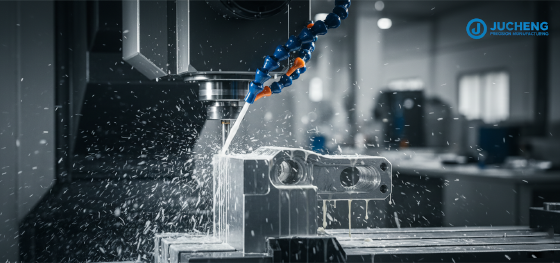
Speed is the most significant metric in robotic maintenance. A "Down-Robot" situation can cost a factory thousands of dollars per hour. JUCHENG’s Custom robot spare parts CNC service is designed for rapid response. Because we manage the entire lifecycle—from laser scanning and CAD modeling to 5-axis machining and heat treatment—in our Shenzhen precision manufacturing hub, we can deliver custom spares in as fast as 5 to 7 business days. This is often faster than sourcing a "New Old Stock" part from an overseas OEM warehouse.
Small-batch manufacturing is our specialty. Unlike traditional job-shops that require a minimum order quantity (MOQ), JUCHENG provides one-off spare parts with the same rigor as a production run. We understand that you may only need two custom bushings for a discontinued SCARA robot. By utilizing "Bridge to Production" technologies like 3D metal printing and rapid-turn CNC centers, we eliminate the high NRE costs associated with custom MRO, making legacy robot maintenance financially viable for any size facility.
Digital inventory is the future of AgTech and industrial MRO. Once JUCHENG has reverse-engineered a part for you, we store the validated 3D model in our secure digital vault. If the same part fails on another robot in your fleet six months later, we can initiate a production run instantly without the need for a second scan. This "Virtual Spare Parts" strategy allows our clients to reduce their physical inventory costs while ensuring they have a guaranteed source of high-quality hardware whenever a failure occurs in the field.
Quality verification is non-negotiable for critical spares. JUCHENG performs full dimensional inspection and material certification on every custom part. We understand that a spare part that doesn't fit is just as useless as a broken one. Our QC lab provides CMM reports for every critical dimension, ensuring that when the part arrives at your facility, it can be installed immediately with zero manual modification. This level of professional oversight is why JUCHENG remains a trusted partner for global aerospace and automotive maintenance teams.
JUCHENG: The Shenzhen Hub for Robotic Life Extension
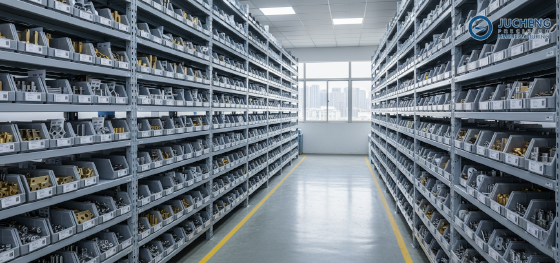
Dominating the [2026] robotic market requires a partner that can support the entire lifecycle of a machine, from prototype to legacy maintenance. Jucheng Precision operates with a 24/7 manufacturing mindset in our Shenzhen precision manufacturing hub, delivering high-tolerance custom robot spare parts CNC and structural industrial robot parts with industry-leading speed. We provide a bridge to production that ensures your legacy robot fleets remain operational long after the OEM has moved on to newer models.
Integrating your MRO needs with JUCHENG’s expertise ensures that your facility survives the "Obsolescence Cycle" and moves into a state of permanent uptime. We offer comprehensive DFM reviews within 24 hours, identifying potential material upgrades or "wear-proofing" opportunities in your spare part design before it enters production. Whether you are maintaining an older automotive welding robot or a high-speed electronics assembler, Jucheng Precision provides the rigid, precise hardware that keeps your innovation moving through the years of hard labor.
Our facility is equipped with 150+ CNC machines and dedicated reverse-engineering labs, allowing us to manage the entire spare-part lifecycle in one location. We manage the complexity of micron-level machining and material science so your maintenance team can focus on the system integration and the software. By combining Shenzhen's speed with industrial-grade material verification, JUCHENG remains the preferred partner for the world's most aggressive industrial robot parts challenges. Contact us today to start your next MRO project.
FAQ: Custom CNC Solutions for Discontinued Robots

Can JUCHENG make parts for robots without original drawings?
Yes. We use 3D laser scanning and CMM inspection to reverse-engineer parts directly from the physical sample.
Is it possible to upgrade plastic robot parts to metal?
Absolutely. We frequently upgrade brittle plastic components to CNC-machined 7075 aluminum or steel for better durability.
What is the minimum order quantity for custom spare parts?
We have No MOQ. We can manufacture a single, one-off spare part to get your robot back online.
How do you ensure the spare part fits the legacy robot?
We utilize sub-micron measurement and assembly-fitment analysis to guarantee the part matches original factory specs.
What is the typical turnaround for a custom CNC spare part?
Most custom MRO parts are reverse-engineered, machined, and delivered within 7 to 10 business days.
Component obsolescence in industrial automation is an absolute hardware killer. Partnering with Jucheng Precision ensures that your are protected with the custom robot spare parts CNC and specialized reverse-engineering techniques the industry demands. Reach out to our Shenzhen manufacturing hub today for a complete DFM review and build the high-durability foundation your legacy fleet requires.

