


Making a metal part for a simple consumer good is one thing. Making a metal part for a car's engine, a hospital's CT scanner, or a 5G base station is another thing entirely.

While the core technology, Die Casting, might be the same, the rules of the game are completely different. Each industry is its own unique battlefield. It has its own definition of "quality," its own set of risks, and its own language of compliance.
Understanding these different battlefields is critical when choosing a manufacturing partner. You need a partner who is not just a good machinist, but a fluent speaker in the language of your industry. This guide explores the unique demands of the key Die casting industry applications.
content:
Automotive: A Battlefield of Zero Failures
Medical: A Battlefield of Absolute Purity
5G/Telecom: A Battlefield of Heat and Speed
Choosing a Partner Who Speaks Your Language
Automotive: A Battlefield of Zero Failures
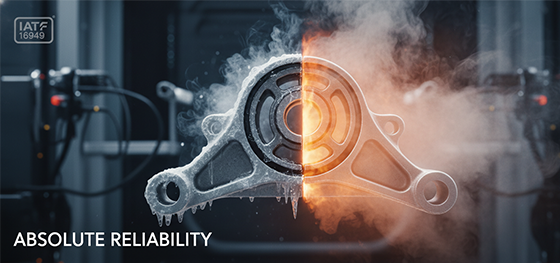
In the automotive world, the number one rule is reliability. A die cast part in a vehicle is expected to function perfectly for hundreds of thousands of miles. It must endure bone-jarring vibrations, extreme temperatures, and exposure to corrosive road salt.
Failure is not an option. A failed engine bracket or transmission case is a catastrophic event. This is why the industry is governed by one of the world's strictest quality standards: IATF 16949.
A manufacturer serving this industry must live and breathe this standard. It demands rigorous process control, full material traceability from the metal's origin, and a quality system (like PPAP) that is obsessed with preventing defects.
Die casting is essential for automotive because it can produce complex, lightweight aluminum parts like engine cradles and radiator housings at a massive scale and a low cost. When you choose a partner for an automotive project, their IATF 16949 certification is your proof that they understand the high stakes of this zero-failure game.
Medical: A Battlefield of Absolute Purity
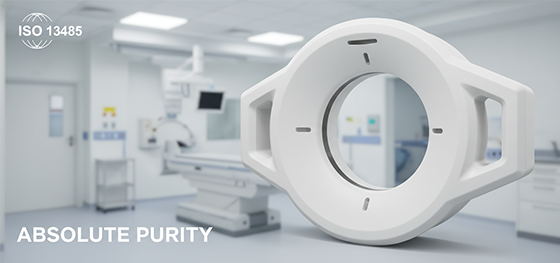
In the medical device industry, the rules change. The top priority is now safety, cleanliness, and reliability.
Die casting is used to create the large, stable, and complex structural components for machines like CT scanners, X-ray machines, and hospital beds. These parts need to be strong enough to support heavy loads, but also have a smooth, cleanable surface.
The governing standard here is ISO 13485. This is the quality management system for medical devices. It demands extreme levels of documentation, risk management, and traceability. A single component's entire life history, from raw material to final inspection, must be documented and auditable.
A manufacturer with ISO 13485 certification has proven they have the discipline and the systems required to produce parts that are safe and reliable enough for the high-stakes medical environment.
5G/Telecom: A Battlefield of Heat and Speed
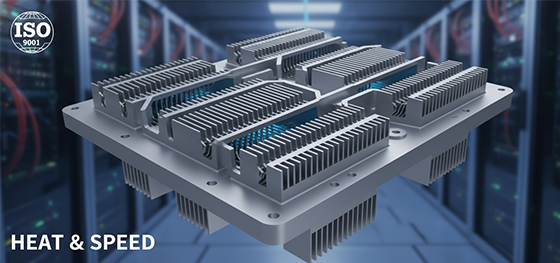
In the fast-moving world of 5G and telecommunications, the rules change again. The game is won with thermal performance and the ability to produce complex shapes with perfect consistency.
Modern 5G base stations generate an enormous amount of heat. This heat must be dissipated efficiently to prevent the sensitive electronics from failing. This is where die cast aluminum shines.
Die casting is the perfect process for creating large, complex heat sinks. It allows engineers to design housings with hundreds of thin, closely-spaced fins. This maximizes the surface area for heat dissipation. The excellent thermal conductivity of aluminum does the rest of the work.
These parts also need to provide excellent EMI shielding. The precision of die casting ensures that different parts of an enclosure fit together perfectly, with no gaps for electronic noise to escape. For this industry, a manufacturer's ability to hold tight tolerances and cast complex geometries is paramount.
Choosing a Partner Who Speaks Your Language
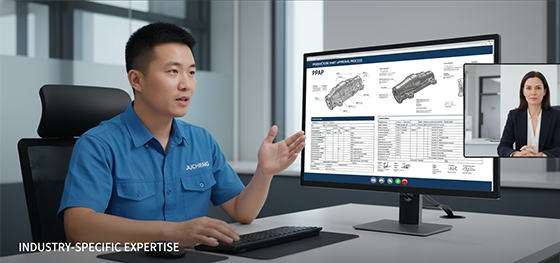
Automotive. Medical. Telecom. Three different industries. Three different sets of rules. Three different definitions of "quality."
A truly great manufacturing partner is multilingual. They do not just speak the language of Die Casting. They speak the specific dialect of your industry.
At JUCHENG, our certifications are proof of our fluency. Our IATF 16949 certification shows we understand the world of zero defects and PPAP documentation. Our ISO 13485 certification shows we understand the world of medical traceability and risk management. Our experience with leading telecom companies shows we understand the world of thermal management and EMI shielding.
When you choose a partner, do not just ask if they can make a part. Ask if they understand your battlefield. This is the question that leads to a true, successful partnership.

