


Designing structural, load-bearing parts for extreme industrial environments requires absolute physical certainty. Sourcing teams frequently make the mistake of looking strictly at raw part weight, completely ignoring the microscopic gaps hidden inside the metal. Comparing die casting vs cnc strength directly prevents your custom brackets from snapping under heavy operational loads during transit.
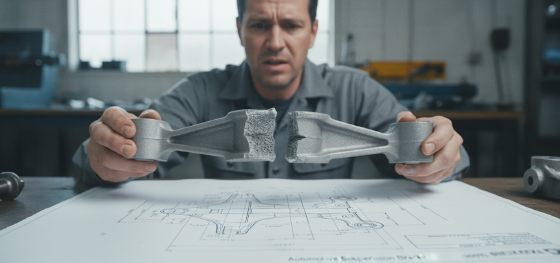
Rushing into mass production without testing physical limits is a dangerous financial gamble. Deciding between die casting vs cnc machining wisely ensures your early-stage cash flow remains completely secure while protecting your product lifespans.
Consolidating your engineering resources with an agile, dual-capability contract manufacturer is the ultimate cost-killer. Let's dissect why solid pre-forged billets provide superior density, analyze how high-pressure gas traps weaken cast metal, and compare zinc against aluminum structural limits.
content:
Billet Integrity: Why Solid Milled Blocks Outperform Castings
Porosity Realities: Defeating Gas Voids in High-Pressure Casts
Vacuum Solutions: Pushing Metal Density to the Limits
Material Competitions: Balancing Weight and Yield Strengths
FAQ: Honest Answers About AUTOCLAVES and Thickness
Billet Integrity: Why Solid Milled Blocks Outperform Castings
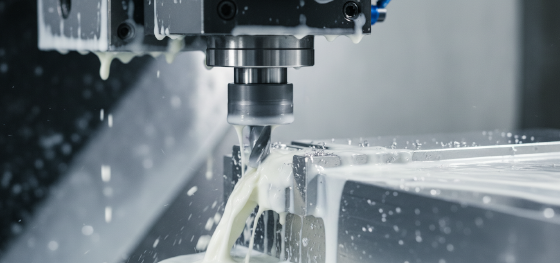
Why do solid machined components possess significantly better yield strength than cast parts?
Solid structural billets are pre-forged and completely free of the microscopic gas pockets that naturally form inside cast metal during cooling.
Slicing parts directly from a pre-compressed block ensures absolute molecular density. The metal holds its structural integrity under extreme physical stress, making it the undisputed king for heavy-lift motor mounts.
Mastering this raw material baseline is critical for extreme payloads. You achieve the maximum possible tensile strength and yield limit required to keep your complex assemblies aligned under heavy torque.
Porosity Realities: Defeating Gas Voids in High-Pressure Casts
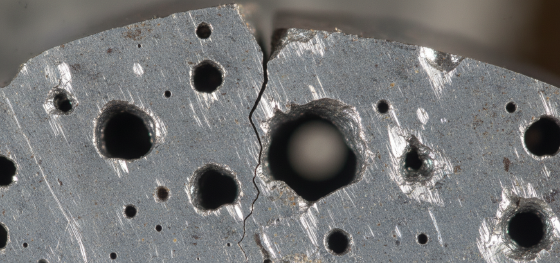
What causes raw cast components to crack and shatter under heavy physical impact?
Extreme hydraulic speeds wrap atmospheric air into the liquid metal, creating hidden gas porosity voids that act like micro-fractures inside the final part.
Standard injection molding delivers excellent baseline dimensional accuracy but can compromise your ultimate die casting vs cnc strength. If your structural part has uneven mass, these internal voids will form exactly where the metal cools slowest.
Screwing fasteners into these porous zones causes the threads to strip out completely under tension. You get a weak, brittle component that fails basic drop tests in the field.
Vacuum Solutions: Pushing Metal Density to the Limits
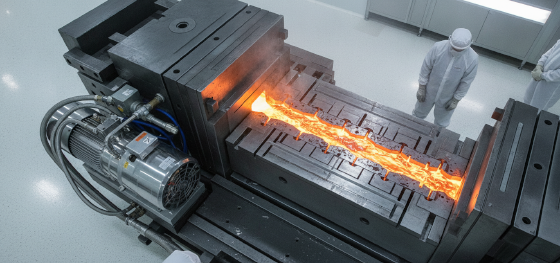
How do advanced factories eliminate these dangerous internal air pockets safely?
By deploying high-capacity vacuum pumps and specialized timing valves to extract all oxygen from the mold cavity milliseconds before the liquid metal enters.
Utilizing vacuum die casting protocols dramatically upgrades the raw density of the alloy. The expanding liquid fills every crevice under a deep vacuum, delivering ultra-dense, void-free parts that pass strict X-ray inspections.
Securing this perfect density allows engineers to successfully heat-treat the parts later. This thermal tempering process skyrockets your die casting vs cnc strength, delivering castings that closely rival the structural performance of solid machined blocks.
Material Competitions: Balancing Weight and Yield Strengths
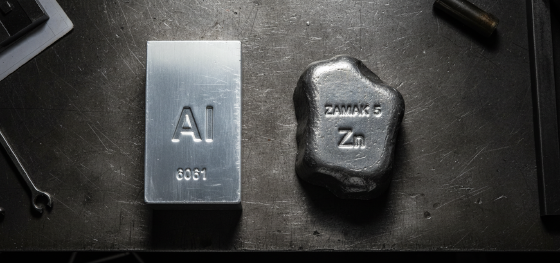
Comparing raw material limits is a non-negotiable step before freezing your CAD drawings. The technical matrix below outlines how different manufacturing methods perform across critical mechanical stress limits.
| Mechanical Limit | Solid Machined Aluminum (6061) | High-Pressure Cast Aluminum (ADC12) |
|---|---|---|
| Tensile Strength (MPa) | 310 (Maximum load-bearing resilience) | 310 (Prone to internal voids) |
| Yield Strength (MPa) | 276 (Extremely rigid, resists bending) | 150 (Softer, lower elastic limit) |
| Internal Gas Porosity | Zero (100% solid molecular structure) | Moderate to High |
Sourcing aluminum die casting vs cnc machining runs is perfect for lightweight heatsinks, but zinc Zamak alloys offer much greater impact toughness. Zinc flows like water, filling complex molds rapidly to deliver highly consistent, heavy-duty parts.
Securing your ultimate die casting vs cnc strength requires selecting the right raw alloy. JC Rapid operates both advanced casting presses and high-speed CNC milling bays under one roof, delivering fully finished, compliant hardware.
FAQ: Honest Answers About Autoclaves and Thickness
Can I heat-treat standard high-pressure aluminum castings to improve their strength?
Usually no. Heating standard castings causes the trapped internal air bubbles to expand violently, creating ugly surface blisters that ruin the structural and cosmetic quality.
Does zinc alloy have better impact resistance than aerospace aluminum?
Yes, zinc Zamak alloys possess exceptional natural damping capacity and impact toughness, absorbing heavy mechanical shocks and vibrations far better than standard aluminum.
Do you charge extra fees for mandatory Material Test Reports?
Providing complete chemical certifications (CoA) and RoHS compliance certificates with every single delivery is our standard practice, included entirely free of charge.
Why do some machined parts look dull and smeared instead of shiny?
Dull, smeared finishes typically indicate that the designer left too little excess metal, forcing the cutter to aggressively drag across the tough chill zone instead of slicing through it cleanly.

