


Comparing raw metal textures straight out of the press against computer-guided toolpaths reveals a massive aesthetic gap. Sourcing teams often expect a mirror-like shine from a raw mold, completely ignoring the microscopic roughness naturally left by liquid metal cooling. Specifying die casting vs cnc surface finish guidelines early protects your corporate branding from looking like a cheap toy. Selecting an inexperienced supplier to manage these structural and cosmetic boundaries guarantees assembly failures.
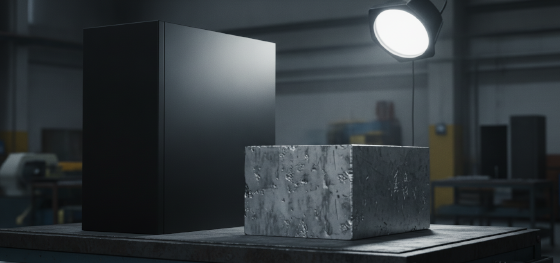
Ignoring these surface variations before ordering massive production batches invites severe paint adhesion failures. Liquid polymers and chemical anodizing dyes react completely differently depending on the roughness of the substrate. Deciding between die casting vs cnc machining keeps your early-stage cash flow completely secure.
Balancing visual beauty with uncompromising protective coatings defines successful hardware engineering. Let's compare standard mold textures to raw milling lines, analyze why cast aluminum is notoriously difficult to anodize, and explore the best post-processing options for your product.
content:
Molding vs. Milling: The Visual and Tactile Contrast
Surface Roughness: Deciphering the Ra Metrics
Surface Coating Challenges: Anodizing Cast Aluminum
Technical Data: Comparing Roughness and Finishing Costs
FAQ: Honest Answers About Paint Adhesion and Media Blasting
Molding vs. Milling: The Visual and Tactile Contrast
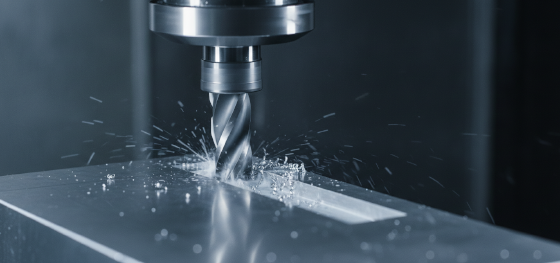
Why do raw injected metal parts feel so different from precision cut parts?
Molten alloys copy the microscopic texture of the steel mold, leaving a slightly rough, non-directional finish, whereas spinning tools leave highly visible parallel cutting lines.
Industrial designers refer to these raw patterns as the as-cast texture. While excellent for hidden brackets or under-hood brackets, this slightly bumpy skin requires heavy manual polishing if your product demands a premium consumer aesthetic.
Subtractive cutting produces the classic as-machined look. The spinning tool leaves tiny, microscopic grooves across the metal, which can be highly attractive for modern tactical gear but requires careful deburring before final assembly.
Surface Roughness: Deciphering the Ra Metrics

How do engineers quantify the physical smoothness of a metal part?
By dragging a highly sensitive digital profilometer probe across the surface to calculate the average height deviations of microscopic peaks and valleys.
Standard casting results in a relatively high roughness average (Ra) value, typically ranging from 1.6 to 3.2 micrometers. This rough surface is fantastic for holding heavy industrial powder coatings but completely blocks high-gloss electroplating.
Milling raw billets comfortably achieves tight, microscopic roughness limits down to 0.4 Ra. Securing this extreme smoothness is mandatory for critical sealing faces, ensuring your rubber gaskets compress flawlessly without leaking.
Surface Coating Challenges: Anodizing Cast Aluminum
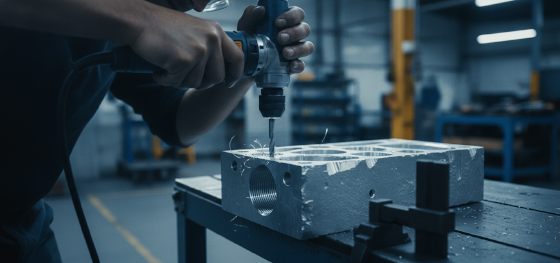
Why is it notoriously difficult to apply bright anodized colors to cast parts?
Silicon additives required to make the liquid metal flow smoothly into the mold turn a muddy, splotchy gray or black during chemical anodizing.
Mastering a vibrant, glossy blue or red finish requires a pure aluminum substrate with zero silicon contaminants. Extruded metals like 6061 or 7075 anodize into brilliant colors, making them highly preferred for premium consumer electronics.
Managing this chemical limitation on cast parts requires alternative strategies. We highly recommend applying thick electrostatic powder coatings or specialized liquid paints to mask the gray surface blemishes and protect the underlying alloy permanently.
Technical Data: Comparing Roughness and Finishing Costs

Selecting the right cosmetic pathway requires balancing raw aesthetics against ongoing post-processing bills. The data matrix below outlines how different manufacturing methods perform in surface roughness and finishing compatibility.
| Sourcing Parameter | Die Casting Surface | CNC Milled Surface |
|---|---|---|
| Raw Surface Roughness | Ra 1.6 to 3.2 (Slightly rough) | Ra 0.4 to 1.6 (Smooth tool lines) |
| Anodizing Compatibility | Poor (Turns gray/black due to silicon) | Flawless (Brilliant cosmetic colors) |
| Powder Coating Grip | Excellent (Rough surface holds powder) | Good (Requires bead blasting prep) |
Pushing your designs into production with JC Rapid ensures your die casting vs cnc surface finish is managed flawlessly. We operate both automated hot chamber presses and high-speed CNC milling bays under one roof, delivering ready-to-assemble hardware directly to your assembly line.
Stop paying third-party vendors for mismatched aesthetics and ruined paint jobs. Send your detailed 3D CAD files to our engineering team today for a comprehensive aesthetic and structural review, perfectly matching your required corrosion resistance to the optimal factory process.
FAQ: Honest Answers About Paint Adhesion and Media Blasting

Does the raw mold texture provide better paint adhesion than milled metal?
Yes, the natural roughness of the as-cast skin acts like microscopic velcro, allowing heavy industrial primers to grip the metal much more aggressively.
Can you completely erase CNC cutting lines using cheap plastic media tumbling?
Tumbling and vibratory finishing soften sharp tool ridges beautifully but cannot erase deep directional cutting marks. You must use aggressive manual polishing to achieve a flawless, smooth finish.
Why do some powder-coated castings show tiny bubbles on the surface?
This indicates outgassing. Trapped internal air pockets from the injection phase expand violently inside the high-temperature paint curing ovens, popping through the liquid polymer.
Will high-pressure bead blasting help prepare cast aluminum for anodizing?
Yes, bombarding the raw metal with microscopic glass beads erases the splotchy directional flow lines, creating a perfectly uniform, premium matte gray surface before the chemical bath.

