


Forming complex, seamless hollow geometries from flat plate stock requires extreme mechanical force and deep metallurgical calculations. When designing deep 3D enclosures or deep-drawn cups, utilizing sheet metal drawing is the most reliable path to preserve raw material thickness and structure. This advanced forming process stretches flat blanks into hollow cylindrical or box-shaped configurations without joints, seams, or structural weak points.
Suffer from multi-part welded assemblies that leak or warp under pressure? Multi-stage welding is slow, labor-intensive, and introduces localized heat stresses that cause cosmetic and structural defects. Shifting to an integrated drawing setup completely eliminates these issues, delivering a clean, solid metal body that is mechanically superior and aesthetically pristine.
Balancing the material flow rates against punch forces separates high-yield production runs from split, wrinkled scrap. Let's examine the mechanical constraints of deep extrusion, evaluate the best ductile alloys, and learn how our advanced facility coordinates custom tooling to stabilize your hardware designs.
content:
What Constitutes "Deep" Drawing?
Best Materials for Drawing
Applications in Medical and Consumer Housings
Precision Deep Drawing Tooling at JUCHENG
FAQ: Critical Questions About Deep Drawing Sheet Metal
What Constitutes "Deep" Drawing?
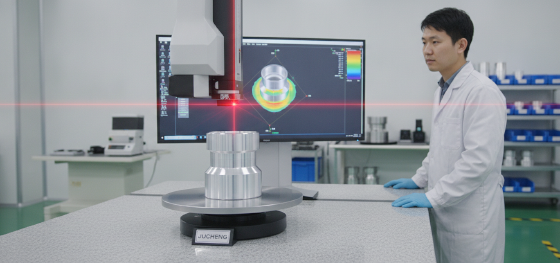
What defines the difference between shallow drawing and deep drawing?
Deep drawing occurs when the depth of the drawn hollow part exceeds its diameter, requiring a carefully controlled mechanical slide to stretch the metal without structural failure.
Understanding the limits of the deep drawing process is essential to designing viable custom hardware. During a standard deep drawing process, a high-pressure blank holder secures the outer flange of a flat blank. A mechanical punch then descends, forcing the metal to flow into a customized draw die to form a three-dimensional hollow cavity.
The physical feasibility of this deformation is governed by the limiting draw ratio (LDR), which measures the maximum blank diameter relative to the punch diameter. If this ratio is set too high, the outer flange cannot compress smoothly, resulting in edge splits. Controlling the die radius is also critical; a tight radius causes extreme tension and tears the material, while an oversized radius allows the metal to slip too fast, causing severe flange wrinkling.
Best Materials for Drawing
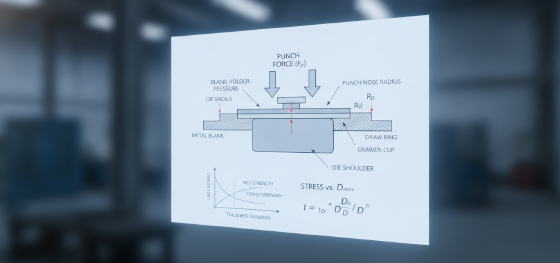
What metallurgical properties are required for a successful drawing process?
The material must possess high ductility, an excellent strain-hardening exponent, and low yield-to-tensile strength ratios to allow smooth stretching under high pressure.
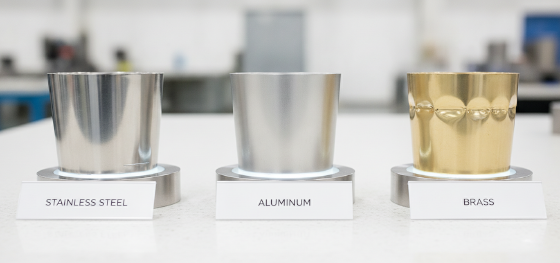
While sheet metal drawing can theoretically be applied to any ductile plate, selecting the correct alloy prevents costly stress cracks. Soft metals with high elongation rates flow seamlessly around draw dies, whereas hard or brittle plates will instantly crack. Selecting the proper alloy dictates the final structural strength of your drawn enclosure:
| Material Grade | Metallurgical Ductility | Typical Draw Ratio (LDR) | Recommended B2B Applications |
|---|---|---|---|
| Stainless Steel 304 / 316 | Excellent (High work hardening) | 2.0 - 2.2 | Medical enclosures, food processing cups |
| Aluminum 5052-O / 3003-O | Very High (Soft annealed temper) | 1.8 - 2.0 | Lightweight electronics, consumer casings |
| Mild Steel (e.g., DD14 / SPCD) | Superior (Deep-draw quality) | 2.1 - 2.3 | Automotive shells, heavy structural cans |
We stock high-quality grades of stainless steel, annealed aluminum, and deep-draw quality mild steel. This ensures that the material behaves predictably under the punch. By matching the correct raw temper to your specific depth requirement, we prevent unexpected thinning and keep your part dimensions stable.
Applications in Medical and Consumer Housings
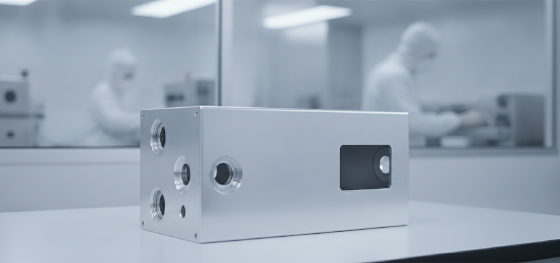
Why is deep drawing preferred for high-end medical and consumer housings?
It produces seamless, joint-free enclosures that protect delicate electronics from moisture ingress, simplify sterilization, and deliver ultra-clean cosmetic profiles.
Drawn housings are highly valued in the medical device industry. Modern diagnostic scanners, surgical fluid pumps, and laboratory analyzers require robust casings that prevent chemical or bacterial ingress. Because drawn stainless steel or aluminum enclosures are formed from a single continuous blank, they feature no micro-gaps, welds, or seams, allowing for easy washdowns and sterilization under strict healthcare protocols.
In consumer electronics, seamless drawn panels deliver premium aesthetics and robust shielding. Complex consumer housings such as speaker back-cans, projector chassis, and smart home modules leverage drawn metal to maximize internal space while providing excellent electromagnetic interference (EMI) protection. This ensures reliable performance in compact footprints.
Precision Deep Drawing Tooling at JUCHENG
How does JUCHENG guarantee success on complex deep drawing projects?
We engineer custom draw dies with calculated blank-holding forces and die clearances, matching the tooling to your alloy's physical properties to prevent tearing.
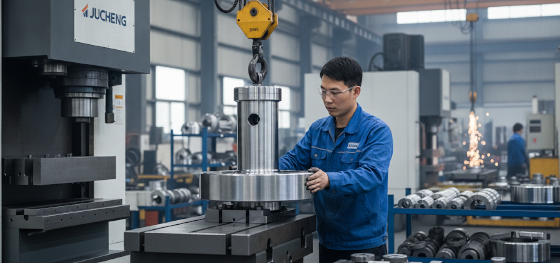
Why settle for multi-part welded assemblies that leak or warp? Our advanced hydraulic workstations specialize in precision sheet metal drawing, eliminating leak points and keeping your project budgets balanced. We manage the entire tooling and stamping workflow in-house.
As the most demanding mechanical stage within the modern sheet metal fabrication process, deep extrusion requires a seamless blend of custom tool design and raw material control. JUCHENG operates an IATF 16949 and ISO 13485 certified facility, utilizing over 150 high-performance manufacturing machines to execute complex stamping runs. We offer a 24-hour free DFM analysis to evaluate your CAD models, checking strain rates and flange parameters before cutting any tool steel. With our no MOQ policy and rapid delivery schedules, we provide reliable support for both your initial prototype development and ongoing low-to-medium volume manufacturing demands.
FAQ: Critical Questions About Deep Drawing Sheet Metal
How do you control wall thinning during deep metal drawing?
We minimize wall thinning by optimizing our blank-holding forces and utilizing specialized lubrication systems. This reduces friction between the raw plate and the draw die, allowing the metal to slide smoothly into the cavity rather than stretching to the point of structural failure.
What causes tearing at the bottom corner of a drawn cup?
Bottom corner tearing occurs when the tensile stress exceeds the material's ultimate strength, typically caused by insufficient punch or die radii, excessive blank-holding force, or running a blank diameter that exceeds the limiting draw ratio. We resolve this by polishing the tooling radii and adjusting the raw holding pressure.
Is custom drawing tooling cost-effective for low-volume production?
Traditional deep draw tooling carries a high upfront cost due to the use of hardened steel dies. However, for low-volume runs, we can utilize rapid tooling or modular dies to significantly lower your initial setup costs, making seamless enclosures affordable even for small batches.
How does JUCHENG prevent surface scratching during aluminum drawing?
To maintain cosmetic surfaces on aluminum parts, we utilize highly polished draw rings or apply specialized protective vinyl coatings to the blank plate before forming. This buffering layer prevents metal-on-metal friction, delivering clean, mark-free parts ready for anodizing or final assembly.

