


Achieving a perfectly flat surface on precision mounting plates, semiconductor chassis, or optical brackets is a major developmental milestone. Establishing a realistic standard flatness tolerance for sheet metal prevents physical warping across large surfaces, ensuring that your critical mounting planes align perfectly during final assembly while identifying how raw residual stresses behave during high-heat processing. For mechanical designers, understanding these structural limits is essential to engineering high-precision hardware that mounts without mechanical stress.
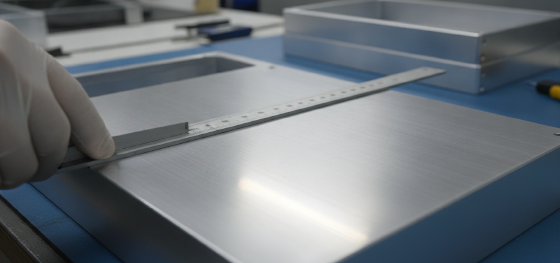
Suffer from precision brackets that warp or twist after laser cutting, making it impossible to align your card guides or PCBs? When thermal energy is introduced to raw plates, internal stresses are released unevenly, warping flat panels into wavy, non-compliant profiles. Proactively configuring your tolerances and utilizing hybrid fabrication pathways is the best way to secure your assembly clearances.
Let's examine the mechanical nature of flatness deviations, analyze how high-temperature cutting and welding warp flat panels, and explore how post-bending CNC milling delivers extreme flatness tolerances for critical applications.
content:
Understanding Flatness in Sheet Metal Fabrication
How Laser Cutting and Welding Affect Flatness
When to Use CNC Machining for Extreme Flatness
Strict Quality Control and CMM Inspection at JUCHENG
FAQ: Critical Questions About Standard Flatness Tolerance for Sheet Metal
Understanding Flatness in Sheet Metal Fabrication
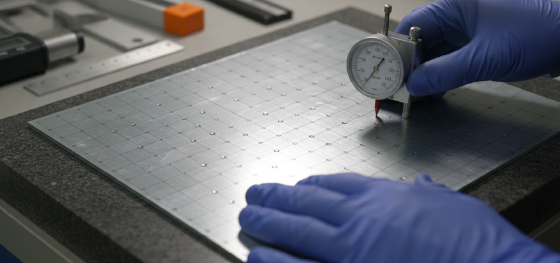
What defines flatness deviation in custom sheet metal manufacturing?
Flatness is the geometric boundary defined by two parallel planes enclosing all surface points, measuring the maximum vertical deviation across a flat panel.
Defining a realistic standard flatness tolerance for sheet metal is highly dependent on the chosen blank thickness and raw rolling mill tempers. When standard plates are rolled at the mill, they inherit internal residual stresses. During subsequent processing, any mechanical shearing or punching relieves these stresses unevenly, resulting in minor warping.
Under standard commercial tolerances (such as ISO 2768-m), a raw flat plate of 1.0mm to 3.0mm thickness typically exhibits a flatness deviation of approximately 0.3mm to 0.5mm per 100mm of length. Attempting to hold tighter tolerances on raw sheets without secondary processing is highly impractical due to these natural material characteristics, requiring specialized manufacturing steps.
How Laser Cutting and Welding Affect Flatness
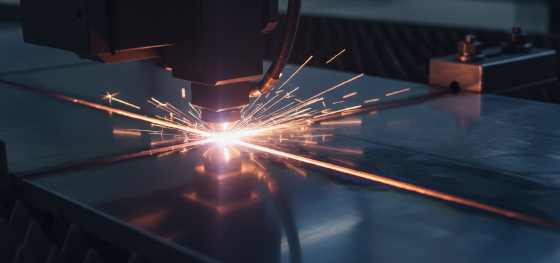
How do high-temperature fabrication processes warp flat metal panels?
Laser cutting and arc welding introduce extreme localized heat, creating sharp thermal gradients that cause uneven material expansion and severe distortion upon cooling.
Thermal cutting processes like CNC laser cutting utilize intense thermal energy to vaporize metal along a thin path. This localized heat creates a high-temperature heat-affected zone directly adjacent to the cut. As the cooled metal contracts, it exerts tensile forces on the surrounding flat sheet, inducing a wavy, buckled profile.
Structural welding causes even more severe welding distortion. Fusing separate flanges together with an electric arc heats the joints past their melting points. Upon cooling, the solidified weld bead shrinks, pulling the adjacent sheets inward and warping the flat surfaces. We manage this distortion by deploying rigid clamping fixtures, utilizing copper chill blocks, and optimizing weld sequences to distribute heat input evenly.
When to Use CNC Machining for Extreme Flatness
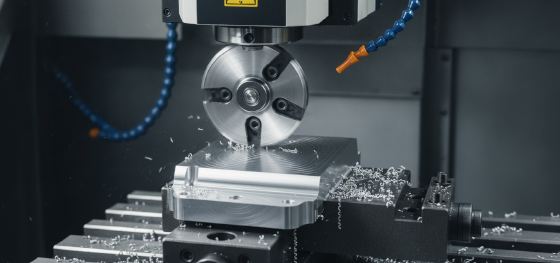
How do you achieve extreme flatness tolerances under 0.1mm on fabricated brackets?
We resolve flatness conflicts by implementing a hybrid process, utilizing high-precision CNC post-milling to fly-cut critical mounting surfaces flat after forming and welding.
When your application demands extreme flatness (such as mounting interfaces for optical sensors or vacuum-sealed semiconductor chambers), relying on standard folding is impossible. To meet these specifications, we implement a hybrid fabrication approach. We first laser cut, bend, and weld the raw chassis, leaving extra material on critical mounting faces.
Once the thermal stresses have stabilized, we mount the welded assembly on our multi-axis CNC milling centers. Using high-speed fly-cutters, we execute precision post-machining to shave off the warped surface layers. This mechanical material removal delivers flat surfaces within 0.05mm, combining the cost-efficiency of sheet metal with the precision tolerances of CNC machining.
Strict Quality Control and CMM Inspection at JUCHENG
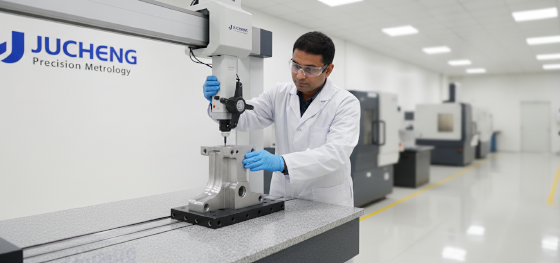
How does JUCHENG guarantee flatness tolerances across high-volume production?
We operate high-power fiber lasers and CNC benders backed by high-precision granite surface plates and multi-sensor coordinate measuring machines.
Integrating precise tolerance limits into your active sheet metal design cycle is the single most effective way to eliminate assembly defects. JUCHENG integrates these advanced geometric and material validations into our digital manufacturing network, ensuring that your CAD files translate into fully finished, durable assemblies with extreme dimensional precision.
We process a wide range of raw sheets, including lightweight aluminum, high-yield stainless steel, and easily formable carbon steel. Our technical department provides a 24-hour free DFM analysis to check your CAD models, checking flatness tolerances and clearances before production. Supported by our no MOQ policy and rapid delivery guarantee, we manage your project from initial flat pattern cutting to final packaging and assembly.
FAQ: Critical Questions About Standard Flatness Tolerance for Sheet Metal
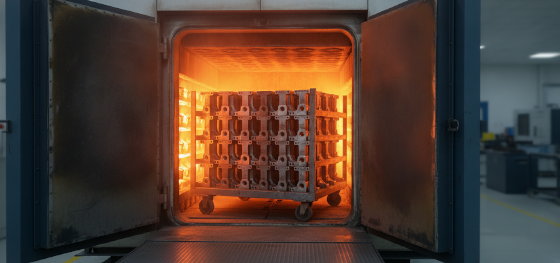
How does thermal annealing improve the flatness of warped steel sheets?
Thermal annealing involves heating the fabricated metal parts in a furnace to a controlled temperature, holding it to allow the microcrystalline grains to relax, and cooling it slowly. This heat treatment relieves the internal residual stresses induced by laser cutting and welding, preventing subsequent warping during CNC post-machining.
What is the standard flatness tolerance for SPCC cold-rolled steel?
Cold-rolled steel sheets (such as SPCC) possess excellent raw flatness tolerances due to cold-rolling mills processing the steel at room temperature. For standard SPCC sheets under 2.0mm thickness, the commercial flatness deviation is typically within 0.2mm per 100mm, which is significantly flatter than standard SPHC hot-rolled steel sheets.
How does JUCHENG prevent tool marks on delicate cosmetic surfaces?
We protect raw aluminum and polished stainless steel sheets during press brake operations by utilizing specialized polyurethane die inserts or applying high-density protective vinyl masking films. This prevents direct metal-on-metal friction between the steel tooling and the sheet, delivering scratch-free panels ready for immediate coating.
How does JUCHENG guarantee tight standard flatness tolerance for sheet metal parts?
Our quality control department checks flatness across a grid of coordinates using physical dial indicators on granite surface plates, or runs automatic scans on our multi-sensor coordinate measuring machines (CMM). If your enclosure demands extreme flatness, our engineering team suggest hybrid post-machining to shave warped faces, ensuring perfect mounting alignments.

