


Analyzing the molecular foundation of high-performance robotic enclosures or surgical instrument handles reveals a critical divide in liquid chemistry. In the current hardware development landscape, the decision to utilize Thermoset PU for RIM vs Urethane Casting Resins is the primary driver of part durability and cycle time. While both systems utilize two-part liquid polyurethanes, the way these chemicals are mixed and injected into the tool dictates the final mechanical limits of the hardware. Achieving the isotropic strength required for life-critical medical devices or high-torque autonomous systems demands a move toward machine-controlled reactions that ensure 100% molecular cross-linking from the first second of injection.

Precision in chemical homogenization is governed by the Mixing dynamics of the equipment. Manual processes used in vacuum casting rely on static mixing or hand-stirring, which can introduce microscopic air bubbles and inconsistent material properties across a large part. Jucheng Precision addresses these material hurdles by utilizing high-pressure impingement mixing heads that collide the A and B components at velocities exceeding 150 meters per second. Jucheng Precision leverages a fleet of 150+ CNC machines to manufacture the high-tolerance aluminum tools required to contain these aggressive reactions, ensuring that your RIM vs Vacuum Casting decision results in hardware that survives the unrelenting reality of the field.
Operating under the global quality mandates of ISO 13485 and ISO 14001, Jucheng Precision serves as the high-tier material scientist for global OEMs. Jucheng Precision delivers a free DFM analysis in 24 hours to help engineers optimize their resin selection for either process, preventing the expensive field failures associated with under-engineered polymers. This guide explores the essential mixing physics, pot-life constraints, and formulation strategies required for mastering Thermoset PU for RIM vs Urethane Casting Resins to ensure your next fleet of autonomous machines is built on a foundation of unyielding reliability and chemical purity.
content:
Mixing Science: High-Pressure Impingement vs. Manual Degassing
Technical Data: Comparing Viscosity and Curing Rhythms
Custom Formulation: Achieving Specific ABS and PP Characteristics
JUCHENG Solution: Mastering Liquid Logic in the Shenzhen Shop
FAQ: Real Answers for Resin Ratios, Hardness, and Stability
Mixing Science: High-Pressure Impingement vs. Manual Degassing

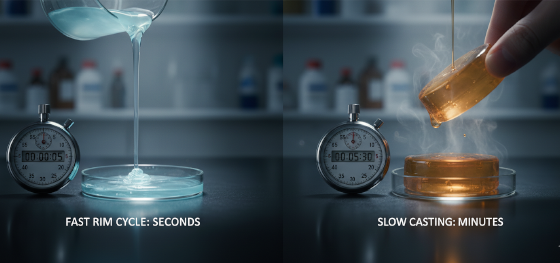
Molecular integrity in large-format plastic parts is a direct result of how the resin components meet. When considering Thermoset PU for RIM vs Urethane Casting Resins, the primary difference is the energy of the mix. In vacuum casting, the resins have a long "Pot Life," allowing them to be mixed slowly and degassed in a chamber to remove air. While this is effective for visual models, the slow reaction often results in a lower cross-link density. Jucheng Precision utilize the RIM process where Side A and Side B are forced through micro-orifices at 3,000 psi. This high-energy collision ensures that every Polyol molecule finds an Isocyanate partner, creating a monolithic polymer matrix that possesses superior impact resistance and thermal stability compared to hand-poured alternatives.
How to prevent soft spots in large enclosures?
Utilize machine-controlled impingement mixing to ensure 100% homogenization of the chemicals, eliminating the operator-induced variance found in manual vacuum casting.
Internal stress management is also dictated by the mixing method. In high-pressure systems, the resin enters the mold as a highly reactive liquid that hardens within minutes. This rapid transition is managed by the aluminum tool’s thermal conductivity, preventing the internal heat buildup that can lead to warpage. Jucheng Precision utilize 25 5-axis Haas/Mazak units to machine these tools with integrated water-cooling circuits. This thermal discipline ensures that the 2-meter long panels for your medical diagnostic scanner remain perfectly planar, a requirement that is difficult to meet with the insulating silicone molds used in standard urethane casting.
Surface purity is the third benefit of machine-injection. Vacuum casting often leaves a "Tacky" surface or microscopic pinholes if the degassing is not perfect. The RIM process utilizes a dry self-cleaning mixing head that purges the chamber with a mechanical piston after every shot. This ensures that no solvent or air is introduced into the polymer stream, resulting in a mirror-smooth Ra 0.8 finish directly off the mold. This surface excellence is essential for high-gloss automotive painting, providing the retail-ready aesthetic required for investor demos and clinical trials in the current MedTech market.
Technical Data: Comparing Viscosity and Curing Rhythms

Success in hardware validation depends on matching the chemical rhythm to the part volume. If your design requires a 1.5-meter part, you cannot use a resin that hardens in 30 seconds unless you have high-pressure injection equipment. Jucheng Precision provides full material data sheets to help your team navigate the Thermoset PU for RIM vs Urethane Casting Resins selection. The following table compares the essential operational variables of machine-injected and hand-poured polyurethanes for the current high-end hardware market.
| Variable | Urethane Casting Resin (Manual) | Thermoset PU for RIM (Machine) | Engineering Advantage |
|---|---|---|---|
| Initial Viscosity (cps) | 500 - 2,000 (Thick) | 50 - 150 (Watery) | Fills Complex Internal Ribs |
| Pot Life (Work Time) | 5 - 20 Minutes | 15 - 45 Seconds | Accelerated Production Cycles |
| Demolding Time | 1 - 4 Hours | 5 - 10 Minutes | Scalable to 1,000+ Units |
| Specific Gravity | 1.05 - 1.25 | 0.60 - 1.15 (Tunable) | Extreme Lightweighting |
The extremely low viscosity of machine-injected resins is the primary reason why RIM owns the large-part market. Because the liquid flows like water before it reacts, it can travel 2.5 meters through a narrow mold cavity without getting stuck or creating "Knit Lines." This fluidity allows Jucheng Precision to produce structural fenders and hoods for autonomous vehicles that have the unyielding foundations of metal but the complex organic forms of plastic. Our Shenzhen hub manages these material formulations with +/- 1% ratio accuracy, providing the statistical stability required for high-stakes prototype robot fleets.
Custom Formulation: Achieving Specific ABS and PP Characteristics
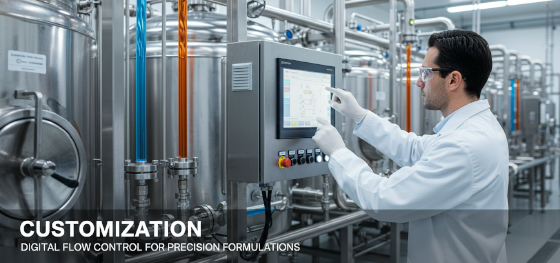
The "Material Chameleon" nature of polyurethane is fully unlocked through machine-based injection. In the comparison of Thermoset PU for RIM vs Urethane Casting Resins, the machine-based approach allows for real-time additive integration. Jucheng Precision can blend high-stability pigments, UV blockers, and mineral fillers directly into the Side B polyol. This enables us to create hardware that simulates the exact performance of production-grade ABS or Polypropylene. If your robot requires a flexible bumper that returns to its original geometry after an impact, we formulate an elastomeric RIM resin with 400% elongation. This level of customization ensures that your Beta trial data is representative of mass-market performance.
Can I achieve flame retardancy with casting resins?
Only through heavy fillers that can make the part brittle; RIM formulations utilize liquid-phase flame retardants that achieve UL94 V-0 without compromising impact strength.
Chemical resistance is another byproduct of high-pressure mixing. In medical environments, enclosures are subjected to thousands of wipe-down cycles with bleach and alcohol. Standard casting resins often suffer from Environmental Stress Cracking (ESC) because their molecular structure is less dense. Jucheng Precision’s RIM polyurethanes possess a highly cross-linked matrix that is chemically inert to clinical disinfectants. This environmental resilience is essential for maintaining the unyielding foundations of diagnostic scanners and surgical robots, ensuring the surface doesn't become tacky or yellowed over years of hospital use.
Reinforcement through glass fibers (RRIM) is the final advantage of the machine process. Jucheng Precision utilize specialized mix-heads that can handle abrasive milled glass fibers added to the polyol stream. This turns the polyurethane into a structural composite with a flexural modulus exceeding 600,000 psi. Vacuum casting is physically limited by the manual pouring process; adding fiber would make the resin too thick to flow into a silicone mold. By delivering fiber-reinforced hardware, Jucheng Precision helps clients build industrial robot parts that are stiffer than aluminum but significantly lighter, extending the battery life of your autonomous innovation.
JUCHENG Solution: Mastering Liquid Logic in the Shenzhen Shop
Dominating the hardware market requires a partner that doesn't just buy materials, but masters the chemistry of survival. Jucheng Precision operates with a 24/7 manufacturing mindset in our Shenzhen precision manufacturing hub, delivering high-tolerance RIM components and structural industrial robot parts with industry-leading speed. Jucheng Precision provides the bridge to production that ensures your innovations move from CAD to field trial with 100% metallurgical and chemical confidence. Jucheng Precision provides free DFM analysis in 24 hours to ensure your design is optimized for the unyielding reality of the field, whether you are building an autonomous medical assistant or a heavy-duty industrial mobile base.
Integrating your structural design with JUCHENG’s expertise ensures that your Thermoset PU for RIM vs Urethane Casting Resins decision is based on performance data, not guesswork. Jucheng Precision offer comprehensive DFM reviews within 24 hours, identifying potential material-ratio risks or thermal-expansion bottlenecks in your design before they become field failures. Whether you are building an autonomous vineyard scout or a multi-part MRI housing, Jucheng Precision provides the rigid, precise, and *chemically optimized* foundations that keep your innovation moving through the high-speed cycles and the years of hard labor.
Our facility is equipped with dedicated high-pressure RIM assembly cells and dedicated ISO 13485 and ISO 14001 quality labs, allowing Jucheng Precision to manage the entire hardware lifecycle in one location. Jucheng Precision manage the complexity of multi-material bonding and automotive-grade finishing so your engineering team can focus on the clinical outcomes and the AI. By combining Shenzhen's speed with industrial-grade material verification and global quality standards, Jucheng Precision remains the preferred partner for the world's most aggressive hardware challenges. Contact the Shenzhen hub today to start your next project.
FAQ: Real Answers for Resin Ratios, Hardness, and Stability

Is the piece price of RIM lower than vacuum casting?
For quantities over 30 units, the automated RIM cycle is more cost-effective due to the high manual labor required for individual vacuum cast pours.
Can I achieve 100% color matching with RIM?
Yes. We mix high-stability pigments directly into the resin, providing permanent color-through aesthetics that never chip or peel.
Does JUCHENG provide the batch logs for chemical audits?
Yes. We provide full chemical ratio and pressure logs for every ISO 13485 compliant medical production run.
What is the maximum part size for a high-pressure RIM part?
We regularly mold structural panels up to 2,500mm in length with consistent wall thickness and zero internal voids.
What is the lead time for a custom-formulated Alpha prototype?
Functional iterations using specialized resins are typically delivered in 10 to 12 business days, including tool fabrication.
Chemical drift and surface pinholes are absolute innovation killers for large-scale robotics. Partnering with Jucheng Precision ensures that your functional iterations are built with the unyielding polyurethane reaction injection molding and specialized Thermoset PU for RIM vs Urethane Casting Resins knowledge the industry demands. Reach out to our Shenzhen manufacturing hub today for a complete DFM review and build the unyielding foundation your autonomous fleet requires.

