


The question of whether a CNC Machining process can reliably achieve a 10-micron tolerance (0.01 mm) is a decisive factor in industries like Aviation Aerospace, Medical Devices, and advanced optics. The answer is yes, but it requires a specialized discipline known as Ultra-Precision Machining. This level of accuracy is not the domain of a standard machine; it is a system of controlled environment, stabilized equipment, and micro-metrology.

For B2B buyers sourcing parts where failure is not an option, understanding the four foundational pillars of Ultra-Precision Machining is essential. The process focuses on eliminating the four primary sources of error: machine error, thermal drift, vibration, and measurement uncertainty.
Machine Rigidity: The Foundation of Structural and Dynamic Stability
Thermal Stability: Eliminating the Largest Source of Dimensional Error
Tooling Strategy: Choosing Micro-Tools and Final Finishing Methods
Metrology Validation: Verifying 10-Micron Accuracy with Certified Inspection
Machine Rigidity: The Foundation of Structural and Dynamic Stability
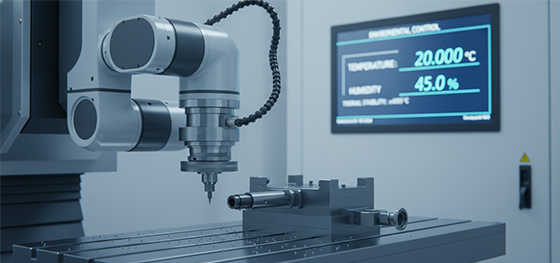
To achieve a 10-micron tolerance, the machine itself must be virtually immune to vibration and structural movement. The smallest external force—even sound waves or factory traffic—can cause measurable deflection:
Vibration Dampening: Ultra-precision machines are often placed on specialized anti-vibration pads or isolated concrete foundations to decouple them from external floor vibration.
Structural Rigidity: The machine's frame is built from heavy, rigid materials (like cast iron or granite composite) to absorb cutting forces and maintain a stable tool-to-workpiece relationship over the entire travel distance.
Linear Motor Drives: High-end machines utilize non-contact linear motor drives instead of traditional ballscrews. This eliminates mechanical backlash and friction, allowing for smoother, sub-micron movement control.
Thermal Stability: Eliminating the Largest Source of Dimensional Error

Thermal drift—the dimensional change caused by temperature fluctuations—is the single largest obstacle to achieving 10-micron accuracy. A one-degree change in temperature can move a metal component by more than 10 microns:
Climate Control: Ultra-Precision Machining must be performed in a climate-controlled room where temperature is maintained within a fraction of a degree (e.g., ±0.5°C). The component is measured and machined at this single reference temperature.
Machine Cooling: The machine itself (spindle, axis drives, fluid reservoirs) is often actively cooled using chilled water systems to prevent internally generated heat from causing machine expansion.
Thermal Compensation: Advanced CNC controls use sensor data to model the minute thermal expansion of the machine components and apply real-time mathematical compensation to the tool path.
Tooling Strategy: Choosing Micro-Tools and Final Finishing Methods
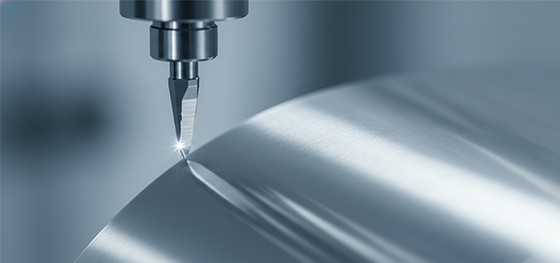
The final 10 microns of material removal must be performed using tools and strategies that minimize force, heat, and tool deflection:
Single-Point Diamond Turning (SPDT): For optical-grade surfaces (like mirrors or lenses) on materials like aluminum and copper, SPDT uses a single-crystal diamond tool to achieve surface roughness below 0.05 microns and positional accuracy within 1 micron.
High-End Tooling: For general milling and turning, specialized carbide inserts with ultra-fine grain structure and advanced coatings are mandatory. Tool life must be strictly managed to replace the tool before wear affects the final pass.
Micro-Machining: For features below 1mm, tools with micron-level runout and high-speed spindles are necessary. Cutting forces are kept minimal to prevent part deflection, which would destroy the tolerance.
Metrology Validation: Verifying 10-Micron Accuracy with Certified Inspection
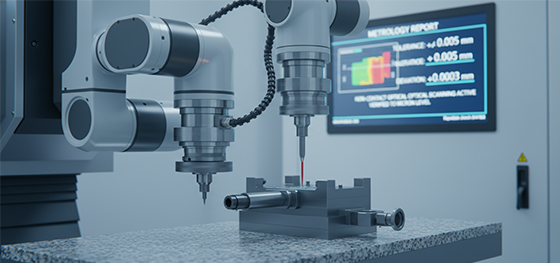
The final and most crucial step is verification. Measuring a 10-micron tolerance requires certified metrology equipment that is significantly more accurate than the tolerance being measured:
CMM (Coordinate Measuring Machine): High-precision, temperature-controlled CMMs are used to measure complex geometric tolerances, ensuring features are aligned and dimensionally accurate to the required standard.
Optical and Non-Contact Systems: For fine surface finishes and delicate parts, non-contact measurement (like optical comparators or laser scanners) is used to verify the part without the risk of probe damage.
Certified Process: The entire inspection process must be performed under ISO or IATF certified quality management systems, ensuring traceability and objective reporting of the final dimensions.
Achieving the 10-micron tolerance required by micrometer-level components is a matter of holistic engineering control. Jucheng Precision Technology offers specialized 5-axis machining in a controlled environment, leveraging advanced thermal compensation and certified metrology to guarantee the precision of your most critical parts.
Secure guaranteed sub-micron accuracy for your critical components. Contact us today to discuss the thermal and dimensional requirements for your Ultra-Precision Machining project.

