


In high-stakes industries like Aviation Aerospace and critical Industrial Machinery, components must operate flawlessly under extreme loads, high temperatures, and continuous fatigue. Precision engineering here is not just about tight tolerances; it is about guaranteeing High-Reliability Engineering—a design and manufacturing approach that eliminates the risk of premature failure.
For B2B buyers sourcing these complex parts, the focus must shift from basic CNC Machining to the manufacturer's ability to manage multi-process integration, material traceability, and thermal dynamics. This guide details the critical strategies required to manufacture durable, certified metal components that define structural integrity.
content:
Thermal Load Management in Braking and High-Speed Systems
Material Traceability and Certification for High-Stress Alloys
Multi-Axis Precision: Complex Geometry and Minimal Setup
Process Integration: Seamless Transition from CNC to Sheet Metal
Thermal Load Management in Braking and High-Speed Systems
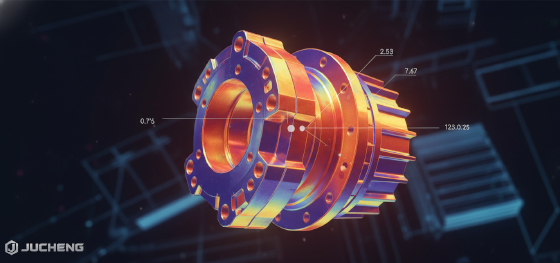
Components like aerospace brake pistons, turbine parts, and high-speed motor shafts experience massive thermal loads. The material and the manufacturing process must account for this heat to prevent dimensional creep and structural degradation:
Thermal Stability: Materials such as Alloy Steel, Titanium, and specific aluminum alloys (like 7075 or even heat-resistant plastics like PEEK) are chosen for their ability to maintain strength and dimension at elevated temperatures.
Post-Machining Stress Relief: Even after CNC Machining, internal stresses in the metal can cause warping when exposed to operational heat. Controlled heat treatment (annealing) after machining is essential to relieve these stresses and guarantee dimensional stability in use.
Heat Dissipation Design: Features like cooling fins, intricate channels, and minimal mass structures must be precisely machined to ensure rapid heat dissipation, a fundamental design requirement for brake and clutch components.
Material Traceability and Certification for High-Stress Alloys
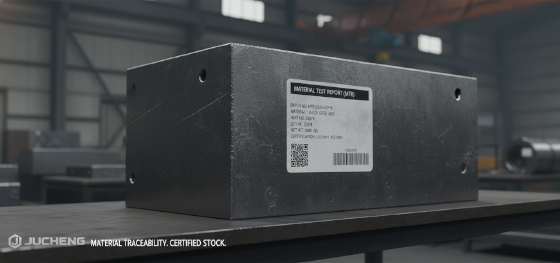
For aerospace and safety-critical industrial machinery, material verification is mandatory. The material's certification acts as a crucial layer of High-Reliability Engineering:
Material Test Reports (MTRs): Every component's raw material (e.g., Aluminum, Alloy Steel) must be accompanied by an MTR, verifying its chemical composition and mechanical properties (Yield Strength, Toughness) meet the drawing specifications.
Quality Management Systems (QMS): Compliance with QMS standards like IATF 16949 (Automotive) and ISO 13485 (Medical) guarantees that the entire manufacturing process—from material receiving to final inspection—is controlled and auditable, mitigating the risk of material substitution or process error.
CNC Material Handling: Expert CNC shops maintain strict material segregation, especially when dealing with aluminum and steel alloys, to prevent cross-contamination that could lead to structural failure in critical components.
Multi-Axis Precision: Complex Geometry and Minimal Setup
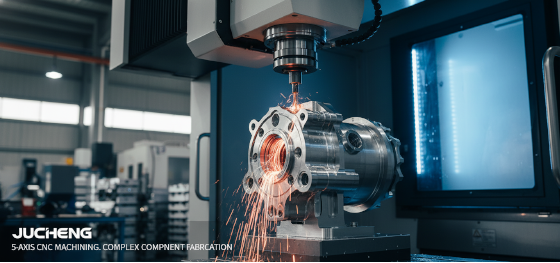
High-reliability components are often complex, requiring features on multiple faces and intricate internal geometry. This demands the capabilities of multi-axis CNC Machining:
5-Axis Machining: Using 5-axis CNC Machining minimizes the number of times a part is set up on the machine. This is crucial for maintaining concentricity, alignment, and reducing the cumulative error inherent in repositioning the component for machining multiple faces.
Specialized Machining: Advanced techniques like EDM (Electrical Discharge Machining) and precision grinding are often required for features like deep internal keyways or extremely hard material surfaces that cannot be cut by standard milling tools.
Inspection: Final inspection is performed using high-precision CMM (Coordinate Measuring Machine) equipment to verify dimensional accuracy, especially for complex internal features and geometric tolerances.
Process Integration: Seamless Transition from CNC to Sheet Metal
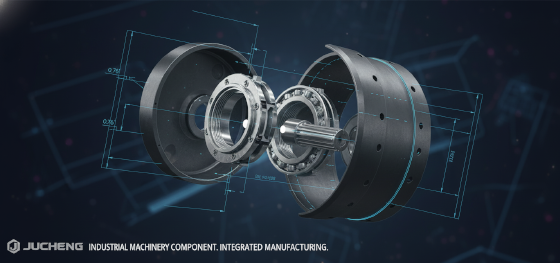
Complex industrial machinery requires components made from different processes (machined blocks, cast housings, fabricated frames) to be seamlessly integrated:
Structural Assembly: Heavy industrial machinery often pairs CNC Machined high-stress components (like precision shafts or bearing blocks) with structurally rigid frames created via **Sheet Metal Fabrication** (Laser Cutting, Bending, Welding).
Surface Finish and Protection: Final components require integrated finishing. CNC parts receive specialized coatings (Anodizing, Chem Film, Electroplating), while Sheet Metal components often receive Powder Coating for durable protection against industrial environments.
One-Stop Manufacturing: A manufacturer offering both CNC Machining and Sheet Metal Fabrication under a single QMS reduces the supply chain complexity, minimizing communication errors and ensuring that mating parts fit perfectly.
High-Reliability Engineering is the only standard for aerospace brakes and industrial machinery components. Jucheng Precision Technology offers the comprehensive, certified expertise necessary to manage material traceability, thermal stresses, and multi-axis complexity across both CNC Machining and Sheet Metal Fabrication.
Secure guaranteed reliability for your high-stress components. Contact us today to discuss the precision engineering and integrated manufacturing strategy for your critical industrial and aerospace projects.

