


Stainless steel is the ultimate choice for components that demand both robust mechanical strength and uncompromising hygiene—from industrial food processing equipment and medical enclosures to high-volume commercial parts. Successful fabrication requires a strategic choice between two core methods: high-volume Stamping and high-integrity Welding.
The decision is not just about cost; it is about geometry, compliance, and the structural lifespan of the product. This guide provides B2B buyers with a practical framework for selecting the correct manufacturing process for stainless steel parts, minimizing hidden risks and ensuring the final component meets stringent industry standards.
content:
Material Grades: 304 vs. 316 for Corrosion and Strength
Stamping Strategy: High-Volume Production and Tooling
Welding for Structural Integrity and High-Hygiene Seams
Finishing for Hygiene: Polishing and Passivation Standards
Material Grades: 304 vs. 316 for Corrosion and Strength
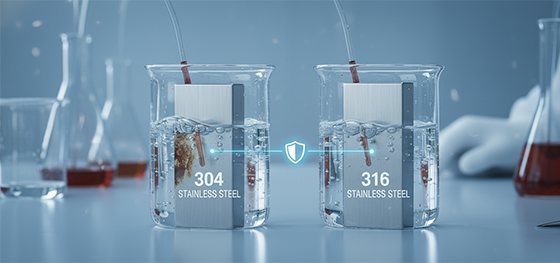
Stainless steel is not a single material, but a family of alloys. The choice between 304 (18/8) and 316 (18/10/2) is the most critical decision, balancing cost against the operating environment's corrosiveness:
304 Stainless Steel: The standard workhorse. Offers excellent general corrosion resistance and is ideal for parts in general atmospheric exposure, structural components, and most food-contact applications where chlorides are not present.
316 Stainless Steel: The marine grade. Contains 2-3% Molybdenum, significantly boosting its resistance to pitting and crevice corrosion, especially in environments exposed to chlorides (salt water, certain cleaning agents). This is the safer choice for high-end medical or pharmaceutical equipment.
Formability: Both 304 and 316 offer excellent ductility, making them highly suitable for the bending, forming, and stamping required in Sheet Metal Fabrication.
Stamping Strategy: High-Volume Production and Tooling

When your stainless steel part—such as a component for a commercial pail or high-volume bracket—requires identical replication at scale, the Stamping Service is the most cost-effective solution:
Tooling Investment: Stamping requires significant upfront investment in high-precision, robust steel dies (Stamping Dies). This cost is only justifiable for production volumes that quickly exceed the thousands.
Repeatability: Once the die is validated, the process delivers perfect, identical parts with near-zero variation, crucial for components requiring high-speed assembly line integration.
Punching and Forming: The process typically combines Punching (for holes and cutouts) and Forming (Bending) in a rapid sequence, optimizing material usage and minimizing per-part cost.
Welding for Structural Integrity and High-Hygiene Seams

When parts must be permanently joined to create structural frames (like machine chassis) or sealed containers (like high-hygiene tanks), Welding Service is mandatory. The focus shifts from speed to joint integrity and cleanliness:
Joint Integrity: TIG (Tungsten Inert Gas) welding is the preferred method for stainless steel, providing the strongest, cleanest joint with minimal porosity. This is essential for components that must withstand repeated structural loads.
Hygiene Standard: For food and medical applications, joints must be seamless and smooth to prevent bacteria and residue buildup. This requires expert, full-penetration welding followed by extensive grinding and polishing—a non-negotiable step for sanitary design.
Contamination Control: As previously noted, specialized welding areas and tools must be strictly segregated from carbon steel to prevent iron particle contamination, a mandatory quality control step.
Finishing for Hygiene: Polishing and Passivation Standards
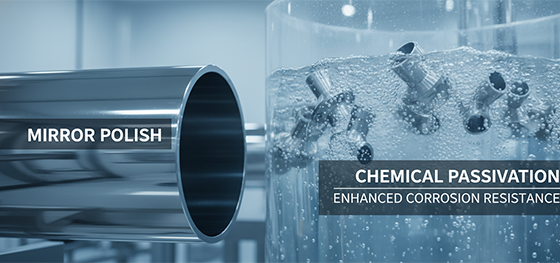
The final surface finish of a stainless steel part is a direct measure of its compliance. The surface must not only look good but must be smooth enough to be easily cleaned and safe from internal corrosion:
Mechanical Polishing: Abrasive polishing and brushing reduce the surface roughness (Ra value). Lower Ra values (smoother surfaces) are crucial for medical and food-contact areas, as they leave fewer microscopic valleys for bacteria to harbor.
Passivation: This is a mandatory chemical treatment following welding or heavy machining. It removes free iron contamination and re-grows the protective chromium oxide layer, chemically fortifying the steel against rust and maintaining compliance.
Quality Verification: The final Assembly Service includes thorough quality verification using tools like profilometers (to measure surface roughness) and CMMs (to verify final dimensions).
Successful Stainless Steel Fabrication requires a manufacturing strategy that combines the volume efficiency of Stamping with the structural integrity of Precision Welding. Jucheng Precision Technology offers this unified expertise, backed by strict contamination control and mandatory final surface passivation to meet the highest global hygiene and structural standards.
Secure compliant, high-volume stainless steel components. Contact us today to discuss the stamping and welding requirements for your next structural or sanitary project.

