


Sourcing heavy, premium-feeling metal hardware often leads to a massive financial headache during product development. Sourcing teams frequently choose expensive subtractive milling to cut complex shapes out of solid blocks, completely ignoring the total manufacturing cycle. Selecting zinc die casting vs cnc machining directly changes your ongoing piece part price and tooling amortization limits. Deciding on the wrong alloy can destroy your product margins.

Raw Zamak alloys flow with the consistency of water when melted, capturing microscopic details flawlessly. Deciding between die casting vs cnc machining wisely ensures your early-stage cash flow remains completely secure. You avoid the high-NRE mold trap entirely.
Balancing initial launch speeds with uncompromising material strength defines modern uncrewed vehicle and medical hardware engineering. Let's compare standard casting limits to raw milling accuracy, analyze why liquid metal changes size, and explore the best post-processing options.
content:
Submerged Injection: Pumping Molten Metal Faster
Surface Adhesion: Achieving Mirror Plated Aesthetics
Tooling Longevity: Protecting Molds from Thermal Shock
Turnkey Sourcing Hub: End-to-End Zinc Finishing
FAQ: Honest Answers About Rust, Strength, and Speed
Submerged Injection: Pumping Molten Metal Faster
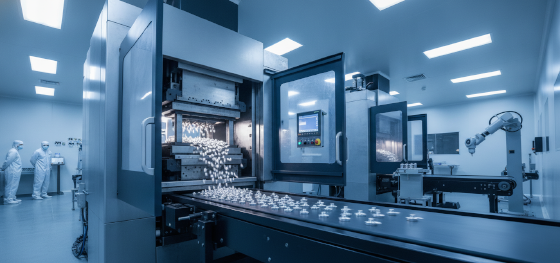
Why do hot chamber injection machines operate at double the speed of traditional foundries?
Submerging the entire hydraulic pump directly inside the boiling crucible completely eliminates slow robotic pouring steps.
Liquid Zamak alloy flows into the mold cavity within milliseconds of the plunger stroke. This rapid cycle speed drops your machine depreciation costs significantly compared to slow cold chamber aluminum casting.
Pushing these rapid cycle times ensures your zinc die casting vs cnc machining ongoing unit expense remains incredibly low on large production runs. You easily produce thousands of identical complex components every single day.
Surface Adhesion: Achieving Mirror Plated Aesthetics
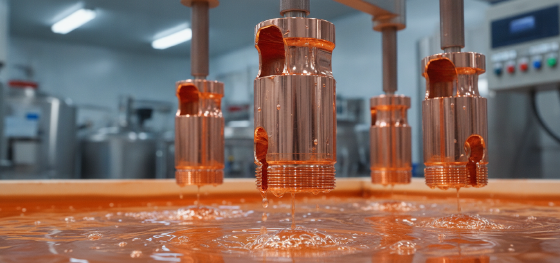
Why is zinc considered the absolute champion for luxury cosmetic hardware?
Curing into a highly dense, non-porous outer skin allows the raw metal surface to accept brilliant chrome and gold electroplating flawlessly without blistering.
Standard aluminum naturally contains high levels of silicon, making it incredibly difficult to anodize beautifully. Zinc possesses zero silicon contaminants, providing the perfect foundation for reflective mirror-chrome finishes.
Mastering this luxury tactile feel does require post-casting surface preparation. We utilize automated vibratory tumbling and manual cotton buffing to erase minor parting lines before the chemical plating bath.
Tooling Longevity: Protecting Molds from Thermal Shock

How does the low melting point of Zamak protect your expensive tooling?
Processing metal at 750 degrees Fahrenheit reduces thermal shock massively, preventing the H13 steel mold from developing surface cracks over millions of cycles.
Tooling amortization represents a massive hidden cost for high-temperature aluminum casting. Standard aluminum molds wear out after 100,000 shots due to severe heat checking, forcing you to buy replacement tools.
Comparing die casting vs cnc strength becomes irrelevant when you are building a part that must take continuous high-torque impacts. Running zinc alloys completely rewrites this tooling lifecycle equation. The mold easily survives over a million injections, dropping your ongoing zinc die casting cost to pennies.
Turnkey Sourcing Hub: End-to-End Zinc Finishing
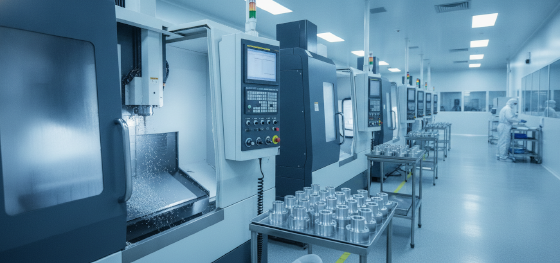
Why is consolidating your casting and finishing under one roof so critical?
Shipping bare zinc parts across town to a separate plating shop invites rapid surface oxidation and physical scratching before the protective copper layer is applied.
Operating our own integrated manufacturing facility eliminates this supply chain friction. Jucheng Precision executes the rapid hot chamber injection, CNC machining, and final electroplating entirely under one roof.
Stop paying third-party vendors to ruin your premium cosmetic hardware. Send your complex CAD files to our engineering team today for a comprehensive, manual DFM flow analysis and secure a guaranteed zinc die casting vs cnc machining quote.
FAQ: Honest Answers About Rust, Strength, and Speed

Does this low-temperature alloy rust easily when deployed outdoors?
Yes, we must apply protective coatings for severe moisture. While zinc does not form red rust because it contains no iron, raw metal will slowly develop a white powdery oxidation layer if left untreated.
Can you cast highly precise internal threads directly with this process?
No, zinc die casting vs cnc machining tolerances dictate that high-stress mounting threads must still be tapped post-casting using high-precision CNC equipment to ensure absolute holding force.
Why do some electroplated parts bubble or peel after a few months?
Subsurface porosity causes this failure. If the factory runs the injection too slowly, microscopic air pockets form near the surface, trapping plating acids that eventually boil outward.
Will the fast cycle speed of the hot chamber process cause part warpage?
Yes, injecting metal so rapidly can warp thin-walled parts if cooling is unbalanced. Our engineers run extensive thermal simulation audits to perfectly configure the mold water lines before production.

