


Designing lightweight metal brackets for drone wings or medical carts always starts with a simple choice. Sourcing teams usually look at a solid block of aluminum and assume all parts perform exactly the same. Selecting aluminum die casting vs cnc machining directly changes your final piece price and assembly weight. Designing a heavy bracket out of the wrong material destroys your payload margins.
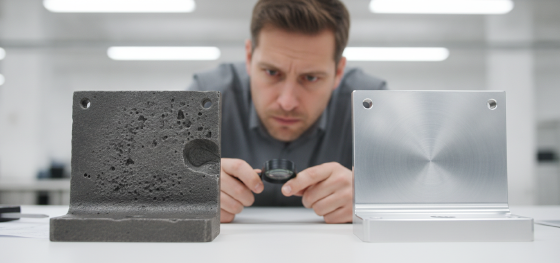
Rushing into mass production without checking how the metal grain structure behaves is a massive financial trap. Extruded metals carved on a mill have different strength limits than liquid metals shot into steel dies under high pressure. Deciding between die casting vs cnc machining keeps your early-stage cash flow completely secure.
Balancing initial launch speeds with uncomplicated tooling setups defines successful manufacturing. Let's compare standard cast alloys to milled billets, analyze geometric wall thickness limits, and explore how chemical anodizing behaves on different surfaces.
content:
Material Realities: Raw Billets vs. Cast Alloys
Geometric Limits: Wall Thickness and Draft Angles
Cosmetic Protection: Anodizing Cast vs. Machined Metal
Comprehensive Sourcing: Your Turnkey Metal Extension
FAQ: Honest Answers About Molds, Speeds, and Quality
Material Realities: Raw Billets vs. Cast Alloys
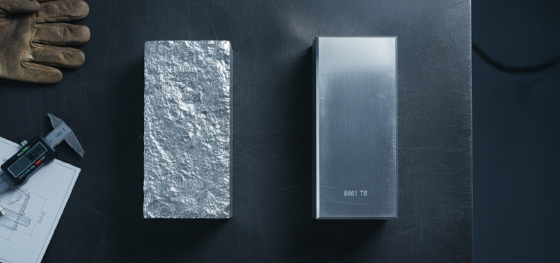
Why do solid milled components possess significantly better yield strength than cast parts?
Solid structural billets like 6061 aluminum are pre-forged and completely free of the microscopic gas pockets that naturally form inside cast metal during cooling.
Slicing parts directly from a pre-compressed 6061 billet ensures absolute molecular density. The metal holds its structural integrity under extreme physical stress, making it the undisputed king for heavy-lift motor mounts.
Liquid casting relies on different chemical blends. We melt raw A380 aluminum ingots and inject them into molds to create lightweight, complex parts quickly, but the final product carries lower tensile strength.
Geometric Limits: Wall Thickness and Draft Angles
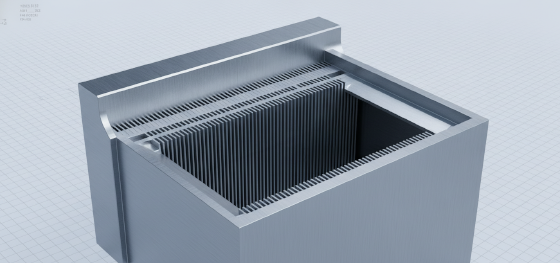
Why does direct metal milling fail when you need to produce ultra-thin, complex outer shells?
Cutting tools physically cannot carve deep, paper-thin walls without causing the metal to vibrate, warp, and snap off under the extreme force of the spinning cutter.
Pushing liquid metal into a steel die allows designers to achieve incredibly thin, lightweight geometries. Standard casting parameters easily handle 1.5mm walls, allowing you to integrate dense cooling fins directly into the housing.
Finding the perfect balance on your CAD drawing requires checking your wall thickness. If your part has uneven mass, the thick areas will cool slower than the thin areas, creating ugly surface sink marks.
Cosmetic Protection: Anodizing Cast vs. Machined Metal
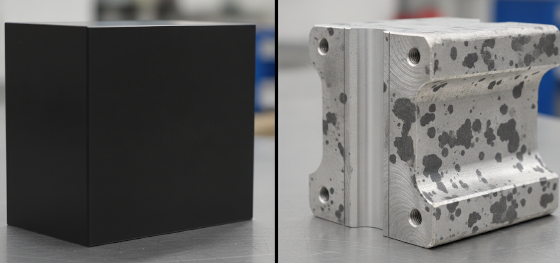
Why do standard chemical plating shops ruin anodized die-cast aluminum components?
Cast alloys contain high levels of silicon to help the liquid flow smoothly, which turns an ugly, patchy gray or black during chemical anodizing.
Mastering your ultimate die casting vs cnc surface finish is a non-negotiable step before launching a retail-ready product. Machined billet aluminum anodizes into brilliant, glossy colors because it contains zero silicon contaminants.
Protecting cast parts from outdoor corrosion requires alternative topcoats. We highly recommend applying heavy-duty electrostatic powder coating to mask the raw surface imperfections and seal the metal permanently against moisture.
Comprehensive Sourcing: Your Turnkey Metal Extension

Comparing manufacturing methodologies based on your current volume goals prevents massive budget overruns. The technical matrix below outlines how these two processes compare across critical engineering milestones.
| Production Quantity | Best Sourcing Choice | Key Sourcing Advantage |
|---|---|---|
| 1 to 100 Units | 5-Axis Milling (CNC) | Zero mold debt, instant design changes. |
| 100 to 1,000 Units | Low-Volume Modular Molds | Bridges prototyping with cheap, modular tooling inserts. |
| 5,000+ Units | High-Pressure Injection | Lowest unit price, fastest cycles. |
Sourcing aluminum die casting vs cnc machining runs with JC Rapid is incredibly simple. We maintain a highly flexible, fully audited facility, allowing us to run short batches of 100 to 5,000 pieces with highly competitive tooling and piece pricing.
Stop paying outrageous unit prices for slow subtractive milling or high-NRE mold tooling. Send your complex CAD files to our engineering team today for a comprehensive, manual DFM flow analysis and secure a highly optimized, aluminum die casting vs cnc machining dual-quote.
FAQ: Honest Answers About Molds, Speeds, and Quality

Does the complexity of the internal gating system increase my aluminum die casting vs cnc machining cost?
Yes, complex runner channels consume more raw metal per shot. We design highly optimized gating paths to minimize excess scrap metal, keeping your material waste exceptionally low.
Can I run zinc and aluminum through the exact same steel mold?
No. Because different metals shrink and contract at completely different rates, pouring aluminum into a mold designed for zinc will result in parts that fail to meet your dimensional tolerances.
Do you charge extra fees for mandatory Material Test Reports?
Providing complete chemical certifications (CoA) and RoHS compliance certificates with every single delivery is our standard practice, included entirely free of charge.
Will the soft rapid tools wear out quickly during production?
Softer steel and aluminum alloy molds naturally degrade faster than hardened steel, but they easily survive two to five thousand shots before showing any dimensional wear.

