


Brass is a widely utilized alloy consisting mainly of copper and zinc. Known for its versatility, this material offers a valuable combination of workability, resistance to corrosion, and a visually appealing gold-like finish. These qualities have made it a preferred option for a diverse array of applications throughout history. By varying the amounts of copper and zinc, and sometimes incorporating other elements such as lead, tin, or aluminum, manufacturers can produce numerous varieties of this alloy, each designed for particular functional or decorative purposes. This article explores the essential features, physical traits, and practical uses of this copper-based material.
content:
The Copper-Zinc Alloy Material
Hardware Components Made from This Material
Mechanical Characteristics: Balancing Strength and Workability
Weight Considerations: How Heavy Is It?
Resistance to Indentation: Examining Hardness
Density of the Alloy: Mass per Unit Volume
Comparison with Pure Copper
The Popularity of Textured Brass Finishes
The Copper-Zinc Alloy Material
At its foundation, the copper-zinc alloy material is what scientists call a substitutional alloy. In such a mixture, atoms of copper and zinc can occupy positions within the same crystalline framework. The proportion of these two metals significantly affects the behavior of the final product. For example, low-zinc versions (e.g., 70% copper and 30% zinc) are recognized for their flexibility, while those with more zinc provide increased strength. Incorporating additives like lead improves how easily the substance can be machined, tin boosts its ability to withstand corrosive settings (leading to types known as naval brass), and aluminum encourages a protective surface layer. This adaptability makes the substance highly valuable for technical and creative applications.

Hardware Components Made from This Material
The application of brass hardware highlights how this substance balances practicality with visual appeal. Its inherent ability to resist degradation from moisture and organic growth makes it well-suited for use in marine equipment, including boat parts and propellers. In water supply systems, the alloy is commonly used for valves and connectors because of its longevity and the availability of safe compositions for drinking water. Besides these functional benefits, its warm golden color has secured its place in decorative items. Elements such as handles, locks, and light fittings made from this alloy introduce a sense of elegance to various design styles, and they often acquire an attractive aged look as time passes.
Mechanical Characteristics: Balancing Strength and Workability
The mechanical characteristics of this copper-zinc alloy vary widely based on its specific makeup and processing history. Although it provides reasonable strength, it is not in the same category as high-strength materials like steel. Its standout features are exceptional malleability and ductility. Many versions can be shaped at room temperature—stretched into wires, pressed into thin sheets, or molded into intricate forms—without fracturing. This ease of forming is a major reason for its broad use. Additionally, the material displays favorable wear resistance and low friction when interacting with other metals, making it appropriate for moving parts such as gears. Its machining qualities, particularly in formulations that include lead, exceed those of many other metals, enabling efficient production of finely finished parts.

Weight Considerations: How Heavy Is It?
People often wonder, “Is brass heavy?” The response depends on the context. With a specific gravity between 8.4 and 8.75 g/cm³, it is heavier than aluminum and most polymers but notably lighter than steel or very dense metals like tungsten. Therefore, it occupies a middle range in terms of weight among common industrial materials. The heft of the alloy contributes to a sense of durability and quality in goods such as musical instruments and fixtures, though it might be avoided in situations where reducing weight is essential, like in aircraft parts.
Resistance to Indentation: Examining Hardness
The term brass hardness refers to the alloy’s ability to resist surface indentation or scratching. This property fluctuates significantly among different types. Softer conditions, such as annealed cartridge brass, are relatively easy to deform, while hardened or high-zinc compositions are much more resistant. hardness is commonly evaluated using scales such as Rockwell B. For example, a fully hardened sample might rate above 90 HRB, whereas an annealed one might be around 65 HRB. Introducing elements like manganese or nickel can further enhance this characteristic. The adjustable nature of hardness allows designers to choose the right grade for either wear-resistant applications or projects requiring additional shaping.
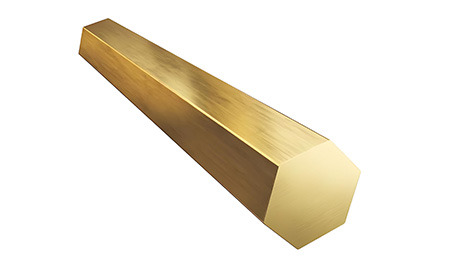
Density of the Alloy: Mass per Unit Volume
Closely associated with weight is the precise evaluation of brass metal density. Density describes the compactness of mass within a given volume. For this copper-zinc alloy, values generally lie between 8,400 and 8,750 kg/m³. This physical property is vital for engineers when estimating the mass of a finished part for shipping, assessing material expenses (which are frequently weight-based), and making buoyancy-related decisions in marine design. The density is directly affected by the blend of metals; because zinc is less dense than copper, alloys with more zinc tend to be somewhat lighter.
Comparison with Pure Copper
When comparing brass vs copper, important distinctions emerge. Although both materials contain copper, the addition of zinc creates a substance with different qualities. Pure copper is known for outstanding electrical and heat conductivity, making it the first choice for wiring and cooling systems. However, the copper-zinc alloy outperforms pure copper in strength, hardness, and formability, enabling the creation of complex forms that would be challenging with copper alone. Additionally, the alloy generally demonstrates better corrosion resistance in settings like seawater and is more economical because zinc is less expensive than copper. Visually, copper has a reddish tone, whereas the alloy provides a spectrum of gold-type colors.

The Popularity of Textured Brass Finishes
In interior design, brushed brass finishes have become increasingly popular. This effect is produced by abrasively treating the metal surface to generate a pattern of fine, parallel lines. The process yields a soft, satin-like surface that scatters light gently rather than producing a bright shine. This finish is not only visually attractive—it also helps conceal fingerprints and small scratches—but it also improves the tactile experience. It is frequently selected for contemporary tap fixtures, switch plates, and furniture details, providing a look that merges industrial and refined elements.
In summary, brass represents a carefully developed group of materials with customizable properties to suit a vast range of needs. From vital roles in plumbing and machinery to its lasting popularity in decoration and architecture, this alloy continues to be essential today. Its effective balance of durability, ease of fabrication, resistance to environmental factors, and visual flexibility confirms its ongoing value in both technical and creative fields.

