


Sending untested CAD files straight to the tooling department guarantees massive financial ruin. Engineers lacking metallurgical experience frequently submit blueprints featuring impossible geometric demands, expecting liquid alloy to behave exactly like 3D-printed plastic. Implementing strict design for die casting (DFM) protocols halts this catastrophic supply chain trap immediately by forcing designers to respect brutal thermodynamic realities.
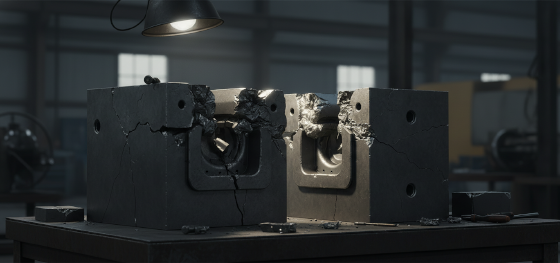
Skipping this vital engineering audit ensures your custom hardware will violently warp, stick to the mold, or shatter during ejection. Finding out your geometry fails after paying fifty thousand dollars for a heavy steel cavity destroys your commercial launch entirely.
Protecting your startup capital demands aggressive pre-production analysis. Referencing a comprehensive die casting design guide provides the foundational rules, but executing a professional factory audit physically validates your success. Let's dissect exactly why ignoring these rules breaks expensive machinery and how proper optimization slashes your unit price.
content:
Pre-Production Audits: Stopping Mold Rebuilds
Geometry Checklist: Thickness, Draft, and Radii
Subtractive Milling: Minimizing Secondary CNC
Tooling Amortization: Extending Cavity Lifespans
JC Rapid Factory: Complimentary Engineering Reviews
FAQ: Honest Answers About CAD Adjustments and Tooling
Pre-Production Audits: Stopping Mold Rebuilds

Why do aggressive manufacturing audits prevent six-figure tooling disasters?
Molten metal shrinks violently as it chills; if your blueprint lacks proper extraction slopes, the solidifying part grips the internal steel cores like a vice, ripping the machine apart during ejection.
Fixing a shattered H13 tool steel cavity requires shutting down the entire press and welding raw steel back into the block. This catastrophic delay halts your assembly line for weeks and balloons your final invoice.
Running advanced design for die casting (DFM) software simulates the entire injection and cooling cycle virtually. We identify deadly stress concentrations and thermal traps long before cutting any physical metal, saving immense capital.
Geometry Checklist: Thickness, Draft, and Radii
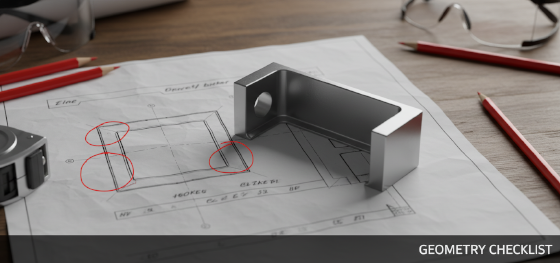
How do senior engineers alter basic CAD files for liquid injection?
Thick, bulky metal blocks trap boiling heat, causing severe surface depressions; hollowing out these heavy masses and replacing them with intersecting support ribs maintains ultimate structural rigidity without triggering ugly sink marks.
Applying generous draft angles to every vertical wall remains absolutely non-negotiable. Sloping the geometry slightly allows robotic ejector pins to push the hot hardware out effortlessly without leaving deep, tearing scratches across the cosmetic faces.
Erasing sharp ninety-degree internal corners prevents molecular tearing. Liquid metal hates navigating sharp intersections; smoothing those junctions with generous radii guarantees a flawless, high-density fill.
Subtractive Milling: Minimizing Secondary CNC
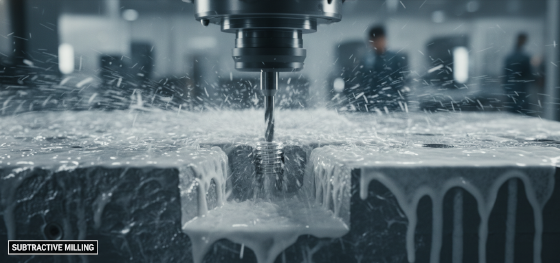
Why should founders aggressively eliminate secondary milling operations?
Clamping a raw metal bracket into a 5-axis CNC machine just to drill a microscopic hole doubles your labor cost instantly.
Smart hardware teams utilize design for die casting (DFM) strategies to cast as many functional features as physically possible. If a mounting pillar does not require zero-gap sealing tolerances, we cast the hole directly, bypassing the expensive milling bay completely.
Balancing raw injection against precision cutting defines true commercial expertise. We intentionally leave microscopic layers of sacrificial metal only on the most critical O-ring sealing grooves, reserving expensive spindle time exclusively for vital mating surfaces.
Tooling Amortization: Extending Cavity Lifespans
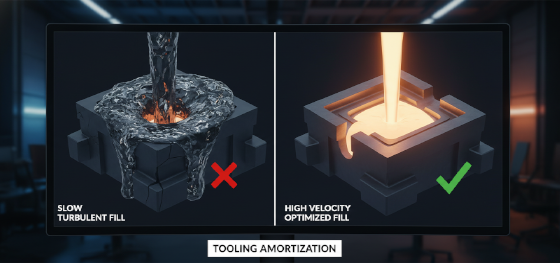
Does optimizing the 3D model actually make the factory machinery last longer?
Absolutely; eliminating massive thermal bottlenecks prevents the steel mold from overheating, directly stopping the brutal thermal fatigue that causes heat-checking and surface cracking.
Replacing a worn-out steel mold destroys your unit economics. Hardware designed with smooth, sweeping curves and balanced cross-sections subjects the tooling to significantly less mechanical shock during high-speed injection.
Prolonging the lifespan of your permanent tooling allows you to amortize the initial NRE fee across millions of flawless parts. Highly optimized hardware runs significantly faster, drastically lowering your hourly machine overhead.
JC Rapid Factory: Complimentary Engineering Reviews

Why must hardware teams rely on experienced contract manufacturers for blueprint audits?
Low-tier brokers happily accept flawed CAD models, pocket your upfront tooling payment, and continuously charge you expensive modification fees when the parts inevitably fail to eject properly.
Partnering with JC Rapid completely neutralizes this predatory factory behavior. Our senior metallurgical experts refuse to cut expensive steel until your blueprint passes a ruthless design for die casting (DFM) evaluation.
Stop bleeding venture capital on impossible geometries. Send your complex commercial assemblies to our engineering department today. We map the thermodynamic limits, correct your draft angles, and deliver flawlessly optimized commercial hardware.
FAQ: Honest Answers About CAD Adjustments and Tooling

Will adding draft angles visibly distort the final shape of my product?
Standard drafting requires only one or two degrees of slope, which remains entirely invisible to the naked human eye but drastically improves the mechanical ejection process.
Do I need to calculate metal shrinkage before sending my files?
No. Our tooling engineers utilize advanced flow simulation software to calculate the exact volumetric contraction rate for your specific alloy, aggressively oversizing the steel cavity to compensate.
Why did the factory request permission to hollow out my mounting pillars?
Solid pillars retain massive amounts of heat, causing the exterior cosmetic surface to collapse inward. Hollowing the center promotes rapid, uniform cooling and completely eliminates surface sink marks.
Can proper design optimization prevent internal gas porosity?
Yes. Smoothing out sharp internal corners and maintaining uniform wall thicknesses prevents liquid metal turbulence, ensuring atmospheric air escapes the exhaust vents before the metal freezes.

