


For the industrial supply chain, the purpose of a laser is not decoration—it is permanent traceability and critical information transfer. Industrial Laser Marking is a highly controlled finishing process that creates durable, high-contrast marks (such as Data Matrix codes and serial numbers) on metal and plastic components without compromising their structural integrity or dimensional precision.
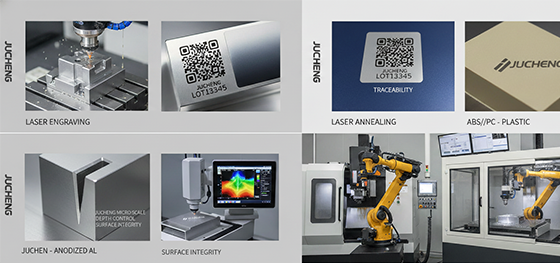
The challenge for B2B procurement is ensuring that the mark is permanent enough to withstand a part's operational life (abrasion, chemical exposure) while being shallow enough not to induce stress risers. This guide details the essential techniques and controls required to guarantee the long-term legibility and durability of industrial markings.
Marking Techniques: Choosing Between Engraving and Surface Annealing
Depth and Integrity Control: Avoiding Structural Compromise
Surface Finish and Contrast: Marking Anodized and Raw Materials
Traceability and Durability: Meeting Abrasion and Chemical Standards
Marking Techniques: Choosing Between Engraving and Surface Annealing
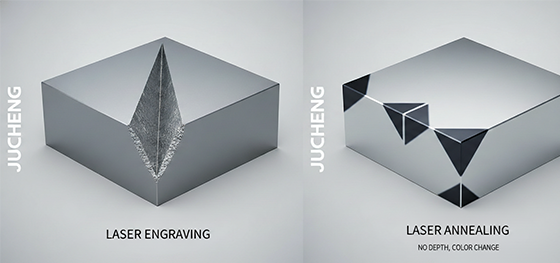
The laser’s interaction with the material dictates the permanence and visual characteristic of the mark. The choice of technique is purely functional:
Laser Engraving (Subtractive): Uses high power to physically vaporize the material, creating a recessed mark. This is the most durable method, as the mark is below the surface, making it resistant to abrasion and wear throughout the component's life.
Laser Annealing (Surface Change): Heats the material (typically steel) below the melting point, causing a localized oxidation or microstructure change that creates a dark, high-contrast mark without removing any material. This preserves surface integrity but offers less durability against heavy abrasion.
Ablation (Coating Removal): Specifically used on pre-coated parts (like anodized aluminum or painted surfaces) to vaporize the top layer, exposing the underlying base material for high visual contrast.
Depth and Integrity Control: Avoiding Structural Compromise
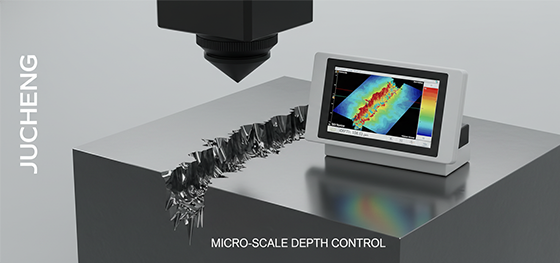
For critical structural components, the depth of the laser mark must be rigorously controlled. A mark that is too deep can create a stress riser, acting as a starting point for fatigue cracks:
Focus on the Balance: The ideal mark is just deep enough to survive the part's wear cycle but shallow enough not to compromise the component's fatigue life. This requires precise control of the laser's focal length and power settings.
Verification: Advanced manufacturers use specialized non-contact measurement tools (like white light interferometry) to verify the actual depth profile of the mark in microns, ensuring compliance with structural engineering standards.
Aviation and Defense: For aerospace parts, a mark is often limited to a specific maximum depth relative to the material thickness, mandating the use of the annealing or light etching technique to preserve material integrity.
Surface Finish and Contrast: Marking Anodized and Raw Materials
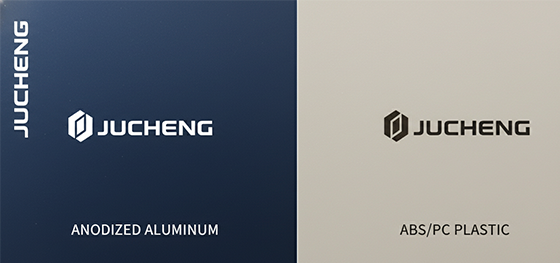
Achieving the highest possible visual contrast is essential for automated scanning and human legibility. The optimal strategy varies significantly based on the base material and its final finish:
Anodized Aluminum: Laser ablation is used to vaporize the colored anodized layer, exposing the underlying bright aluminum. This creates a high-contrast white or silver mark on the colored background, ideal for permanent part marking.
Raw Metals: On raw metals like stainless steel, annealing (surface oxidation) is used to create a dark black mark, providing excellent visual contrast without any material removal.
Plastics: On polymers (ABS, PC), a specialized laser creates a chemical reaction that darkens or lightens the polymer's surface (foaming or carbonization), providing a clean, permanent contrast without the need for inks.
Traceability and Durability: Meeting Abrasion and Chemical Standards
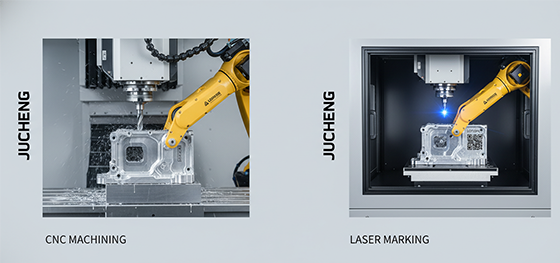
The primary function of Industrial Laser Marking is to ensure full material and process traceability throughout the product's lifespan. This requires the mark to withstand the rigors of its operating environment:
Abrasion Resistance: For parts in heavy-wear environments, the mark is tested by subjecting it to repeated rubbing with a cloth, simulating cleaning or continuous mechanical contact. The mark must maintain a high scanning grade.
Chemical and Sterilization Resistance: Medical and pharmaceutical components require marks that remain legible after repeated exposure to cleaning agents and high-temperature autoclaving processes.
Data Matrix Codes: Two-dimensional Data Matrix codes (DMC) are the preferred standard for part identification. They hold vast amounts of information (serial number, batch, date) in a small, square area and are designed with error correction to ensure readability even when partially damaged.
Industrial Laser Marking is the final quality gateway for traceability. Jucheng Precision Technology integrates specialized fiber laser technology directly into the CNC Machining and finishing workflow, ensuring depth control is maintained to preserve structural integrity while achieving permanent, high-contrast marks.
Secure permanent traceability for your high-value components. Contact us today to discuss the optimal laser marking and finishing strategy for your metal and plastic parts.

