


Laser etching stands as a paramount subtractive manufacturing process, utilizing a highly focused beam of light to alter the surface of a material and create permanent, high-contrast marks. Unlike engraving, which involves removing significant material to create deep grooves, or annealing, which uses heat to induce a color change on metals, etching merely vaporizes microscopic layers off the surface. This process results in a precise, clean, and incredibly detailed mark without compromising the material's structural integrity. The core principle involves the laser beam's energy being absorbed by the material's surface, causing instantaneous heating that leads to oxidation and melting, thereby changing its roughness and reflectivity to form a visible contrast. This technology is revered for its unparalleled accuracy, speed, and versatility, making it indispensable across industries from aerospace and medical device manufacturing to consumer electronics and personalized item creation.
The Laser Etching Machine: Engine of Precision
The Critical Role of a Surface Primer
Material-Specific Etching Applications
The Laser Etching Machine: Engine of Precision
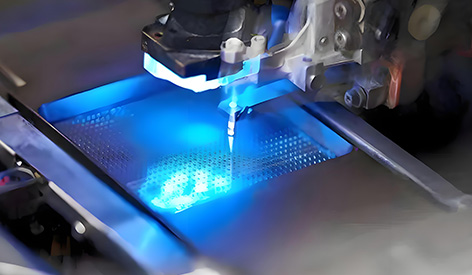
At the heart of this operation lies the sophisticated laser etching machine, a system far more complex than a simple light source. Modern machines are integrated computer-numerical-controlled (CNC) platforms that translate digital designs into physical marks with micron-level precision. The core components include the laser resonator (which generates the beam), a series of mirrors or fiber optics to guide the light, and a galvanometer-based scanning head. This head, often called a "galvo," houses mirrors that deflect the laser beam at extremely high speeds across the workpiece, tracing the desired pattern without moving the material itself. The entire process is governed by specialized software that not only directs the path of the beam but also meticulously controls its power, pulse frequency (Hz), and scanning speed. These parameters are the digital dials that an operator tunes to achieve the perfect mark for any given substance, ensuring that the interaction between the laser's energy and the material is optimized for clarity, durability, and minimal heat-affected zones.
The Critical Role of a Surface Primer
While many materials etch naturally, some surfaces require a specialized primer or marking compound to achieve a high-contrast result, particularly with certain types of lasers. This is often the case with transparent or highly reflective materials where the laser light is not adequately absorbed. A primer, typically a ceramic-based or metallic oxide coating, is applied to the surface prior to etching. This coating is specifically formulated to absorb the laser's wavelength efficiently. When the beam strikes the primed area, the coating undergoes a dramatic color change—often to a dark black or contrasting tone—while the underlying material remains unaffected. The result is a sharp, durable mark that is effectively fused onto the surface. This technique is invaluable for marking glass, certain polished metals, and some plastics where a clear, legible identifier like a barcode or serial number is non-negotiable.
Material-Specific Etching Applications
The true power of laser etching is revealed in its ability to interact with a vast spectrum of materials, each requiring unique parameter settings.
Plastic etching is a delicate balance. The goal is to vaporize just enough surface material to create a contrast without melting the surrounding area excessively. Different polymers react uniquely; for instance, ABS plastic etches to a frosted white appearance, making it ideal for labels on keyboard keys and automotive interior components. The laser’s heat can carbonize the plastic, turning it dark, or simply change its texture. Careful calibration is essential to avoid releasing harmful fumes, necessitating proper ventilation systems.

The realm of metals showcases the process's versatility. For stainless steel, laser etching is the go-to method for creating permanent, corrosion-resistant identifiers on surgical instruments, industrial equipment, and kitchen appliances. The laser locally disrupts the protective chromium oxide layer, creating a mark that is both visually apparent and resistant to wear and cleaning processes. Copper, with its exceptional thermal conductivity, poses a challenge as it rapidly dissipates heat. Successful etching requires high-powered, pulsed beams to overcome this dissipation, creating crisp marks on electrical components and heat sinks without warping the delicate material. Similarly, aluminium is a highly receptive candidate. The laser can create a bright white oxide mark or a deep, dark etch, perfect for anodized layers on consumer electronics, nameplates, and aerospace parts where weight and permanence are critical.
Beyond metals and plastics, laser etching excels with engineered materials. Plexiglass (a brand name for acrylic) is beautifully suited to the process. The laser beam internally fractures the material at the point of focus, creating a delightful frosted effect within the clear substrate. This is extensively used for signage, decorative panels, and awards, allowing for intricate designs and even 3D imagery to be captured inside the material itself without damaging the surface.

Laser etching has transcended its role as a mere marking tool to become a fundamental pillar of modern manufacturing and customization. Its non-contact nature eliminates tool wear and mechanical stress, while its digital workflow ensures flawless reproducibility. From the microscopic precision required to mark a medical absorbent polymer to the robust branding of aluminium and stainless steel consumer goods, the technology offers a solution that is both elegant and enduring. As laser systems become more advanced and accessible, their application will continue to expand, driving innovation in design, traceability, and personalization across the global industrial landscape.

