


Think of the most resilient material in your workshop. It probably isn't a metal. For engineers designing parts that must endure repeated impacts, vibrations, or harsh frictional loads, Nylon 6 stands as the ultimate "soft-strength" solution. Also known as Polyamide 6 (PA6), this engineering plastic is the contortionist of the manufacturing world. It absorbs energy where others shatter and yields where others snap. Yet, for many machine shops, this flexibility is a nightmare.
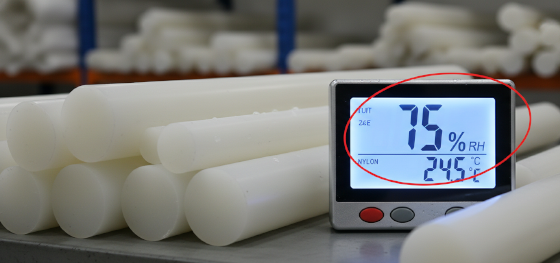
Success in nylon cnc machining is a balancing act between managing heat and accounting for chemistry. Nylon 6 is not just a plastic; it is a living material that reacts to the humidity in the room and the temperature of the tool tip. If you treat it like aluminum, you will end up with a tangled mess of melted plastic and dimensions that shift before the part even leaves the dock. At Jucheng Precision, we have spent over a decade perfecting the art of Machining Nylon 6, turning its challenging traits into competitive advantages for our global clients.
Whether you are developing a snap-fit enclosure that must survive a thousand cycles or a heavy-duty impact pad for an industrial conveyor, understanding the mechanical soul of PA6 is essential. This guide dives deep into the technical strategies, environmental controls, and tooling secrets JUCHENG employs to ensure every Nylon 6 component meets the highest standards of precision and cosmetic excellence.
content:
Mechanical Core: Toughness and Damping
Tackling the "Stringy" Challenge: Tooling Strategy
Applications: From Snap-fits to Guards
Moisture Villain: Managing Dimensions
JUCHENG's Finish: Cosmetic Excellence in PA6
Mechanical Core: Toughness and Damping
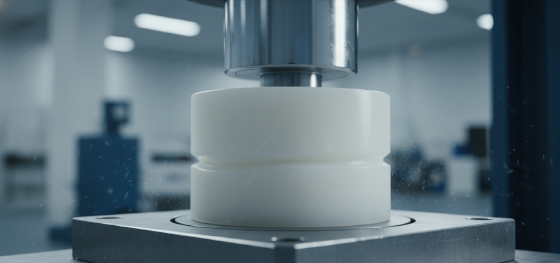
Nylon 6 is defined by its molecular simplicity and its physical resilience. Unlike its cousin, Nylon 66, which features a more rigid and crystalline structure, PA6 is slightly more ductile. This ductility is its greatest asset. When a part experiences a sudden shock load—like a dropped medical device or a vibrating motor mount—Nylon 6 has the ability to deform slightly, absorb that kinetic energy, and then return to its original shape. This makes it an ideal material for damping applications where noise reduction and vibration isolation are critical.
In the machining world, this "resilience" means the material is tough rather than hard. It resists the shearing action of the tool. If your cutter is even slightly dull, it won't cut the fibers of the nylon; it will simply push them out of the way. This leads to a phenomenon we call "elastic recovery," where a hole you just drilled suddenly measures smaller than the bit. At Jucheng Precision, we account for this physical behavior during the programming phase, utilizing specific offsets and specialized geometries to ensure the material yields precisely where we intend it to, maintaining the structural integrity that makes PA6 so popular in automotive and heavy industry.
Tackling the "Stringy" Challenge: Tooling Strategy
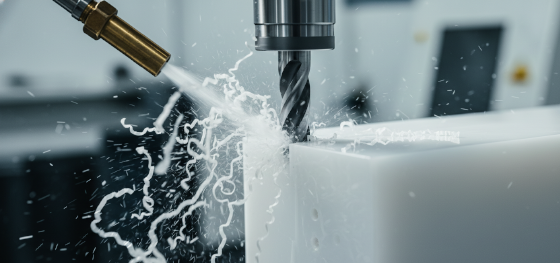
The biggest enemy of automated CNC production with Nylon 6 is the "bird's nest." Because Nylon 6 is so ductile, it refuses to break into clean, crisp chips like brass or even Delrin. Instead, it creates long, stringy ribbons of plastic that love to wrap themselves around the spindle, the tool, and the part itself. These "strings" can cause massive heat buildup, ruin the surface finish, and even trigger machine crashes if left unmanaged.
Successful Machining Nylon 6 requires a radical tooling philosophy. At Jucheng Precision, we utilize high-positive rake angle tools—often with a single flute—to ensure the metal is "sliced" rather than "plowed." We maximize chip load to carry heat away from the part. The goal is to produce thick, substantial chips that have enough mass to be flung away by centrifugal force. We also employ aggressive air-cooling and high-pressure fluid systems to physically blast the strings away from the cutting zone. By controlling the evacuation of waste material, we enable "lights-out" manufacturing for our clients, ensuring that even the most difficult-to-cut grades of PA6 are processed with the same reliability as aluminum.
Applications: From Snap-fits to Guards
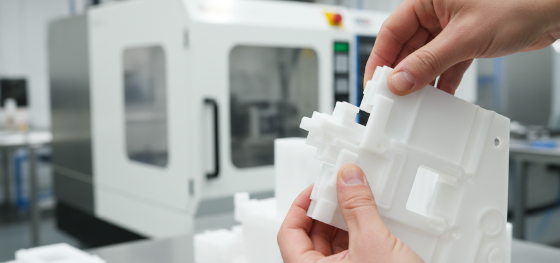
Where does Nylon 6 belong in your design? It is the undisputed king of the "living hinge" and the "snap-fit." Because it doesn't crack under repeated bending, it is used extensively for enclosures that must be opened and closed thousands of times. In the industrial sector, we frequently machine PA6 for machine guards, wear strips, and conveyor rollers. The material’s low coefficient of friction against metals means it can operate without lubrication in many environments, reducing maintenance costs for end users.
Another critical application is in the energy sector. Nylon 6 provides excellent electrical insulation and chemical resistance to oils and fuels. This makes it a primary choice for junction boxes, insulators, and bushings in oil and gas equipment. JUCHENG works with many clients in the renewable energy space, providing Nylon 6 components that withstand the harsh outdoor vibrations of wind turbines and solar tracking systems. The material's ability to survive impact while resisting environmental chemicals ensures a long service life in the most demanding field conditions.
Moisture Villain: Managing Dimensions
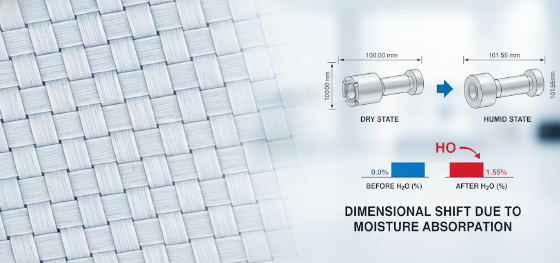
We must address the elephant in the room: Nylon 6 is hygroscopic. It is a material that drinks water. In high-humidity environments, a PA6 part can absorb up to 8% of its weight in moisture. As it absorbs water, the part swells. A hole that was exactly 10.00mm in our climate-controlled inspection room in Shenzhen might measure 10.15mm after sitting in a humid shipping container for two weeks. This is the primary reason why many general machine shops fail when Machining Nylon 6.
| Property Type | Nylon 6 (Dry as Molded) | Nylon 6 (At Equilibrium - 50% RH) |
|---|---|---|
| Tensile Strength | ~80 MPa | ~45 MPa |
| Elongation at Break | ~60% | ~200% |
| Dimensional Change | 0.0% | ~0.7% to 1.5% Expansion |
Jucheng Precision solves this with a three-pillar strategy. First, we store our raw material in temperature and humidity-controlled environments. Second, for critical precision parts, we perform a "post-machining moisture conditioning" process. We essentially pre-soak the parts in a controlled environment to reach their saturation equilibrium before we do the final precision cut. Third, we perform "over-machining" or "under-machining" based on calculated expansion coefficients. This ensures that when your part reaches its final operating environment—whether it is a dry desert or a humid coastal factory—it expands into the correct tolerance rather than out of it. This level of material science is what separates JUCHENG from standard shops.
JUCHENG's Finish: Cosmetic Excellence in PA6
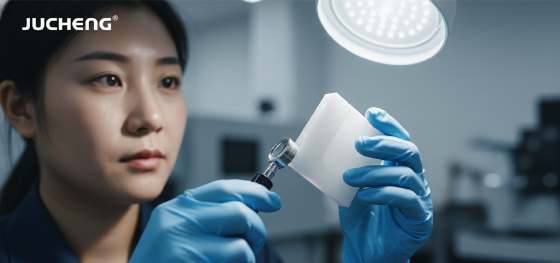
Getting a beautiful surface on Nylon 6 is notoriously difficult. Because it is gummy, it tends to leave "fuzz" or burrs at every exit point of the tool. Standard tumbling often fails because the burrs just fold over rather than breaking off. At Jucheng Precision, we have developed a proprietary deburring and finishing workflow for PA6. We use cryo-deburring techniques—freezing the parts to make the burrs brittle—or hand-finishing with specialized ceramic blades to ensure every edge is crisp.
We also pay close attention to the visual quality of the machined surface. By utilizing high-speed spindles (up to 24,000 RPM) and polished diamond-like tools, we can achieve a smooth, semi-gloss finish directly off the machine. This eliminates the need for expensive secondary painting or coating in many consumer-facing applications. Our quality control team inspects every batch under high-magnification scopes to verify that no microscopic tearing or smearing has occurred. When you open a box from Jucheng Precision, you aren't just getting a functional part; you are getting a component that reflects the precision and care of your own brand's design. Contact us today to see how our expertise in nylon cnc machining can bring your most challenging plastic projects to life.

