


For the highest-value, most sensitive components—such as micro-electronics, complex sensors, and medical devices—traditional coatings are too thick, and often too bulky. The solution is Precision Nano Coating, a surface engineering technology that applies an ultra-thin, functional layer at the nanometer scale. This invisible barrier is the ultimate defense against moisture, corrosion, and electrical leakage, all while preserving the tight dimensional tolerances achieved by precision CNC Machining.
Nano coatings are not paint; they are molecular assemblies. Successful application requires specialized, automated equipment and strict process control to ensure complete, uniform coverage on complex three-dimensional shapes. This guide explores the unique benefits and integration challenges of applying this advanced technology to industrial components.
Dimensional Impact: The Zero-Tolerance Advantage of Nano Coating
Functional Properties: Achieving Superhydrophobicity and Chemical Resistance
Application Mastery: Automated CVD for Uniform and Pin-Hole-Free Coverage
Materials Compatibility: Coating Metals, Plastics, and Electronics
CNC Integration: Ensuring Perfect Fit on Coated Components
Dimensional Impact: The Zero-Tolerance Advantage of Nano Coating
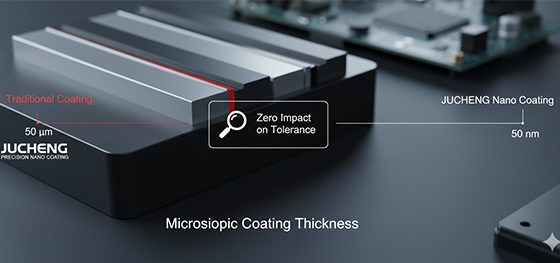
Traditional coatings (like powder coat, paint, or electroplating) add significant measurable thickness (microns or hundreds of microns), requiring the original CNC part to be machined undersize. Nano coatings eliminate this issue entirely:
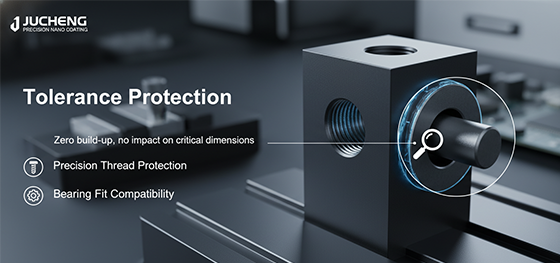
Minimal Build-Up: Nano coatings, such as Parylene or specialized fluoropolymers, are typically applied in layers less than 50 nanometers thick (less than 0.05 microns). This build-up is negligible for all but the most extreme aerospace tolerances.
No Masking Required: Because the coating is so thin, it will not clog threads, tight bores, or precise mating surfaces. This eliminates the need for expensive and labor-intensive masking during the post-processing phase.
Critical Clearance: Nano coatings are the only viable solution for protecting components that require near-zero clearance, such as magnetic actuator assemblies or precision sliding mechanisms.
Functional Properties: Achieving Superhydrophobicity and Chemical Resistance
Nano coatings are selected not for color, but for their advanced chemical and physical properties that enhance component performance in challenging environments:
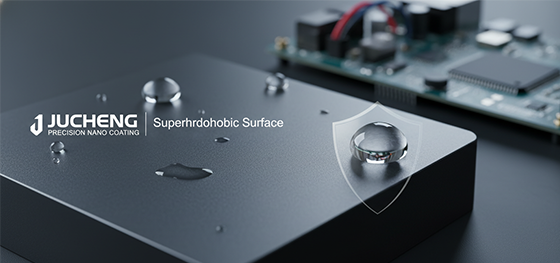
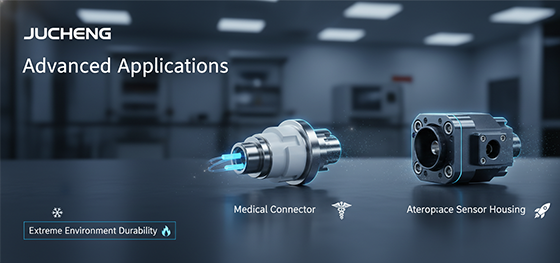
Superhydrophobicity: Many nano coatings create an extremely high contact angle with water (water beads up and rolls off), providing an immediate waterproof and self-cleaning surface, ideal for exterior sensors and electronics.
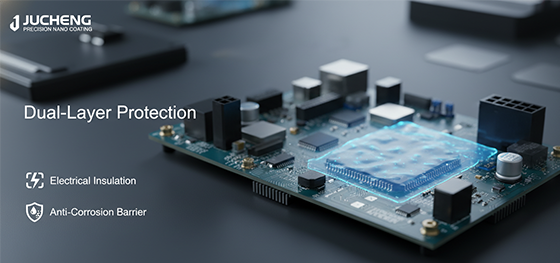
Corrosion and Chemical Barrier: The continuous, pin-hole-free coating acts as a complete barrier against moisture, salt spray, and aggressive chemicals, extending the life of CNC machined aluminum and steel parts.
Dielectric Strength: Nano coatings are excellent electrical insulators (dielectrics). They can be applied directly over sensitive circuitry or complex connectors to protect against short circuits caused by moisture or condensation.
Application Mastery: Automated CVD for Uniform and Pin-Hole-Free Coverage
Achieving the required quality is impossible with simple spraying. Nano coatings are applied using specialized vacuum and vapor deposition techniques to ensure uniformity:
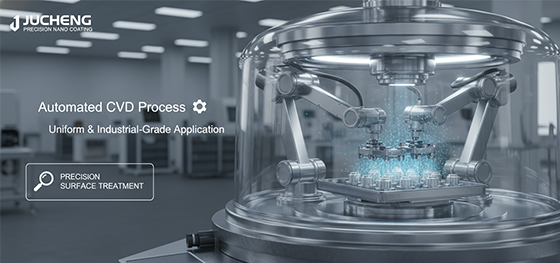
Chemical Vapor Deposition (CVD): The preferred method for Parylene and similar coatings. The material is heated into a gaseous state within a vacuum chamber, where it condenses as a molecularly uniform, pin-hole-free layer over the entire part—inside and out.
Substrate Cleanliness: The process is extremely sensitive to contamination. Parts must undergo rigorous cleaning (often plasma or ultrasonic) immediately before coating to ensure the chemical bond is perfect, as any oil or residue will cause the coating to fail.
Uniformity: The CVD process is unique in that it coats all surfaces, including sharp edges, tight crevices, and internal features, with a perfectly uniform thickness.
Materials Compatibility: Coating Metals, Plastics, and Electronics
The low temperature and chemical inertness of the CVD process allow nano coatings to be safely applied to a wide array of materials:
Metals: Applied to CNC Machined aluminum, stainless steel, and specialized alloys for corrosion protection without affecting dimensional tolerance.
Plastics: Used on Injection Molded housings, especially those made from PEEK or Ultem, to enhance chemical resistance and provide a barrier against moisture intrusion.
Electronics: Nano coatings are widely used for conformal coating of printed circuit boards (PCBs) and sensitive sensors, protecting them from humidity and condensation in harsh environments.
CNC Integration: Ensuring Perfect Fit on Coated Components
The true value of a nano coating is realized when its application is integrated seamlessly with high-precision manufacturing:
Dimensional Accuracy: Since the coating does not add measurable thickness, all CNC Machining (threads, bores, mating faces) can be performed to final specification without needing to adjust for post-processing build-up.
Post-Coating Integrity: The coating should be the absolute final step. Any attempt to machine or cut the part after coating application will break the protective barrier, immediately creating a failure point.
Inspection: Final inspection must verify the coating integrity using specialized methods (e.g., electrical testing for pinholes) in addition to verifying the dimensional stability achieved by the CNC process.
Precision Nano Coating is the definitive solution for high-value components requiring environmental protection without dimensional sacrifice. Jucheng Precision Technology offers certified integration of high-precision CNC Machining with specialized CVD application to deliver parts with superior functional barriers.
Secure non-intrusive, reliable component protection. Contact us today to discuss the optimal nano coating and CNC strategy for your critical electronic and medical prototypes.

