


In high-end manufacturing, applying paint is an engineering process, not an artistic one. The quality of an Industrial Spray Coating—from texture consistency to scratch resistance—is completely dependent on the uniformity of the application, the precision of the surface preparation, and the controlled environment of the curing process. Achieving a lasting, defect-free finish is a mandatory requirement for automotive, medical, and high-end consumer electronic components.
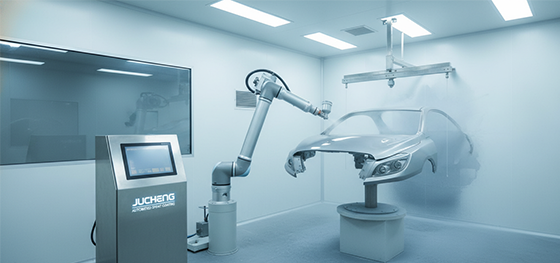
The most common failures (peeling, bubbling, or lack of gloss) are caused by microscopic contaminants or inadequate surface preparation. This guide explores the advanced strategies used by professional manufacturers to ensure optimal coating adhesion and long-term durability across various metal and plastic substrates.
Substrate Quality: The Baseline for Coating Success
Surface Activation: Maximizing Adhesion on Low Surface Energy Plastics
Application Control: Achieving Uniform Thickness and Texture
Thermal Curing: Managing Oven Temperature and Time for Durability
Quality Testing: Adhesion, Gloss, and Film Thickness Verification
Substrate Quality: The Baseline for Coating Success
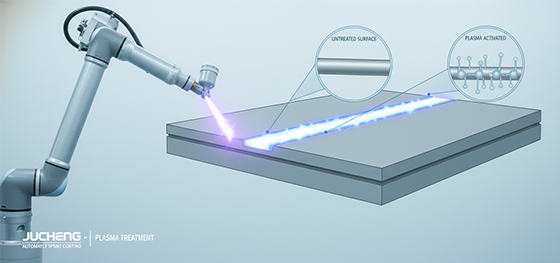
The quality of the final spray coating is fundamentally limited by the quality of the substrate (the raw part) delivered by the CNC Machining or Injection Molding process:
Surface Defects: Defects like sink marks, flow lines, or porosity in Injection Molded parts are magnified by a glossy paint finish. For cosmetic parts, the original mold (tooling) must be flawlessly polished to minimize these flaws.
Tool Marks: For metal components, heavy tool marks left by CNC Machining must be manually or mechanically removed via sanding or bead blasting before painting, as the coating will not fill deep imperfections.
Cleanliness: The part must be rigorously cleaned immediately before painting. Microscopic oil residue from machining or silicone-based mold release agents will repel the paint, causing immediate defects like "fisheyes" or poor adhesion.
Surface Activation: Maximizing Adhesion on Low Surface Energy Plastics
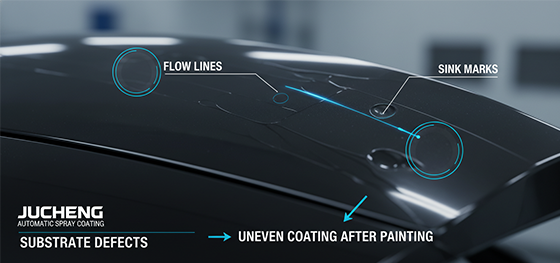
Many common engineering plastics (such as PP, PE, and certain ABS grades) are chemically inert and naturally resistant to bonding. This "low surface energy" problem must be solved through specialized surface activation processes:
Plasma Treatment: This precise method uses an electrical discharge to ionize gas, creating a plasma that chemically modifies the polymer's surface at the molecular level, increasing its surface energy and creating strong anchor points for paint.
Flame Treatment: A cost-effective, high-speed method where an oxidizing flame is passed quickly over the plastic surface. This controlled oxidation breaks surface bonds and makes the polymer receptive to the paint.
Adhesion Promoters: Specialized primers are often applied as a chemical bridge between the difficult-to-bond plastic and the final paint system, mandatory for materials like TPE or un-activated Polypropylene.
Application Control: Achieving Uniform Thickness and Texture
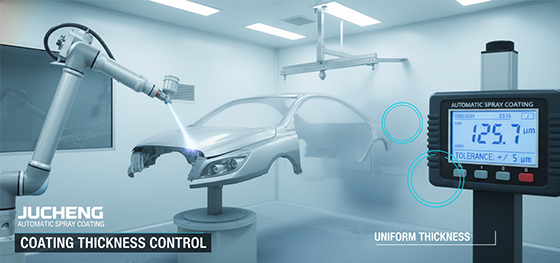
Industrial spray coating requires rigorous control over film thickness and deposition to ensure visual consistency and structural performance:
Clean Room Environment: Painting must take place in temperature- and humidity-controlled clean rooms or booths. Microscopic dust particles settling on wet paint are a primary cause of surface defects that require costly rework.
Automated Spraying: For high-volume projects, robotic spray arms are used to ensure the paint layer is applied with perfect uniformity across complex 3D contours, eliminating the inconsistency and overspray associated with manual application.
Thickness and Tolerance: Film thickness must be controlled to micron levels. Too thin, and durability is compromised. Too thick, and it can affect the dimensional tolerance of mating surfaces or lead to sagging and runs.
Thermal Curing: Managing Oven Temperature and Time for Durability
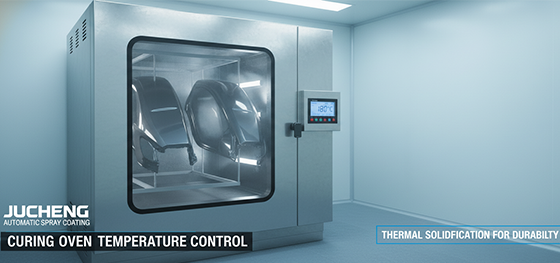
After application, the paint must be cured (baked) in an oven to achieve its final chemical hardness and adhesion. This thermal process must be precisely matched to the plastic substrate:
Curing Temperature Risk: The oven temperature must be high enough to fully cross-link the paint but safely below the plastic's heat deflection temperature (HDT). Exceeding the HDT causes the plastic substrate to warp or deform permanently.
Internal Stress Release: Heat curing can release internal stresses locked into the plastic during the original Injection Molding process, causing latent warpage that ruins the painted finish. Expert manufacturers precondition parts or perform stress-relief annealing.
UV Curing Alternative: For heat-sensitive substrates or materials that cannot withstand high temperatures, UV-curable paints and coatings are used. These cure instantly under ultraviolet light, eliminating the risk of thermal deformation.
Quality Testing: Adhesion, Gloss, and Film Thickness Verification
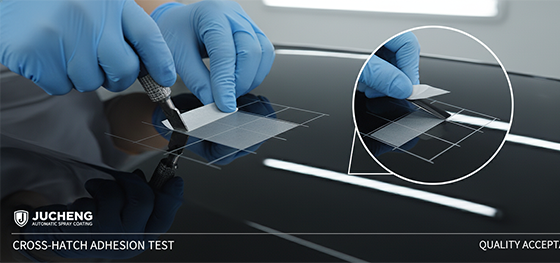
The final painted part is subject to rigorous testing to verify the durability and aesthetic compliance required for automotive and high-end consumer applications:
Cross-Hatch Adhesion Test: This critical test uses a multi-blade tool to cut a precise grid pattern into the paint, penetrating to the substrate. Adhesive tape is applied and ripped off to measure how much of the paint adheres, providing an objective score of bond strength.
Gloss and Texture: Specialized meters are used to measure the reflectivity (gloss) and surface texture (orange peel effect) to ensure every part meets the aesthetic specification of the final product.
Durability Testing: Finished parts are subjected to environmental tests, including thermal cycling, humidity exposure, and salt spray, to ensure the coating maintains its integrity and adhesion over the product's lifespan.
A durable, professional paint finish is a function of manufacturing control, not just art. Jucheng Precision Technology integrates specialized Injection Molding, advanced surface activation, and clean room application to ensure your **Industrial Spray Coating** achieves ultimate adhesion, uniformity, and durability.
Secure guaranteed coating quality on your components. Contact us today to discuss the full-service manufacturing and finishing protocol for your next project.

