

High-Strength Aluminum: Maximizing Strength and Corrosion Protection
Views: 1 Author: Allen Xiao Publish Time: 2025-04-24


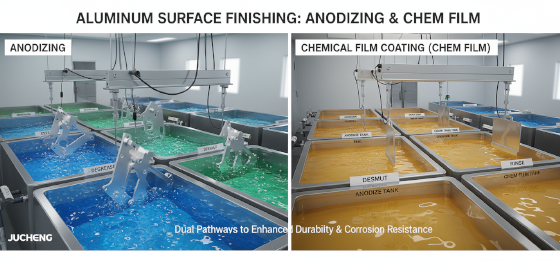
For structural components demanding the highest strength-to-weight ratio, High-Strength Aluminum is the alloy of choice. This heat-treatable aluminum alloy is indispensable in the Aviation Aerospace and military sectors, where structural integrity must be maintained without the penalty of heavy materials. However, its high copper content—the source of its strength—is also its Achilles' heel, making it highly susceptible to corrosion. Successfully utilizing High-Strength Aluminum in a critical component requires expert management of its temper (heat treatment) and the application of mandatory post-machining corrosion protection. This guide details the CNC Machining strategies and essential finishing processes required to make High-Strength Aluminum a reliable alloy for your high-performance prototypes and parts. content: High-Strength Aluminum (referring to the 2xxx series) is defined by copper as its primary alloying element. This element, typically ranging from 3.8% to 4.9%, is responsible for the alloy's incredible strength after it has been properly heat-treated: Strength Source: The copper forms microscopic precipitates within the aluminum crystal structure during the heat-treating process (precipitation hardening). These precipitates block the movement of dislocations, dramatically increasing the alloy's yield and ultimate tensile strength. Corrosion Trade-off: The copper-rich precipitates are electrochemically dissimilar to the surrounding aluminum, creating a vulnerability. This makes High-Strength Aluminum highly susceptible to galvanic and intergranular corrosion when left unprotected. Weldability: Due to this internal structure, High-Strength Aluminum is generally considered non-weldable by conventional fusion methods (TIG/MIG) without severely compromising its mechanical strength, reinforcing the necessity of CNC Machining and structural fasteners. High-Strength Aluminum's final strength is entirely dependent on its **temper**, which is achieved through specific, controlled heat treatments. Sourcing this alloy without a verified temper is a major structural risk: Solution Heat Treatment (T4/T3): The alloy is heated, quenched, and then naturally aged at room temperature. T4 is the designation for the naturally aged condition, providing a good balance of strength and ductility. T3 includes a cold-working step after quenching for added strength. Artificially Aged (T8): The highest strength is achieved through artificial aging (heating to a moderate temperature). The T8 temper is often used for critical aerospace parts, offering exceptional mechanical properties but a slight reduction in ductility compared to T4. Machining Temper: Parts are often machined in the T3 or T4 condition (easier to cut) and then subjected to a final aging (T8) process, or they are machined directly in the T8 state for final precision cuts. The choice impacts the risk of warpage. High-Strength Aluminum is generally considered to have good machinability due to its copper content, which produces small, manageable chips under the correct cutting parameters: High-Speed Machining: The alloy is suitable for high-speed CNC Machining, allowing for faster feed rates and spindle speeds, which is beneficial for reducing cycle times on large components. Surface Finish: Expert CNC shops can achieve an excellent surface finish on High-Strength Aluminum, often requiring minimal post-machining polishing, which is critical before applying the required corrosion coating. Fixturing: Given its use in precision assemblies, fixturing must be rigid yet balanced to prevent the release of internal stress during the cutting process, which could lead to final part warpage. Due to its inherent vulnerability, High-Strength Aluminum must receive a mandatory corrosion protection coating immediately after CNC Machining. The bare metal should not be exposed to the atmosphere for extended periods: Chemical Film Conversion Coating (Chem Film): This process (Mil-DTL-5541) creates a very thin, electrically conductive, corrosion-resistant layer. It is the preferred choice when the component requires electrical conductivity or must serve as a primer base for painting. Anodizing: Creating a thicker, durable oxide layer, Anodizing (Type II or Type III) provides superior wear and corrosion resistance. It is the preferred finish for external structural parts where both durability and aesthetics are required. Primer and Paint: For aviation and defense applications, the corrosion treatment (Chem Film) is often immediately followed by a primer and paint application to create a multi-layered barrier against harsh environmental conditions. Successfully utilizing High-Strength Aluminum is a testament to the manufacturer's expertise in both thermal management and certified finishing. Jucheng Precision Technology ensures full material traceability and applies the correct temper and protective coating to deliver structurally sound, high-performance parts. Maximize the strength of your High-Strength Aluminum components. Contact us today to discuss the precision CNC Machining and corrosion protection strategy for your critical aerospace and structural prototypes.Strength and Composition: The Role of Copper in High-Strength Aluminum
Temper Optimization: Understanding T3, T4, and T8 Heat Treatments
Machining Characteristics: Speed, Finish, and Tooling
Corrosion Mitigation: The Essential Post-Machining Protection
Strength and Composition: The Role of Copper in High-Strength Aluminum
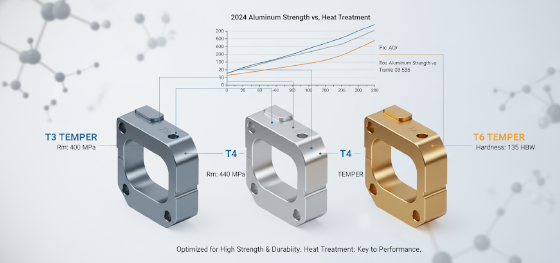
Temper Optimization: Understanding T3, T4, and T8 Heat Treatments
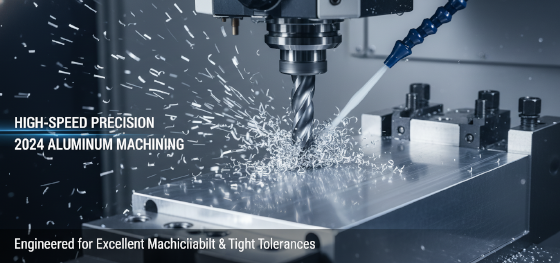
Machining Characteristics: Speed, Finish, and Tooling
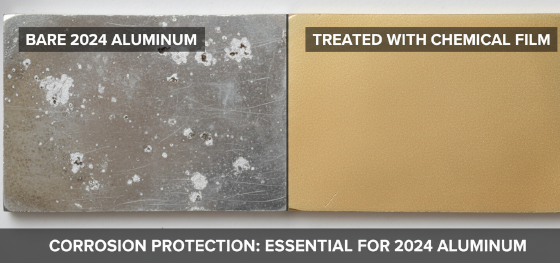
Corrosion Mitigation: The Essential Post-Machining Protection

ㆍPrivacy: We respect your privacy. Here you can find an example of a non-disclosure agreement. By submitting this form, you agree to our terms & conditions and privacy policy.
