


The advent of 3D printing has revolutionized prototyping and manufacturing, offering unprecedented flexibility and speed. Among its most impactful applications is the creation of molds for resin casting and injection molding. This technology enables designers, engineers, and hobbyists to rapidly iterate and produce complex parts that would be costly or impossible with traditional mold-making methods.
The Core Concept: 3D Print Resin Mold
Beyond Molds: Resin 3D Printing Without a Mold
Bridging Technologies: 3D Printed Injection Mold Resin
The Foundry of the Future: 3D Printed Molds for Resin Casting
Material Synergy: 3D Printer Resin for Silicone Molds
The Process Defined: 3D Printing Molds for Resin
From Digital to Physical: Creating Molds from 3D Resin Print
Aesthetic Excellence: Cold Casting Resin with 3D Printed Mold
The Core Concept: 3D Print Resin Mold
The direct approach involves using a resin 3D printer, such as an SLA or MSLA machine, to 3D print a resin mold master or even the mold itself. This is achieved by designing a negative cavity of the desired object in CAD software and printing it with a high-resolution resin. The key advantage is the exceptional detail capture, allowing for intricate features, undercuts, and smooth surface finishes that are challenging with FDM (Fused Deposition Modeling) printing. However, a critical consideration is the resin's properties; standard resins are often too brittle and may react with the casting resin. Therefore, using specialized tough or castable resins is recommended for creating durable molds that can withstand the demolding process and multiple uses.

Beyond Molds: Resin 3D Printing Without a Mold
It is crucial to distinguish between printing a mold for resin and printing the final object directly. Resin 3D printing without a mold refers to the standard process of SLA/DLP/LCD printing, where a UV-curable liquid resin is selectively solidified layer-by-layer to build a part directly. This is ideal for producing a master pattern that will later be used to create a mold from another material, like silicone, or for one-off pieces where the print itself is the final product. This method excels at producing parts with fine details and a smooth finish but is not suited for high-volume production, hence the need for mold-making.
Bridging Technologies: 3D Printed Injection Mold Resin
For low-volume injection molding of thermoplastic parts, 3D printed injection mold resin refers to molds printed from high-temperature, durable resins. These molds are mounted on a benchtop injection molding machine. While they cannot withstand the immense pressures and temperatures of industrial steel molds for thousands of cycles, they are perfect for producing 50-100 functional prototypes or small batches using materials like ABS, polypropylene, or nylon. This process drastically reduces the lead time and cost associated with machining metal molds for prototyping, enabling faster design validation and market testing.
The Foundry of the Future: 3D Printed Molds for Resin Casting
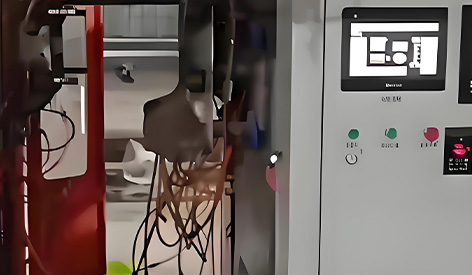
One of the most popular applications is using 3D printed molds for resin casting. Here, a 3D printer creates a master positive pattern. This pattern is then used to create a flexible silicone rubber mold, which is subsequently used to cast multiple copies of the part using various casting resins (e.g., polyurethane, epoxy). Alternatively, a rigid mold can be printed directly. The direct-printed mold approach is faster but requires careful design (draft angles, venting, sprues) and a release agent to ensure the cured resin part can be extracted without damaging the mold. This method is invaluable for artists, jewelers, and manufacturers needing small batches of high-quality parts.
Material Synergy: 3D Printer Resin for Silicone Molds
When the goal is to create a silicone mold from a 3D printed master, the choice of 3D printer resin for silicone molds is paramount. The printed master must be completely cured and its surface properly prepared. Any uncured resin or a resin formulation that contains inhibitors can prevent the silicone (typically platinum-cure silicone) from setting, leading to a tacky, uncured patch on the mold surface. Using resins certified as "silicone-safe" or thoroughly sealing the print with a clear coat (like acrylic spray) is a mandatory step to ensure a successful and bubble-free silicone mold cure.

The Process Defined: 3D Printing Molds for Resin
The general workflow for 3D printing molds for resin involves several defined steps. First, the mold is designed with appropriate draft angles, registration keys, and channels for resin pouring and air escape. It is then printed on a resin printer for high detail. Post-processing is critical: the mold must be washed impeccably to remove all uncured resin, fully cured under UV light, and then often sanded and sealed. A mold release agent is applied before the casting resin is poured. This process empowers creators to make making resin molds with 3d printer technology a standard practice in their workshop, merging digital design with analog casting.
From Digital to Physical: Creating Molds from 3D Resin Print
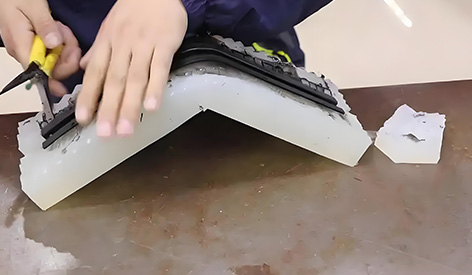
The art of creating molds from 3d resin print typically refers to using a high-resolution 3D printed part as a "positive" pattern to make a secondary mold. This is the most reliable method for producing multiple copies. The printed pattern is placed in a molding box, and liquid silicone rubber is poured over it. Once cured, the silicone mold is cut open, the original pattern is removed, and the resulting cavity is used for casting. This two-step process (print -> silicone mold -> cast parts) leverages the best of both worlds: the perfect detail of a resin print and the flexibility and durability of silicone for production.
Aesthetic Excellence: Cold Casting Resin with 3D Printed Mold
Cold casting resin with 3d printed mold is a technique used to create parts that mimic the look and weight of metal, stone, or ceramic. Metal powder (e.g., bronze, aluminum) or other aggregates are mixed into the casting resin before it is poured into the 3D printed mold. After the resin cures, the part is demolded and polished, revealing a surface that appears to be solid metal. The high resolution of a resin-printed mold is perfect for capturing the fine textural details that sell the illusion, making it a favorite for prop makers, sculptors, and specialty product designers.
The synergy between 3D printing and resin mold making is a cornerstone of modern digital fabrication. It democratizes the production of complex, high-quality parts, shifting the paradigm from mass manufacturing to mass customization. As 3D printing materials continue to evolve—with resins offering higher heat deflection temperatures, greater toughness, and better chemical resistance—the applications for 3D printed molds will expand further. This technology is not just a tool for prototyping but is becoming an integral part of the bridge between a digital idea and a physical product, empowering innovation across countless industries.

