


Light is a design element. Just like form, color, and texture. Some materials block light. Some absorb it. And a rare few have the ability to capture it, guide it, and bend it to their will.
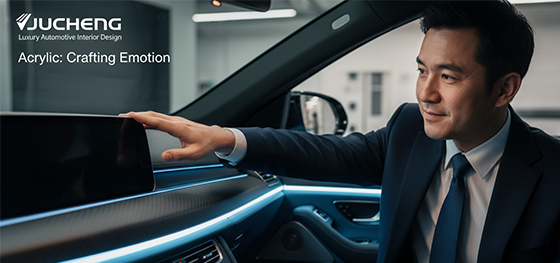
This is the magic of Acrylic, or PMMA. It is a material that is less a solid and more a medium for light itself.
For a designer, it offers a palette of optical possibilities. For a manufacturer, the process of acrylic cnc machining is a pursuit of absolute, flawless perfection. It is a discipline where a single scratch is a total failure. This is a guide to that pursuit.
content:
Capturing Light: The Soul of Acrylic
The Machinist's Dilemma: A Brittle Beauty
The Art of the Final Polish
Acrylic vs. PC: A Choice of Philosophy
Capturing Light: The Soul of Acrylic

The superpower of PMMA (Polymethyl Methacrylate), or acrylic, is its optical purity. It has a light transmission rate of up to 92%. This is higher than glass and higher than any other common transparent plastic. It is crystal clear, with virtually no color distortion.
This makes it the undisputed champion for applications where clarity is the most important goal.
But its real magic lies in its ability to be "edge-lit." It can act like a fiber optic cable. Light entering one edge can travel through the material, reflecting off the internal surfaces, and exit at another edge or face. Designers use this property to create stunning automotive light guides, illuminated signs, and decorative panels that seem to glow from within.
Acrylic is not just a window. It is a canvas for light.
The Machinist's Dilemma: A Brittle Beauty
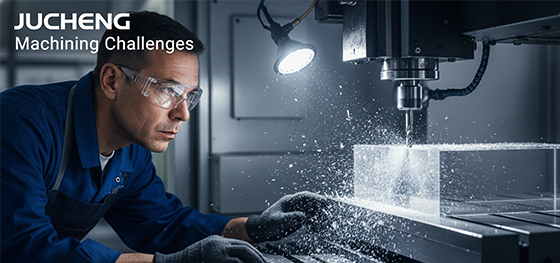
This beauty, however, comes with a challenge. Acrylic is a very hard and rigid, but also very brittle material. It is "notch-sensitive," meaning a small crack can propagate very quickly.
The process of acrylic cnc machining is a delicate balancing act. If you use the wrong tool or the wrong cutting speed, you can easily chip the material or cause tiny stress fractures to form beneath the surface. These fractures, called "crazing," can ruin the optical clarity.
Unlike a gummy material like Polycarbonate, acrylic chips away cleanly into a fine powder. A skilled machinist must use extremely sharp cutting tools, often with a special geometry designed for plastics. They must use high spindle speeds but a carefully controlled feed rate.
Cooling is also critical. But not just for heat. The coolant also helps to clear away the fine chips, preventing them from being re-cut and marring the surface. Machining acrylic is an act of finesse, not force.
The Art of the Final Polish

A freshly machined acrylic part has a clean, but frosted, matte appearance. To unlock its true optical soul, it must be polished.
This is a multi-stage, highly skilled process that is closer to art than science. It starts with sanding. A technician will sand the machined surfaces with progressively finer grits of wet sandpaper, often going all the way up to 1500 or 2000 grit.
Then, the true polishing begins. Using a soft buffing wheel and a series of special polishing compounds, the technician carefully buffs the surface. This process removes the microscopic scratches left by the sandpaper, revealing a flawless, glass-like shine.
For the ultimate clarity, a final step of "flame polishing" or "vapor polishing" can be used. This involves very briefly exposing the surface to a high heat or a chemical vapor, which reflows the very top layer of the material to an absolutely perfect, optically pure state. This is a process that demands an expert touch.
Acrylic vs. PC: A Choice of Philosophy
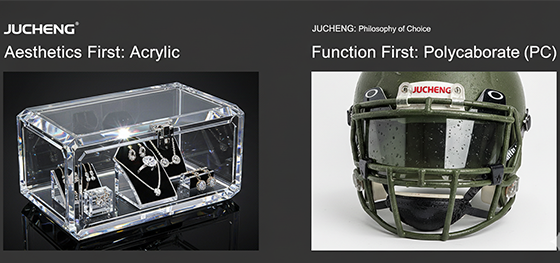
This brings us to the great debate. When do you choose Acrylic (PMMA), and when do you choose Polycarbonate (PC)? It is a choice of philosophy.
You choose Acrylic when your design prioritizes beauty and optical perfection above all else. It is clearer. It is more scratch-resistant. It has a more brilliant, glass-like presence. It is the material for a luxury display case, a high-end light fixture, or a beautiful cosmetic package. It is a choice for aesthetics.
You choose Polycarbonate when your design must prioritize toughness and impact resistance. PC is not as optically pure as acrylic, and it scratches more easily. But it is virtually unbreakable. It is the material for a safety guard, a helmet visor, or a ruggedized electronic device. It is a choice for function.
At JUCHENG, we are experts in machining both of these challenging CNC machining materials. Our DFM process can help you understand this philosophical trade-off, ensuring you choose the material that best serves the true soul of your product.

