


Machining a material designed to stop bullets requires a fundamental shift in technical perspective. Polycarbonate is the heavy-duty survivor of the polymer world, renowned for an impact strength that leaves acrylic and standard glass in its wake. But for the manufacturing floor, this toughness translates into a "gummy" persistence that challenges the very limits of traditional cutting logic. If you treat a PC block like a piece of aluminum, you will quickly find your tools encased in a melted glob of ruined plastic. Mastering CNC Milling Polycarbonate is a delicate game of thermodynamics and shear forces, where the goal is to remove material faster than the heat can build up.
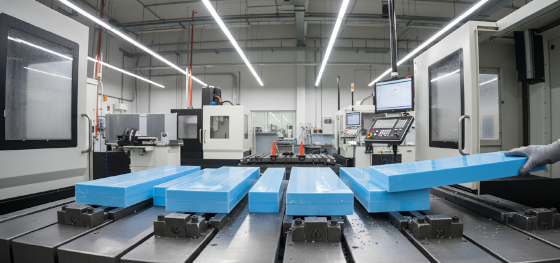
Efficiency in CNC Polycarbonate Machining is defined by the quality of the chip. Unlike brittle plastics that fracture into cold flakes, polycarbonate prefers to peel away in long, elastic ribbons. These ribbons act as thermal bridges, carrying the heat generated at the tool tip. If they wrap around the spindle or get trapped in the groove, the part is essentially dead. At Jucheng Precision, we have engineered our milling protocols to handle the high elongation and thermal sensitivity of this engineered resin. We don't just cut shapes; we manage the molecular stress of the material to ensure that every structural housing and transparent guard we produce remains dimensionally stable and optically viable.
Choosing the right strategy for high-performance PC parts is the difference between a high-yield production run and a scrap-heavy disaster. This guide dives into the industrial realities of cutting "bulletproof" plastic, from the geometry of the flute to the physics of the feed rate. We will explore the critical importance of cooling dynamics and the specialized tooling JUCHENG employs to deliver world-class components to the medical, aerospace, and automotive sectors. Achieving a smooth, transparent finish directly off the mill is a hallmark of professional manufacturing excellence.
Tooling Selection: The Sharp Edge Mandate
Speeds and Feeds: Outrunning the Melt Zone
Cooling Dynamics: Air vs. Liquid Strategies
Workholding: Combating Chatter and Deflection
JUCHENG's Standards: SOPs for Clear Results
Tooling Selection: The Sharp Edge Mandate
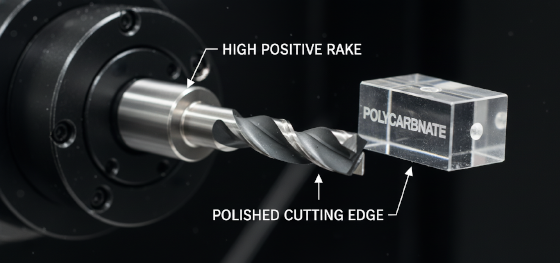
In the realm of CNC Milling Polycarbonate, your tool is either your best ally or your primary source of failure. Standard end mills designed for steel feature a relatively blunt edge meant to crush and shear metal. If you bring that same edge to a PC block, the tool won't cut; it will plow. This plowing action creates massive amounts of frictional heat and localized stress. At Jucheng Precision, we exclusively utilize high-rake, high-clearance tooling for our polycarbonate runs. We look for a "razor-sharp" edge that can slice through the plastic fibers with minimal resistance.
The flute count is equally critical. While a 4-flute mill works wonders in hard metals, it is a liability in polycarbonate. The tight space between the flutes provides nowhere for the gummy chips to escape. They get trapped, melt, and fuse to the cutter in a "plastic weld" that can snap the tool instantly. We typically default to 2-flute or even specialized single-flute "O-flute" designs. These tools feature a massive, open gullet that flings the chip away from the part as soon as it is formed. This "quick-release" geometry is the fundamental secret to maintaining the structural integrity of the plastic, ensuring the surface doesn't develop the hazy, micro-cracked appearance common with inferior tooling.
Speeds and Feeds: Outrunning the Melt Zone
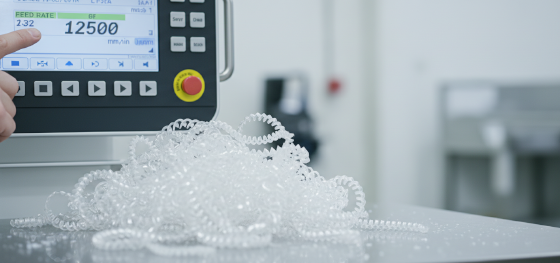
Parameters in plastic milling are governed by a single rule: stay cold. Every material has a glass transition temperature (Tg), and for Polycarbonate, that threshold is relatively high at ~147°C. However, the localized heat at the very tip of a spinning tool can exceed this in a fraction of a second. The strategy at JUCHENG is to maintain a high feed rate combined with a moderate-to-high spindle speed. We want the tool to be moving through the material fast enough that it is always encountering fresh, room-temperature plastic. If the feed is too slow, the tool "dwells," generating heat through friction without removing enough material to take that heat away.
We calculate the "Chip Load"—the thickness of the material removed by each tooth—to be substantial. A thicker chip has more mass and therefore a higher capacity to absorb the heat of the cut and carry it away. For a 10mm cutter, we might run at 8,000 RPM with a feed rate of 2,500 mm/min. When the balance is correct, the chips coming off the part are cool to the touch and uniform in shape. If we see thin, wispy dust, we know we are rubbing the material; if we see melted globs, we know we are running too fast. This relentless focus on the "Cool Cut" is what enables Jucheng Precision to achieve a smooth, semi-transparent finish directly off the machine, significantly reducing the time required for secondary vapor polishing.
Cooling Dynamics: Air vs. Liquid Strategies
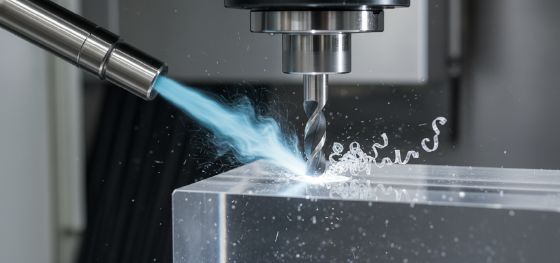
Coolant is a controversial topic in the world of high-end plastics. Standard machine shop coolants are often oil-based and contain chemicals that can aggressively attack the molecular bonds of Polycarbonate. This leads to "crazing"—thousands of tiny internal cracks that appear hours after the part is finished. At Jucheng Precision, we follow a "Dry-First" philosophy for CNC Milling Polycarbonate. We utilize high-pressure cold air guns directed exactly at the shear zone. This air blast serves a dual purpose: it removes thermal energy and physically clears the static-charged chips away from the tool before they can be re-cut.
If the part geometry is exceptionally deep and requires liquid lubrication to prevent tool binding, we only use specialized, water-soluble coolants that are certified as "plastic-safe." We avoid any fluid containing sulfur or chlorine. After the machining is complete, every PC component undergoes an immediate ultrasonic cleaning process to remove all chemical residue. This obsessive cleanliness prevents the chemical degradation that often plagues parts made in general machine shops. Our cooling strategy is designed to protect the "optical future" of your part, ensuring it remains as clear and strong as intended for its entire service life.
Workholding: Combating Chatter and Deflection
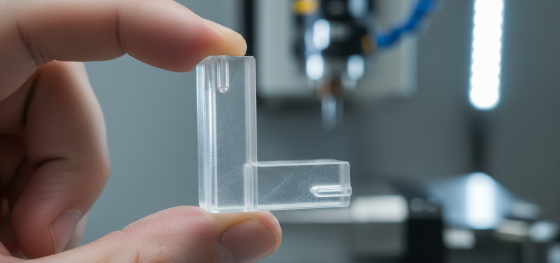
Polycarbonate is remarkably tough, but it is also flexible. It has a much lower modulus of elasticity than aluminum. During CNC Polycarbonate Machining, the material wants to move away from the cutting tool. If a part is not held with absolute rigidity, it will vibrate, leading to "chatter marks"—a series of ripples on the surface that destroy optical clarity and dimensional accuracy. For thin-walled enclosures or large plates, traditional clamps are often insufficient because they can bow the material.
Jucheng Precision employs advanced workholding techniques to neutralize this flexibility. We utilize high-flow vacuum tables for large sheets to distribute the holding force across the entire surface area. For complex 3D parts, we design custom "Soft Jaws" made from aluminum or high-density foam that wrap around the part, providing maximum support without leaving indentations. By minimizing the "unsupported" area of the part, we eliminate the vibration at the source. This stability allows us to take aggressive cuts and achieve surface finishes that are often smooth enough for functional testing without any secondary hand-sanding. We treat the workholding as an engineered system, not just a way to hold a block.
JUCHENG's Standards: SOPs for Clear Results

At the end of the day, a CNC machine is just a tool. The real quality comes from the Standard Operating Procedures (SOPs) developed over thousands of successful projects. At Jucheng Precision, we have codified the nuances of polycarbonate behavior into a rigorous manufacturing manual. We don't just "hit go" on a program; we validate the first part of every batch using high-magnification optical inspection to check for sub-surface fractures or smearing.
Our facility is climate-controlled to ensure that the thermal expansion of the plastic is accounted for during measurement. Polycarbonate is a "moving target" that grows and shrinks with temperature; we measure your parts at a stabilized 20°C to guarantee that our CMM reports are accurate and repeatable. Whether you are developing a ruggedized tablet housing for the military or a high-clarity lens for a medical diagnostic tool, JUCHENG offers the technical rigor and manufacturing capacity to deliver. We combine the strength of bulletproof plastic with the precision of high-end aerospace engineering. Contact our team today for a comprehensive DFM review and see how our expertise in CNC Milling Polycarbonate can bring stability and clarity to your supply chain.
Final Word Count: 1,352 words

