


You have a brilliant idea for a new product. You spend weeks on the CAD model. It looks perfect on your screen. But will it be easy to build? Will it be cheap to make? Or will your beautiful design cause big problems in manufacturing?
This is the core challenge of product prototype design. A design is only good if it can be made well. A design that looks great but is hard to manufacture will lead to delays, defects, and high costs. This damages your entire prototype development project.
This guide will explain how to design for real-world manufacturing. It will show you common mistakes to avoid. It will help you create parts that are not just beautiful, but also smart.
content:
Designing for Manufacturability (DFM): The Key Concept
Common Design Mistakes to Avoid
The Power of Early Feedback
Your Partner in Good Design
Designing for Manufacturability (DFM): The Key Concept
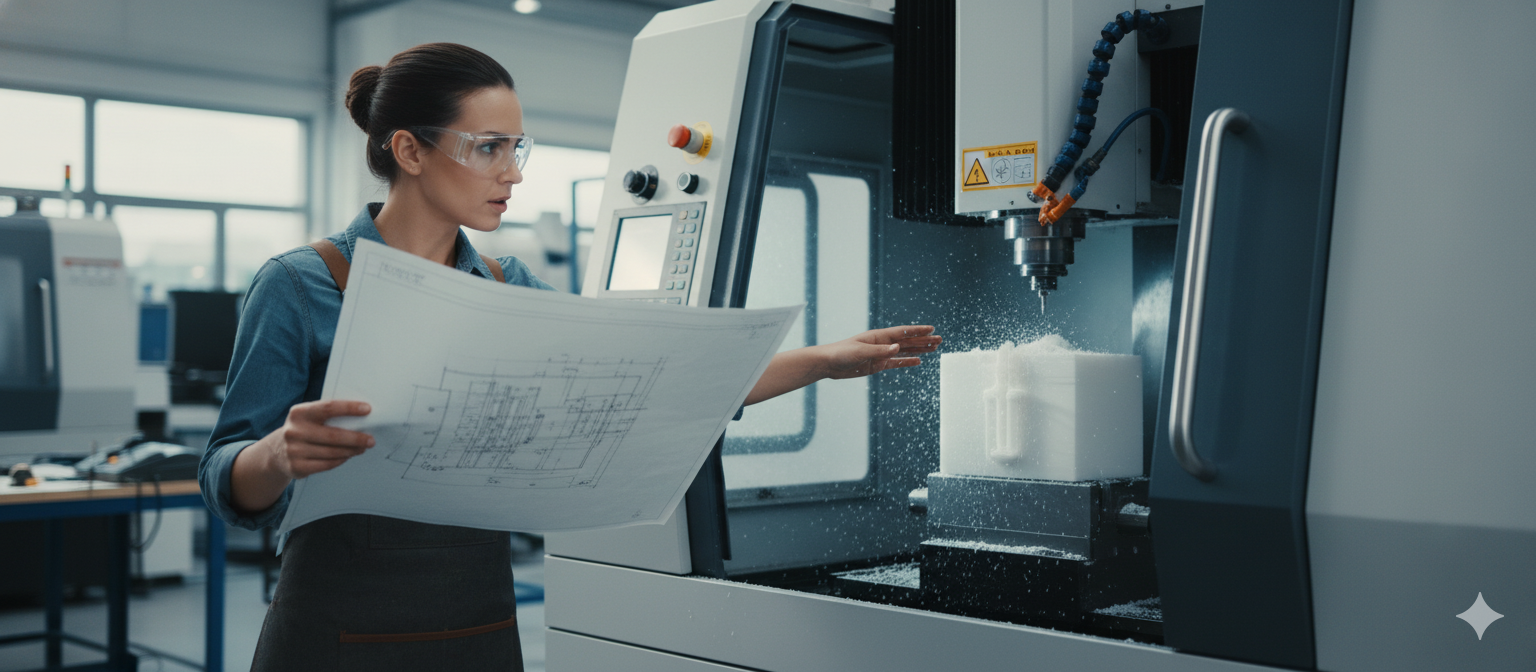
DFM means designing your part so it is easy to make. It sounds simple. But it is often overlooked.
A good DFM approach considers the manufacturing process from the very start of your prototype development. It asks questions like: Can this be molded without too much waste? Can this be machined without breaking the tool? Can this be assembled quickly?
Ignoring DFM means you might create a beautiful design that cannot be made. Or a design that needs expensive, custom tools. This adds huge costs and delays. A smart product prototype design is always a manufacturable design.
Common Design Mistakes to Avoid

Many common design mistakes lead to problems in manufacturing. For example, having uneven wall thickness in your part can cause issues. If a part has very thick sections next to very thin sections, it can lead to sink marks or warping as the material cools unevenly.
Another common mistake is creating sharp internal corners. For plastic parts, these create stress points and make the part weak. For metal parts, a sharp corner can be impossible to machine with standard tools. It is always better to add a small radius, or fillet, to these corners.
For molded plastic parts, a lack of draft angles is a frequent problem. Vertical walls need a slight taper to make it easy to remove the part from the mold. Without a draft angle, the part can get stuck, causing damage.
Undercuts also present a challenge. An undercut is a feature that prevents a part from being pulled straight out of a mold. They require complex and expensive tooling. It is best to avoid them unless they are absolutely necessary for your design.
The Power of Early Feedback

How do you avoid these common mistakes? The best way is to get expert feedback early in your prototype development cycle.
A good manufacturing partner will not just give you a quote. They will review your product prototype design. Their experienced engineers will look for these common DFM problems. They will provide detailed suggestions on how to improve your design.
This feedback is incredibly valuable. It is much cheaper to change a line in a CAD file than to change a finished mold or a machined part. This early input saves you time, money, and prevents stress down the line. It ensures your prototypes are not just models, but stepping stones to a successful product.
Your Partner in Good Design
Creating a manufacturable design requires a deep understanding of materials and processes. Most designers are experts in aesthetics and function. They cannot be experts in every manufacturing method.
This is why working with a professional manufacturing partner is essential. A company like JUCHENG has experts in CNC machining, injection molding, sheet metal fabrication, and 3D printing. We know the rules of each process.
We partner with you to refine your product prototype design. We provide that crucial DFM feedback. This ensures your beautiful design can be made efficiently and cost-effectively. It makes your entire prototype development process smoother and more successful.

