

Industrial Metal 3D Printing: Cost, Precision, and Hybrid Strategy
Views: 4 Author: Allen Xiao Publish Time: 2025-07-15 Origin: Site


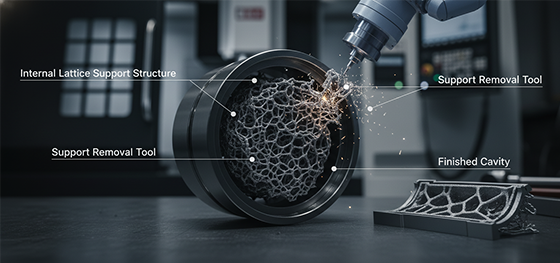
Metal 3D Printing has revolutionized the manufacturing landscape, enabling engineers to create designs previously deemed impossible—complex internal channels, lightweight lattice structures, and intricate custom tooling. For B2B buyers, the key question is no longer "Can it be printed?" but "When is Industrial Metal 3D Printing the most commercially viable solution over traditional CNC Machining?" Success in metal additive manufacturing requires a sophisticated understanding of two core areas: the process's inherent limitations (such as surface roughness and cost) and the strategic necessity of hybrid manufacturing—combining 3D printing with traditional finishing techniques. This guide explores the realistic commercial application of this high-end technology. content: The most common methods for producing fully dense, structural metal parts are DMLS (Direct Metal Laser Sintering) and SLM (Selective Laser Melting). Both rely on a similar core principle: a high-powered laser selectively fusing metal powder: Process: A thin layer of fine metal powder (e.g., Stainless Steel 316L, Aluminum AlSi10Mg, Titanium Ti64) is spread across a build plate. A high-energy laser melts the powder based on the digital file, layer by layer, until the part is fully formed within the powder bed. Metallurgical Quality: The process results in parts that are fully dense (no internal porosity) and possess mechanical properties comparable to—and sometimes exceeding—those of wrought or cast metals. Complexity Advantage: Since the part is built additively, complexity is essentially free. This is ideal for internal channels (e.g., cooling lines in tooling) and complex lightweight structures in aerospace. Metal 3D Printing is expensive, and the unit cost is driven by factors far beyond the machine's running time. Strategic sourcing requires understanding these primary cost drivers: Material Cost: The metal powder itself (especially titanium and specialized alloys) is significantly more expensive than stock material for CNC Machining, and only a fraction of the unused powder can be recycled. Build Time: While complexity is cheap, large volume is expensive. The build process is slow (building layer by layer), making traditional CNC Machining vastly more cost-effective for parts that can be easily cut from a block. Post-Processing: Every metal 3D printed part requires extensive post-processing, including stress relief heat treatment (HIP), removal from the build plate, and mandatory support structure removal—a set of labor and energy-intensive steps that significantly add to the final cost. The nature of the powder-fusion process creates a rough surface finish (often Ra 6.3–12.5 μm) and tolerances that are looser than those required for most functional assemblies: Surface Roughness: The final surface is inherently rough due to the partially melted powder grains. For bearing surfaces, sealing faces, or aesthetic components, this roughness is unacceptable. Tolerance: Additive processes typically hold tolerances around ±0.1 mm to ±0.2 mm. For precision holes, mounting surfaces, and thread features, this is inadequate. The Solution: For functional metal parts, the part is intentionally designed with an allowance of excess material. After 3D printing and post-processing, the critical features are precisely finished using 5-Axis CNC Machining to achieve the required surface finish and tight tolerances (the "hybrid" approach). The most commercially successful strategy for metal additive manufacturing is treating it as a near-net shape fabrication process, using it for the complex core and CNC for the precision shell: Use 3D Printing for Complexity: Utilize the metal 3D printer for internal cooling channels, lightweight lattice structures, and organic geometry that would be impossible or prohibitively expensive to machine. Use CNC for Precision: Use high-precision CNC Machining to define all mating faces, bearing seats, thread bores, and sealing surfaces, where tight tolerances and low roughness are mandatory. Integrated Service: Jucheng Precision Technology offers both Metal 3D Printing (DMLS/SLM for SS316L, Ti64, AlSi10Mg) and 5-Axis CNC Machining under a single roof. This minimizes the risk of dimensional error during the transition between the additive core and the subtractive finish. Industrial Metal 3D Printing is an invaluable tool for geometric complexity. Jucheng Precision Technology offers the expertise to guide your sourcing decision, ensuring that your parts are either fully CNC Machined for maximum economy or utilize a certified hybrid approach for optimal performance, cost, and structural integrity. Secure advanced metal parts through a certified hybrid manufacturing strategy. Contact us today to discuss the optimal balance between Metal 3D Printing and high-precision CNC Machining for your project.Technology Overview: DMLS and SLM for Functional Metals
Cost Drivers: Evaluating Powder, Build Time, and Post-Processing
Surface Finish and Precision: Why Metal Parts Need CNC Machining
The Hybrid Strategy: Integrating Metal 3D Printing with Traditional CNC
Technology Overview: DMLS and SLM for Functional Metals

Cost Drivers: Evaluating Powder, Build Time, and Post-Processing

Surface Finish and Precision: Why Metal Parts Need CNC Machining
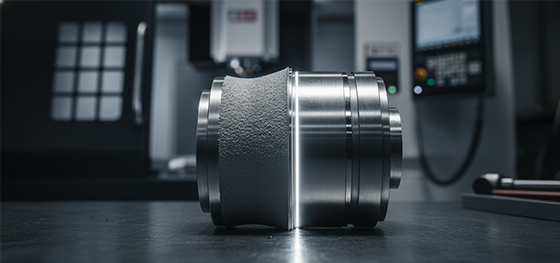
The Hybrid Strategy: Integrating Metal 3D Printing with Traditional CNC



ㆍPrivacy: We respect your privacy. Here you can find an example of a non-disclosure agreement. By submitting this form, you agree to our terms & conditions and privacy policy.
