


Carbide inserts shatter instantly when programmers incorrectly calculate the shear force required to penetrate heavily cold-rolled copper alloys. Machinists frequently encounter catastrophic tool failure when confusing dead-soft architectural metals with high-tensile industrial marine grades. Metal density dictates the absolute boundaries of cutting physics.
Defining the specific brass hardness establishes the baseline for every spindle speed and feed rate generated by advanced CAM software. Engineers must rigorously align raw material specifications with the kinetic realities of multi-axis milling operations. Ignoring these metallurgical parameters violently destroys expensive end mills.
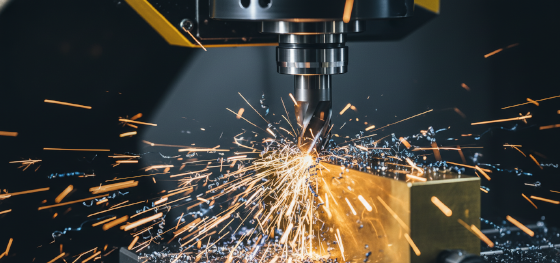
Vibrational resonance rips through the machine chassis when cutting edges strike unexpected hard spots within poorly alloyed billets. Securing predictable chip formation requires deep metallurgical insight into strain hardening and zinc crystalline integration. Fabrication success relies entirely on microscopic structural stability.
content:
Why Does Zinc Content Directly Dictate Brass Hardness?
How Do Cold Working Processes Alter Brinell Measurements?
What Causes Tool Wear When Machining High-Hardness Brass?
Which Hardness Scale Best Evaluates Brass Alloys?
How Does Annealing Reverse Strain Hardening Effects?
Why Choose Jucheng for Precision Brass CNC Fabrication?
What Are the Most Critical Brass Hardness FAQs?
Why Does Zinc Content Directly Dictate Brass Hardness?

Increasing zinc concentration progressively distorts the copper crystal lattice, creating immense internal atomic tension that physically blocks dislocation movements under mechanical stress.
Pure copper exists as an incredibly soft, gummy element that aggressively resists clean machining operations. Introducing zinc atoms into this matrix generates a solid solution that fundamentally alters the shear strength of the resulting alloy. Metallurgists manipulate this ratio precisely to achieve targeted mechanical thresholds.
Alloys pushing beyond thirty-five percent zinc force the microstructure to transition from a pure alpha phase into a dual alpha-beta phase structure. Beta-phase molecules drastically spike the raw tensile resistance but simultaneously eradicate cold-working ductility. High-zinc formulations shatter instantly under heavy pressing forces.
How Do Cold Working Processes Alter Brinell Measurements?
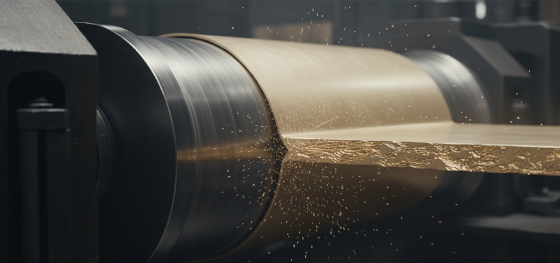
Cold rolling and deep drawing physically compress the metallic grain boundaries, violently amplifying the material's yield strength through severe strain hardening mechanics.
Subjecting a soft brass billet to massive hydraulic pressure permanently elongates the internal crystalline structures along the axis of deformation. This severe structural crowding prevents the atoms from sliding past one another smoothly. The metal transforms from a pliable solid into a rigid, highly stressed mass.
Procurement teams must specify the exact temper state when ordering raw stock for CNC production. Purchasing "half-hard" or "full-hard" C26000 cartridge brass entirely changes the baseline Brinell rating. Machinists must actively compensate for this elevated resistance by aggressively reducing programmed chip loads.
What Causes Tool Wear When Machining High-Hardness Brass?
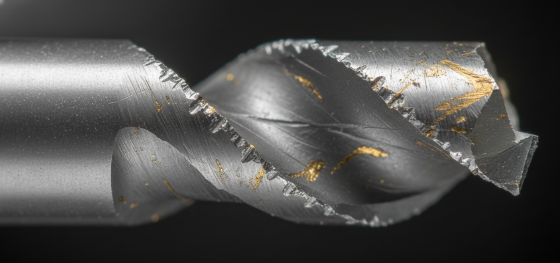
Elevated mechanical hardness directly increases abrasive friction at the primary shear zone, rapidly degrading the sharp geometries of uncoated carbide end mills.
Standard free-machining C36000 utilizes microscopic lead particles to artificially lubricate the cutting interface and snap chips cleanly. High-strength naval brasses completely lack this internal lubrication system. The rigid material demands massive kinetic force to fracture, transferring intense heat directly into the cutting tool substrate.
Thermal shock and severe built-up edge destroy tight geometric tolerances on production runs. Programmers combat this premature tool death by deploying highly specialized polished flutes and injecting high-pressure cutting fluids. Managing the extreme friction curve dictates the ultimate profitability of the machining cycle.
| Brass Alloy Grade | Typical Temper | Hardness (Rockwell B) | Primary Machining Challenge |
|---|---|---|---|
| C36000 (Free-Machining) | Half-Hard (H02) | ~78 HRB | Excellent baseline, minimal wear |
| C26000 (Cartridge Brass) | Spring Hard (H08) | ~91 HRB | High friction, severe chip wrapping |
| C46400 (Naval Brass) | Hard (H04) | ~82 HRB | Abrasive wear on carbide coatings |
Which Hardness Scale Best Evaluates Brass Alloys?
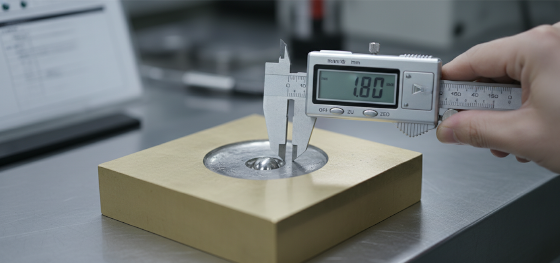
The Rockwell B scale dominates copper alloy industrial specifications due to its precise ability to measure relatively soft metals using a specific 1/16-inch steel sphere.
Deploying diamond indenters used for hardened tool steels shatters the brass surface, rendering the mechanical data entirely useless. Quality assurance technicians rely exclusively on the Rockwell B or Brinell scales to evaluate the structural integrity of incoming billets. Accurate indentation dictates material compliance.
Verifying the exact hardness coefficient prevents catastrophic bending failures in sheet metal fabrication. If a supplier ships full-hard material when the blueprint demands dead-soft annealed stock, the press brake will snap the part instantly. Rigorous testing enforces supply chain accountability.
How Does Annealing Reverse Strain Hardening Effects?

Subjecting stressed brass to high-temperature thermal soaking forces the distorted crystalline grains to completely recrystallize, restoring maximum ductility and eradicating internal tension.
Deep drawing operations violently stretch the metallic matrix until it reaches the absolute brink of structural fracture. Engineers must halt the mechanical forming process and insert the components into an industrial furnace operating near 600 degrees Celsius. Heat provides the atomic energy required for structural realignment.
This precise thermal cycle erases the brutal effects of cold working, drastically dropping the Rockwell B rating back to its lowest baseline. Operators can then resume heavy stamping or spinning operations without fearing sudden material rupture. Manipulating temperature actively controls the physical yield boundaries.
Why Choose Jucheng for Precision Brass CNC Fabrication?
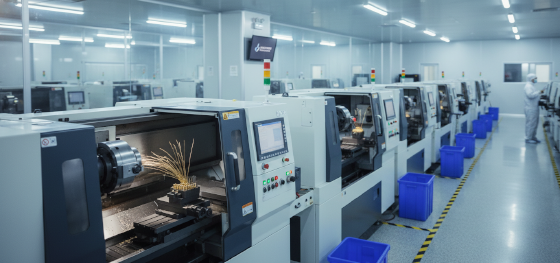
Operating deep within the Shenzhen precision manufacturing hub, Jucheng Precision merges advanced spindle kinematics with strict material verification to guarantee micron-level tolerances.
Navigating [2026] global supply chain tolerances demands absolute control over raw billet metallurgical variations. We refuse to feed unverified, wildly fluctuating stock into our 150+ high-end machining centers. Our quality control teams execute rigorous hardness testing before the first chip flies.
Our 8000-square-meter facility executes complex 5-axis milling and high-volume Swiss turning under severe ISO9001:2015 protocols. We provide intensive Free DFM reviews to analyze your specific temper requirements, ensuring maximum machinability without sacrificing structural strength. We turn raw mechanics into competitive hardware.
What Are the Most Critical Brass Hardness FAQs?

Resolving deep metallurgical uncertainties prevents destructive manufacturing failures during the rapid prototyping and volume production of custom hardware.
Can heat treatment artificially increase the hardness of C36000 brass?
Absolutely not. Unlike carbon steel or specialized aluminum grades, standard free-machining brass cannot be hardened through quenching and tempering cycles. Only physical cold-working operations like rolling or drawing can increase its mechanical yield strength.
How does extreme hardness impact threading and tapping operations?
Cutting internal threads into full-hard brass generates immense torsional friction on the delicate high-speed steel tap. If the machinist fails to aggressively peck-tap or provide massive lubrication, the tool will snap instantly inside the bore, destroying the entire component.
Does lead content negatively impact the overall structural rigidity?
Yes. While lead provides unmatched machinability, the microscopic globular particles physically interrupt the continuous copper-zinc lattice. This discontinuity slightly lowers the overall tensile strength and impact resistance compared to pure, lead-free naval brass alternatives.

