


Delivering brittle, fragile toys to a serious venture capital board meeting destroys corporate funding rounds instantly. Executives absolutely refuse to authorize millions of dollars in mass production budgets based on a visual mockup that shatters when accidentally dropped on the boardroom table. Securing heavy financial backing strictly requires engineering highly durable functional prototypes that look, feel, and physically survive exactly like the final retail product.
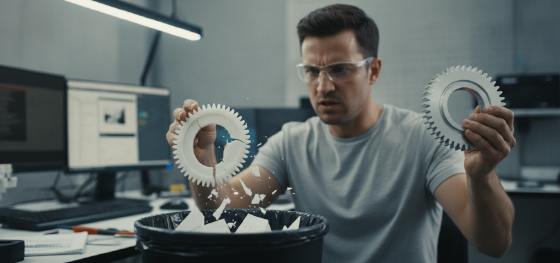
Evaluating early-stage hardware forces procurement teams to navigate a terrifying landscape of false positive data. Testing a complex geometric latch using layered 3D Printing generates entirely useless mechanical feedback because the layered plastic behaves fundamentally differently than a solid molded part. Gathering performance data from the wrong physical chemistry practically guarantees your expensive steel tool will fail catastrophically during volume manufacturing.
Executing legitimate kinetic stress validation demands utilizing manufacturing methods that mimic final production chemistry perfectly. Engineers must aggressively bash, twist, and violently drop these early units to discover hidden design flaws before ordering permanent tooling. Transitioning your digital CAD file into physically indestructible raw materials represents the absolute most critical phase of the entire hardware scaling timeline.
Operating deep inside the Shenzhen precision manufacturing hub equips our veteran tooling experts to eliminate this dangerous guesswork entirely. We aggressively analyze your testing requirements and deploy hardcore CNC Machining or rapid tooling to deliver components that actually survive brutal physical punishment. Protecting your global launch schedule requires trusting factory veterans who refuse to cut corners on material integrity.
content:
Defeating Kinetic Stress Validation Failures
Surviving Brutal Thermal Degradation Testing
Deploying Agile Bridge-to-Production Tooling
JUCHENG Hub: Dominating Hardware Scaling
Frequently Asked Questions: Testing Physics
Defeating Kinetic Stress Validation Failures
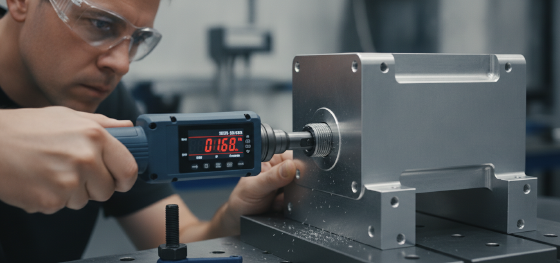
Can hardware engineers rely on extruded plastic models to accurately test heavy load-bearing brackets?
Never. Extruded filaments suffer from severe anisotropic weakness, meaning the part will violently split along the microscopic layer lines long before it reaches the true physical limit of the intended production material.
Subjecting beta components to aggressive drop tests exposes the massive physical disparity between rapid prototyping methods. If your blueprint calls for a solid ABS enclosure, evaluating a fragile resin replica provides dangerously inaccurate drop survivability metrics. Utilizing subtractive milling to carve your test unit directly out of a solid extruded ABS billet perfectly mirrors the monolithic density required for honest data collection.
Designing complex watertight enclosures practically mandates utilizing non-porous manufacturing solutions immediately. Submerging a layered plastic shell into a high-pressure marine testing tank naturally forces water straight through the microscopic printing voids, causing immediate electronic short circuits. Engineers absolutely must test using perfectly dense materials to properly evaluate the physical compression of the internal rubber O-rings.
Fastening heavy assemblies together introduces terrifying torque variables. Driving steel bolts into brittle plastics causes immediate thread stripping and severe wall fracturing. True functional prototypes must flawlessly accept threaded brass inserts or feature directly tapped metal threads to withstand repetitive assembly and disassembly during rigorous field evaluations.
Surviving Brutal Thermal Degradation Testing

Will visual mockups accurately demonstrate how an automotive part performs near a superheated engine block?
Absolutely not. Basic prototyping polymers physically melt, warp, and violently off-gas toxic fumes long before they reach the extreme operating temperatures required for legitimate vehicular certification.
Executing critical thermal degradation testing protects global hardware brands from catastrophic product recalls. Designing a high-intensity LED light fixture generates massive internal thermal loads that must be dissipated rapidly to prevent electrical fires. Machining the exact test chassis out of solid aerospace Aluminum guarantees the thermal conductivity perfectly matches the final engineered product.
Medical robotics equipment frequently undergoes brutal hospital autoclave sterilization cycles containing highly pressurized, boiling steam. Testing these devices using cheap plastics results in the parts turning into useless melted puddles inside the chamber. Supplying raw Stainless Steel or premium medical-grade PEEK components validates that your final design mathematically survives severe chemical and thermal sanitation.
| Manufacturing Technology | Mechanical Strength Level | Testing Data Accuracy | Ideal Beta Testing Application |
|---|---|---|---|
| Desktop Filament Extrusion | Very Low (Prone to splitting) | Dangerously Inaccurate | Basic ergonomic handling and size checks |
| Vacuum Casting (Liquid Resin) | Moderate (Isotropic density) | Excellent (Mimics final polymers) | Consumer electronic drop testing |
| 5-Axis Subtractive Milling | Absolute Maximum (Solid Billet) | Flawless 1:1 Match | Aerospace brackets and fluid manifolds |
| Soft Aluminum Rapid Tooling | Identical to Mass Production | Flawless 1:1 Match | Pre-production assembly line validation |
Deploying Agile Bridge-to-Production Tooling

Must startups immediately purchase expensive hardened steel molds to acquire legitimate testing parts?
No. Cutting agile, lower-cost aluminum tools provides hundreds of identical, fully functional units manufactured from the exact final production polymer without paralyzing your cash flow.
Mastering bridge-to-production tooling entirely eliminates the terrifying gap between single mockups and massive volume orders. Procuring fifty identical Polycarbonate (PC) covers allows your engineering team to distribute physical units to beta testers globally. Gathering aggressive feedback from real-world users frequently exposes invisible ergonomic flaws that computer simulations completely missed.
Transitioning into Injection Molding using soft aluminum cavities aggressively protects your corporate treasury. Because aluminum cuts significantly faster than heavy tool steel, your physical parts arrive weeks earlier. If the beta testers demand a sudden design change, milling a quick adjustment into the soft aluminum block costs pennies compared to burning expensive EDM electrodes into hardened steel.
Executing pilot runs effectively dictates exactly how your assembly line will perform. Workers physically practice pressing bearings, driving screws, and routing delicate internal wiring harnesses inside genuine enclosures. Identifying and resolving these massive assembly bottlenecks early ensures your final global launch scales flawlessly without inducing terrifying labor shortages.
JUCHENG Hub: Dominating Hardware Scaling
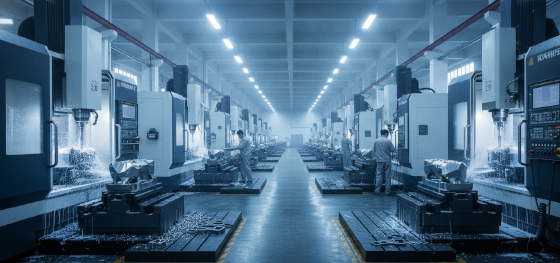
Why do elite hardware startups refuse to bounce between scattered local prototype shops?
Transitioning digital files between different disconnected vendors guarantees severe dimension loss and terrifying intellectual property leaks. Keeping the entire project under one unified manufacturing roof ensures absolute engineering accountability.
Partnering directly with Jucheng Precision guarantees your physical models survive the board room. Submitting your complex CAD file triggers an immediate manual Design for Manufacturing (DFM) audit. We aggressively interrogate the mechanical physics of your design to recommend the perfect material selection before cutting a single millimeter of expensive raw stock.
Leveraging our massive Shenzhen hybrid facility ensures you transition seamlessly from early mockups to pilot runs. We combine heavy 5-axis milling centers with rapid aluminum tooling divisions to deliver exactly what your timeline demands. We protect your venture capital budget by actively preventing you from purchasing inappropriate, fragile manufacturing methods.
Frequently Asked Questions: Testing Physics

Can technicians successfully plate or paint basic additive parts for cosmetic marketing presentations?
Yes, but achieving premium retail finishes requires intense, highly expensive manual labor. Technicians must aggressively sand down the porous layer lines and apply thick chemical primers before spraying, which often fundamentally alters tight mechanical tolerances.
Why do cast liquid resins sometimes fail high-impact drop tests despite being fully dense?
Liquid Polyurethane mimics the exact physical characteristics of engineering plastics, but it lacks the heavy molecular weight and extreme kinetic elongation of true injection-grade pellets. Extreme drop survivability ultimately requires cutting real tools.
Does testing multiple iterations simultaneously reduce the overall timeline?
Absolutely. Smart procurement managers utilize hybrid facilities to produce three slightly different geometric variations in parallel. Field-testing multiple designs over the same weekend aggressively compresses the engineering feedback loop, slicing weeks off the final launch schedule.

