


What is Rapid Prototyping? For many, the term is synonymous with 3D printing. But this is a limited and outdated view. True rapid prototyping is a much broader and more powerful concept. It is a group of techniques used to quickly fabricate a scale model of a physical part using three-dimensional computer-aided design (CAD) data.
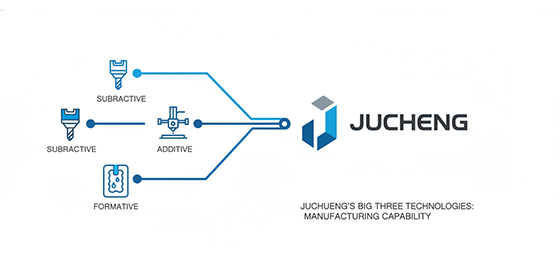
The key word is "group." It is not one single technology. It is a toolbox. The choice of the right tool depends entirely on your project's goal. Do you need a quick shape to hold in your hand? Or do you need a strong, functional part for real-world testing?
At JUCHENG, we are experts in the "Big Three" technology paths of modern rapid prototyping: Additive (3D Printing), Subtractive (CNC Machining), and Formative (Vacuum Casting). This guide will serve as your introduction to this holistic approach, helping you choose the smartest path for your project.
Types of Rapid Prototyping
The Rapid Prototyping Process
Rapid Prototyping Materials
Functional Prototypes
Visual Prototypes
Rapid Prototyping Cost
Advantages of Rapid Prototyping
Rapid Prototyping Applications
Rapid Prototyping Design
Types of Rapid Prototyping
What are the different types of rapid prototyping? They fall into three main families. Additive manufacturing builds a part layer by layer. Subtractive manufacturing carves a part from a solid block. And formative manufacturing uses a mold to shape a material. Each has unique strengths. Learn more in our full guide to the types of rapid prototyping.
The Rapid Prototyping Process
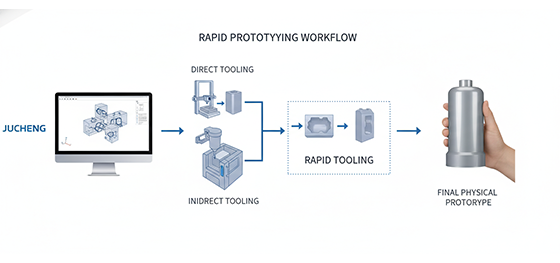
What is the rapid prototyping process? It is a streamlined workflow that turns your idea into a part, fast. It starts with your CAD design, which our engineers review for manufacturability (DFM). The file is then converted for the machine, the part is built, and finally, it goes through any needed post-processing, like sanding or painting. Discover each step in our detailed guide to the rapid prototyping process.
Rapid Prototyping Materials
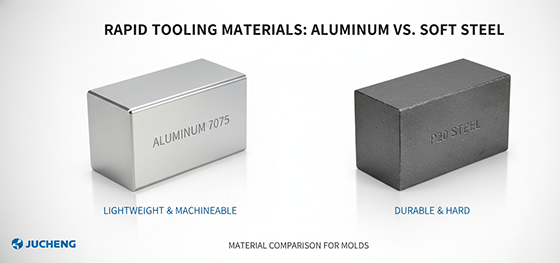
A critical choice is your material. Rapid prototyping materials can be split into two groups. Simulants are materials that look or feel like a production plastic, such as the resins used in SLA 3D printing. Real materials are the actual production-grade plastics and metals, such as a solid block of ABS or Aluminum 6061 used in CNC machining. If you need true material performance, choosing a process that uses real materials is essential. Explore the options in our guide to rapid prototyping materials.
Functional Prototypes
What is a function prototype? It is a prototype that works like the final product. Its purpose is to undergo real-world testing: assembly tests, stress tests, drop tests. For these, you need structural integrity. The best technologies for creating strong Functional prototypes are CNC machining, which creates a solid part from real material, and advanced 3D printing methods like DMLS (for metal) or SLS (for strong Nylon).
Visual Prototypes

In contrast, Visual prototypes (or concept models) are designed to look like the final product. Their job is to impress. They are used for marketing photoshoots, investor meetings, and for verifying the product's final aesthetics and ergonomics. The best technologies for beautiful visual models are SLA 3D printing, for its incredible detail, and Vacuum Casting, which can create a small batch of parts with a perfect, production-quality surface finish. Explore our finishing options for Visual prototypes.
Rapid Prototyping Cost
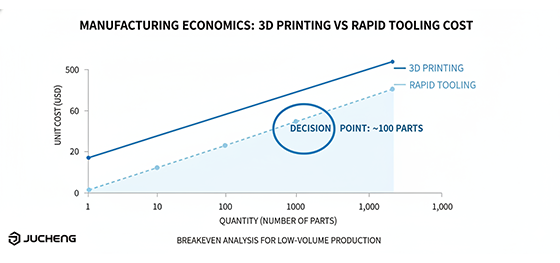
How much does rapid prototyping cost? The Rapid prototyping cost depends on four main factors: the volume of parts, the complexity of the design, the material chosen, and the level of finishing required. A simple FDM print can be very cheap. A complex, CNC-machined PEEK part can be very expensive. However, any prototype cost is a tiny fraction of the cost of fixing a design error after you have invested in mass-production tooling. See our full breakdown of the Rapid prototyping cost.
Advantages of Rapid Prototyping
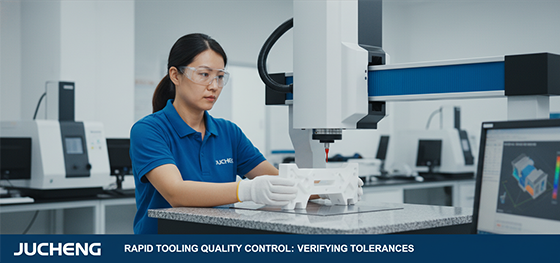
What are the advantages of rapid prototyping? The two biggest advantages are speed and risk reduction. Speed comes from getting your product to market faster than your competitors. JUCHENG can deliver some prototype parts in as fast as 3 days. Risk reduction comes from the ability to "fail fast, fail cheap." Finding a design flaw in a prototype can save you from a mistake that is 100 times more expensive to fix in production. Discover all the advantages of rapid prototyping in our detailed guide.
Rapid Prototyping Applications
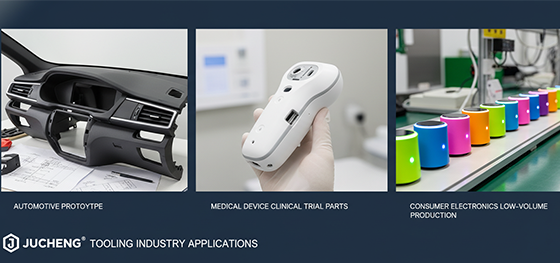
The Rapid prototyping applications are endless. In the automotive industry, we create clear lighting lenses and dashboard concepts for pre-production vehicles. For medical clients, we build handheld surgical device prototypes for surgeon feedback. In consumer electronics, we make earphone and wearable prototypes to perfect the ergonomic fit. Every industry benefits from being able to see and touch their ideas before committing to production. View our gallery of Rapid prototyping applications.
Rapid Prototyping Design
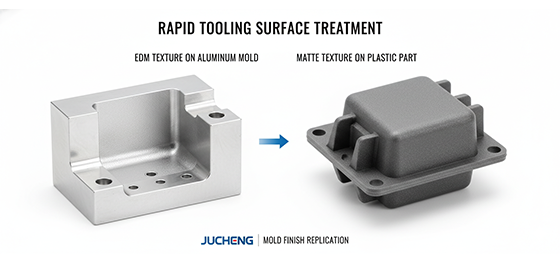
A good part starts with a good design. A good Rapid prototyping design follows the specific rules of the chosen manufacturing process. For CNC machining, this means adding radii to all internal corners. For 3D printing, it means designing with support structures in mind and ensuring your STL file is watertight. For casting, it means adding draft angles. Our engineers help you with your Rapid prototyping design by checking your files for these common issues.
Navigating the world of rapid prototyping can be complex. But with a partner like JUCHENG, you have an expert guide. With our "Big Three" technologies and our commitment to DFM and quality, we can help you choose and execute the perfect strategy for your project. Ready to start? Upload your CAD file today for a free quote.

