


Your design is pushing the limits. The stress calculations are high. The standard 6061 aluminum is not strong enough. You need more performance. You need a material that has the strength of steel, but without the crippling weight.
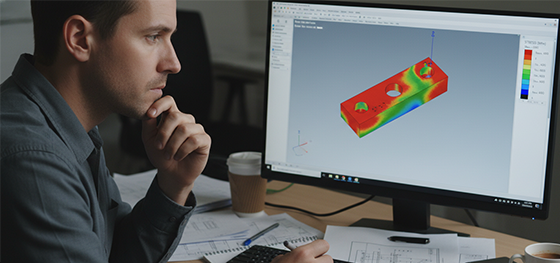
Where do you turn when you need to level up? You turn to the aerospace alloy. The king of strength in the aluminum world.
This is the world of 7075 aluminum. But harnessing its incredible power requires a deep understanding of its unique personality. The process of Machining 7075 Aluminum is a task that demands expertise and respect.
The King of Strength: What is 7075 Aluminum?
A Machinist's Respectful Approach
The Trade-Offs: Weldability and Corrosion
Your Partner in High-Performance
The King of Strength: What is 7075 Aluminum?
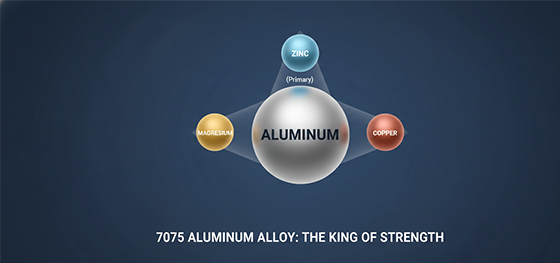
7075 is a high-performance aluminum alloy. Its secret weapon is its primary alloying element: zinc.
This addition, combined with a precise T6 heat treatment, gives 7075 an incredible tensile strength. Its strength is often comparable to many common grades of steel. But it achieves this with only about one-third of the weight. This phenomenal strength-to-weight ratio is why it is known as an "aerospace" alloy.
It is the material of choice for high-stress airframe structures, military-grade rifle components, and other applications where structural failure is not an option. Among all aluminum CNC machining materials, it is the undisputed champion of strength.
| Property | Aluminum 6061-T6 (The Workhorse) | Aluminum 7075-T6 (The Champion) |
|---|---|---|
| Yield Strength | ~276 MPa | ~503 MPa (~82% Stronger) |
| Hardness (Brinell) | 95 | 150 (~58% Harder) |
| Weldability | Excellent | Poor (Not Recommended) |
| Cost | Moderate | High |
A Machinist's Respectful Approach
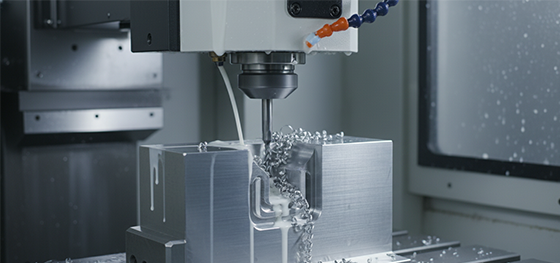
This superior strength comes at a price. The process of Machining 7075 Aluminum is a different game than machining its softer cousin, 6061.
7075 is much harder. This means it creates higher cutting forces and puts much more stress on the cutting tools. It causes tools to wear out faster.
A machinist cannot use the same aggressive speeds and feeds that they would use on 6061. They must take a more respectful, controlled approach. This often means using slightly slower spindle speeds, reduced feed rates, and taking shallower cuts.
While it is still much faster to machine than steel, it is a more demanding and time-consuming process than machining standard aluminum. This increased machine time is a key factor in the higher cost of a finished 7075 part.
The Trade-Offs: Weldability and Corrosion
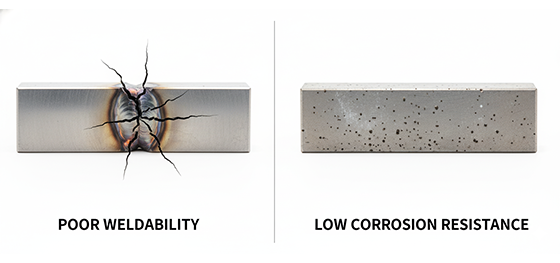
There is no "perfect" material. The incredible strength of 7075 comes with two significant trade-offs that every designer must understand.
First, it has very poor weldability. The same zinc content that gives it its strength can cause cracking issues during the welding and cooling process. For this reason, 7075 is almost never used for fabricated assemblies that require welding. It is a material for monolithic, machined-from-solid parts.
Second, its corrosion resistance is lower than 6061. It is more susceptible to stress-corrosion cracking, especially in saltwater environments. For this reason, a 7075 part that will be used in a harsh environment must have a protective surface coating, such as a hardcoat anodize.
Your Partner in High-Performance

When should you make the leap to 7075?
You choose 7075 when your analysis shows that no other lightweight material can handle the stress. You choose it when reducing weight while maintaining strength is your absolute, number one design driver.
It is the material of choice for high-performance bicycle components, rock climbing gear, drone structural frames, and critical aerospace fittings. In these applications, the higher cost is a small price to pay for the ultimate in lightweight performance.
Working with this high-performance alloy requires a high-performance manufacturing partner. At JUCHENG, our expertise in cnc machining aluminum extends to these demanding aerospace grades. Our advanced 5-axis machines and our deep process knowledge allow us to turn this champion of strength into the perfect, reliable component your high-stress project demands.

