


Hardware startups hemorrhage venture capital by authorizing eighty-thousand-dollar hardened steel molds before ruthlessly verifying market fit. Prematurely locking a flawed component geometry into impenetrable blocks of H13 tool steel guarantees absolute financial disaster when inevitable engineering change orders (ECOs) become physically impossible to execute. Navigating the treacherous gap between low-volume 3D printed prototypes and multi-million-unit mass manufacturing demands an intermediate, financially viable step.
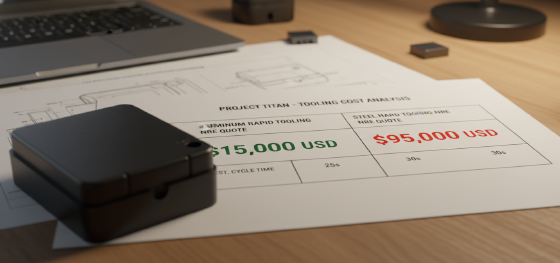
Choosing between Rapid Tooling and Hard Tooling dictates the velocity of your[2026] hardware product launch. Machining aluminum or P20 soft steel cavities purposefully slashes upfront non-recurring engineering (NRE) costs by up to seventy percent. This highly calculated compromise actively sacrifices ultimate mold lifespan to achieve blazing-fast injection molding iterations.
Procurement managers must brutally calculate the amortization curve to pinpoint the exact volumetric break-even point. Utilizing bridge production strategies allows mechanical teams to physically test aggressive glass-filled polymers without committing to heavy mass-production infrastructure. Strategic tooling decisions entirely define supply chain survival.
content:
What Separates Rapid Tooling from Production Molds?
Rapid Tooling vs Hard Tooling: How Do Costs Compare?
When Should You Use Aluminum Molds for Prototypes?
When MUST You Avoid Rapid Tooling in Manufacturing?
How Does Gate Freeze Affect Rapid Injection Molding?
How Does Jucheng Optimize Bridge Production in Shenzhen?
What Are the Most Critical Rapid Tooling FAQs?
What Separates Rapid Tooling from Production Molds?
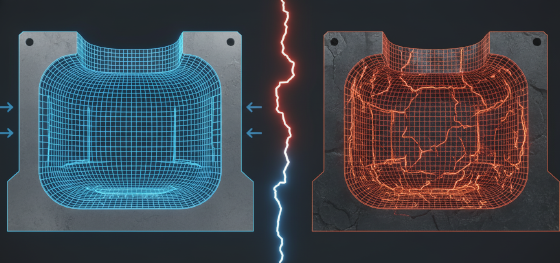
Rapid tooling replaces slow-machined hardened steel with softer aluminum or P20 alloys to drastically accelerate CNC milling times and obliterate upfront manufacturing costs.
Toolmakers burn hundreds of agonizing hours using plunge EDM to sink complex cavities into HRC 50 steel blocks for traditional production molds. This excruciating process ensures the die can withstand millions of violent, high-tonnage clamping cycles without deforming. Hard tooling strictly prioritizes ultimate mechanical longevity over delivery speed.
Bridge tooling completely flips this economic model on its head. Utilizing high-speed 5-axis CNC mills to carve cavities directly into raw 7075 aluminum blocks entirely eliminates the EDM bottleneck. While these softer dies degrade significantly faster under extreme thermal shock, they allow engineers to shoot real injection-molded parts in days rather than agonizing months.
Rapid Tooling vs Hard Tooling: How Do Costs Compare?
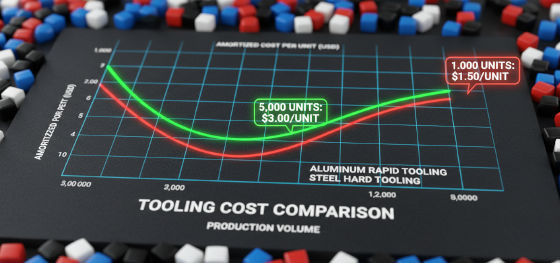
Rapid tooling slashes upfront NRE fees by up to seventy percent but incurs a slightly higher per-unit part cost due to manual mold operation and shorter maintenance intervals.
Calculating the exact financial break-even point prevents catastrophic budget misalignments. If a project requires exactly 5,000 ABS enclosures, spending $5,000 on an aluminum rapid tool yields a $1.00 unit cost (totaling $10,000). Commissioning a $30,000 steel tool dropping the unit cost to $0.50 totals $32,500. The rapid tool saves massive capital instantly.
However, scaling aggressively to 100,000 units viciously punishes soft tooling investments. The aluminum cavity physically washes away under the abrasive plastic flow, requiring multiple complete replacement molds. Procurement teams must accurately forecast total product lifecycles to trigger the transition to H13 steel precisely when volume dictates.
| Tooling Metric | Aluminum Rapid Tooling | H13 Hardened Steel Tooling | Financial Impact |
|---|---|---|---|
| Upfront NRE Cost | $2,000 - $8,000 | $20,000 - $100,000+ | Rapid tooling frees up R&D capital |
| Expected Lifespan | 5,000 - 10,000 Shots | 1,000,000+ Shots | Steel dominates long-term scalability |
| Fabrication Speed | 1 to 3 Weeks | 6 to 12 Weeks | Aluminum enables rapid time-to-market |
| Per-Unit Part Cost | Moderate | Extremely Low | High volume absorbs the steel NRE |
When Should You Use Aluminum Molds for Prototypes?
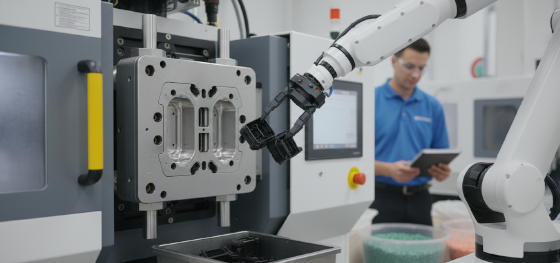
Specify aluminum rapid tooling exclusively for bridge production, beta-testing functional thermoplastic parts, and fulfilling initial low-volume market releases under ten thousand units.
FDM 3D printing and urethane casting fail miserably when hardware engineers must validate the genuine mechanical properties of UL-rated polycarbonates or glass-filled nylons. Rapid injection molds accept these exact production-grade resin pellets. The physical parts ejected from a soft tool act identically to mass-produced parts during severe kinetic drop testing.
Medical device developers rely heavily on this strategy to secure regulatory approvals. They can shoot a hundred biocompatible housings, run clinical trials, and execute critical dimensional tweaks by simply re-machining the soft aluminum cavity. It provides absolute mechanical validation without the crippling financial paralysis of hard steel.
When MUST You Avoid Rapid Tooling in Manufacturing?
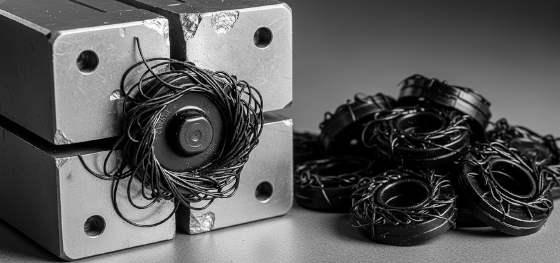
Deploying soft aluminum tooling for highly abrasive glass-filled polymers exceeding 10,000 units guarantees catastrophic cavity wear and severe geometric failure.
Injecting thirty-percent glass fiber nylon acts exactly like pressurized liquid sandpaper against soft 7075 aluminum walls. The immense kinetic friction physically erodes the delicate gate geometry and destroys critical draft angles within a few thousand operational cycles. Parts begin sticking to the core, and severe flash erupts violently along the degraded parting line.
You must completely avoid rapid tools for optical-grade clear polycarbonate lenses requiring SPI A-1 mirror finishes. Aluminum cannot physically hold a flawless diamond polish under repeated thermal cycling; the surface degrades rapidly, imparting a hazy, cloudy texture directly onto the molded lenses. High-volume optics absolutely mandate hardened steel.
How Does Gate Freeze Affect Rapid Injection Molding?
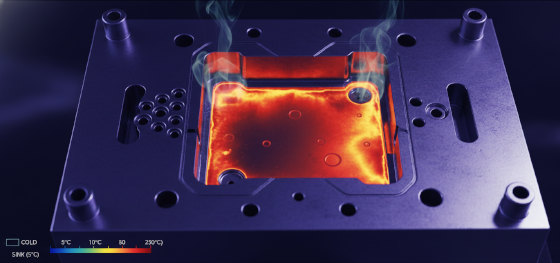
Gate freeze represents the exact thermal moment the plastic solidifies at the cavity entrance, locking in holding pressure and preventing molten material from flowing backward.
Aluminum conducts heat nearly four times faster than standard P20 tool steel. While this rapid thermal transfer accelerates cycle times favorably, it simultaneously introduces severe thermodynamic risks. The narrow injection gate can freeze prematurely before the machine finishes packing the entire cavity, starving the part of essential volumetric mass.
Starved cavities generate massive internal shrinkage forces during the subsequent cooling phase. This phenomenon manifests as brutal surface sink markers and completely compromised structural rigidity. Process engineers must aggressively manipulate heated barrel temperatures and injection velocities to actively counteract aluminum's intense cooling gradient.
How Does Jucheng Optimize Bridge Production in Shenzhen?
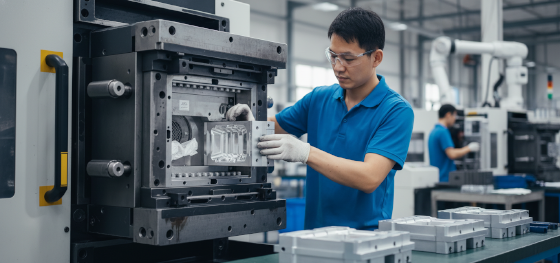
Operating within the Shenzhen precision manufacturing hub, Jucheng utilizes standardized Master Unit Die (MUD) systems to brutally slash rapid tooling NRE costs for global hardware startups.
Navigating [2026] supply chain bottlenecks requires decoupling your custom geometry from the heavy, expensive outer mold frame. We permanently install robust steel mold bases directly into our injection presses. You only purchase the specific CNC-machined aluminum cavity inserts, reducing your upfront capital requirements significantly.
Our 8000-square-meter facility merges dedicated 5-axis mold milling with round-the-clock injection molding under rigid ISO9001:2015 oversight. We execute aggressive Free DFM reviews to mathematically calculate draft angles and identify gate freeze risks long before machining your inserts. Our No MOQ policy empowers immediate, unhindered bridge production.
What Are the Most Critical Rapid Tooling FAQs?
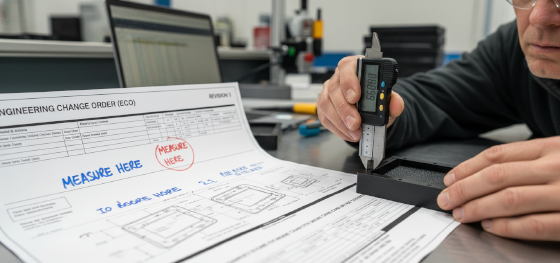
Resolving hardcore injection molding variables prevents devastating delays when transitioning from 3D printed prototypes to legitimate thermoplastic manufacturing.
Can you apply textured finishes like Mold-Tech to an aluminum rapid tool?
Yes. Chemical photo-etching works perfectly on 7075 aluminum to create complex leather or matte textures. However, because the substrate is relatively soft, the microscopic peaks of the texture will physically wear down and turn smooth significantly faster than on a hardened steel die.
What happens if we need to modify the part design after the rapid tool is cut?
If you are removing plastic from the final part, machinists simply mill away more aluminum from the mold cavity (known as "steel safe" changes). If you need to add plastic to the part, toolmakers must perform highly precise micro-TIG welding to add aluminum back into the mold, which introduces severe thermal distortion risks.
Do aluminum molds require cooling channels like steel molds?
Absolutely. Despite aluminum's superior natural thermal conductivity, high-volume cycling still builds up massive internal heat. Without properly drilled water channels, the mold will overheat, causing the plastic parts to warp uncontrollably upon ejection and extending the overall cycle time to unacceptable lengths.

